-
adminposted in News & Trends • read more
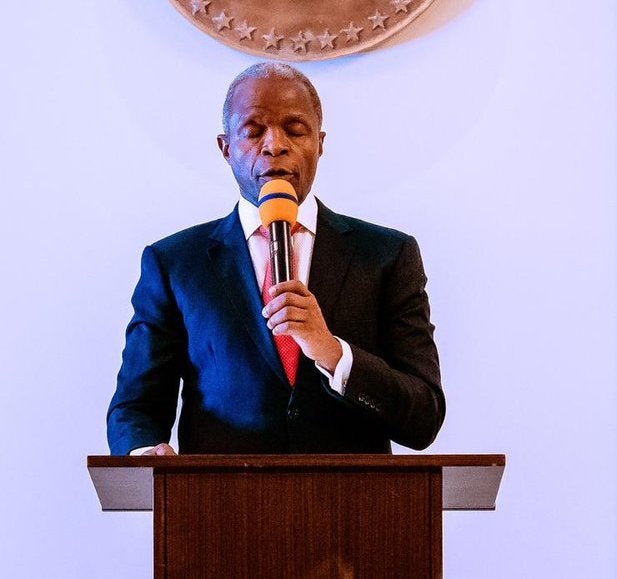
By Chijioke OkoronkwoVice President Yemi Osinbajo has presided over a virtual meeting of the Federal Executive Council(FEC) on Wednesday at the Presidential Villa, Abuja.
The council observed a minute silence in memory of former Minister of Women Affairs, Hajiya Aisha Alhassan, who died on May 7.
President Muhammadu Buhari is on a four-day official visit to Paris, France, for the African Finance Summit.
Ministers physically present at the meeting included Lai Mohammed, Minister of Information and Culture and Abubakar Malami, Minister for Justice and Attorney-General.
Others were Suleiman Adamu, Minister of Water Resources and Clem Agba, Minister of State for Budget and National Planning.
Boss Mustapha, Secretary to the Government of the Federation and Ibrahim Gambari, Chief of Staff to President were also at the meeting.
At the last meeting on May 5, FEC approved N6.2 billion for execution of various power projects across the country.(NAN)
Source: NAN News
-
adminposted in News & Trends • read more
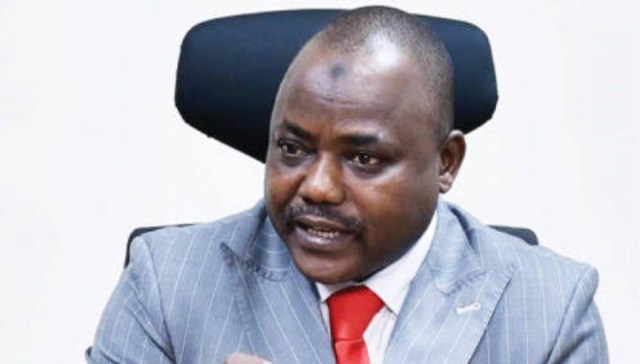
By Solomon AsowataMr Sarki Auwalu, director, Department of Petroleum Resources (DPR) has urged Africa to rise to the challenge of harnessing its oil and gas reserves for the development of the continent.
Auwalu spoke on Wednesday at the opening ceremony of the 5th Edition of the Sub-Saharan African International Petroleum Exhibition and Conference organised by the Petroleum Technology Association of Nigeria (PETAN).
The News Agency of Nigeria (NAN) reports that the three-day virtual conference has as its theme: Post COVID-19: From Global Crises to Global Opportunities.
He said: Indeed, for a better and secured future, Africa must rise to the challenge of harnessing its over 125 billion barrels of proven oil reserves and 625 trillion cubic feet of natural gas for the development of the continent.
Africa must not be cowed to abandon its quest to grow its economies by the doomsday narrative of end of oil era and jettison the development of its resources.
Africas resources must be used to fuel Africas development; the same
way other continents utilised dirtier fossil fuels to fuel their economic transformation.To achieve this, we must take our destinies in our hands and join hands across all spectrum technical, economic, legal, commercial, operational, financial, and political drive regional energy security and economic sustainability.
According to him, Nigeria recognises the reality of energy transition and is committed to accelerated development of its petroleum resources through the emplacement of appropriate legal framework to support upstream asset acquisition, development, production and exports.
However, we are putting increased emphasis on midstream investments and gas-focused infrastructural development for domestic value addition via the Refinery revolution and Decade-of-Gas Initiatives.
The Decade-of-Gas Initiative will leverage Nigerias 203 TCF of natural gas reserves for domestic gas supply (Gas-To-Power), Alternative fuels (Gas-To-People) and Gas Based Industrialisation (Gas-To-Derivatives) elements of the Gas-fired Industrial economy agenda within this decade.
All these efforts will significantly increase the quantum of in-country value addition to drive the contribution of oil and gas to Gross Domestic Production, employment generation and poverty eradication, he said.
Also, Mr Simbi Wabote, Executive Secretary, Nigerian Content Development and Monitoring Board (NCDMB), said the coronavirus pandemic provided a sad realisation of the importance of local content in the oil and gas industry.
Wabote said the NCDMB would continue to deploy strategies to promote local content in Nigeria and within the African continent to provide jobs, support businesses and protect investments.
Earlier, Mr Nicolas Odinuwe, Chairman, PETAN, said the aim of the conference was to offer direct access to the primary stakeholders and key players across the entire Sub-Saharan African supply and value chain.
Odinuwe stressed the need for continued collaboration by African countries to foster development of the continent through the utilisation of its oil and gas resources. (NAN)
Source: NAN News
-
adminposted in News & Trends • read more
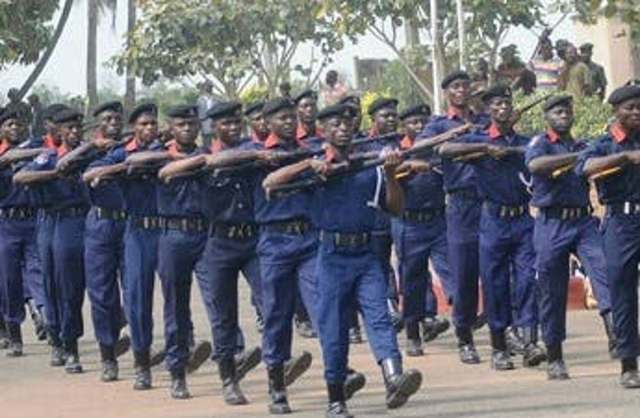
By Suleiman ShehuThe Nigeria Security and Civil Defence Corps (NSCDC) command in Oyo State, says it plans to deploy about 2,800 personnel for the state local government councils poll on Saturday.
This is contained in a statement by the corps Public Relations Officer, Mr Oluwole Olusegun on Wednesday in Ibadan.
Oluwole said that the state NSCDC Commandant, Mr Iskilu Akinsanya, made the disclosure during a meeting with Divisional Officers across the 33 Local Government Areas (LGAs) and 35 Local Council Development Areas (LCDA) of the state.
All officers and men of the corps will be on duty on the election day as undercover officers.
The Agro Ranger and Counter Terrorism Unit (CTU) of the corps will be deployed to all flash spots in the state, he said.
He urged the electorate to participate in the poll without fear, saying the corps was fully prepared to ensure protection of lives and property of residents.
He advised NSCDC personnel that would be deployed to the 3,886 wards and 4,783 polling units across the state to abide by the guidelines of the state Independent Electoral Commission and be good ambassadors.
He also enjoined traditional rulers, community leaders, and religious leaders to caution their subjects against conducting themselves in a manner that would lead to violence in their vicinity.
Akinsanya said the command and other security agencies were ready to deal decisively with individuals attempting to breach the peace in the state during and after the poll.
He enjoined the electorate to observe COVID-19 protocols and to conduct themselves in orderly and peaceful manner during and after the election.
In case of emergency you can contact this control room numbers:09070473188, 08058268164,08077513995,09055533303 and 08160317637, he said. (NAN)
Source: NAN News
-
adminposted in News & Trends • read more
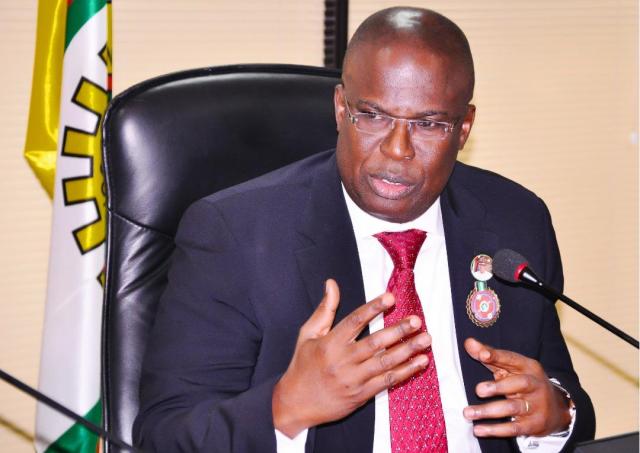
By Edith Ike-EbohThe Minister of State for Petroleum Resources, Chief Timipre Sylva, says the Federal Government is working with the Central Bank of Nigeria (CBN) to ensure full implementation of the Auto Gas Policy.
Sylva said this at an interactive session with newsmen in Abuja on Tuesday.
The News Agency of Nigeria (NAN) reports that President Muhammadu Buhari on Dec. 1, 2020, launched the Auto Gas Policy to help reduce the impact of high cost of petrol price in Nigeria
He said that there was the need to have critical mass of vehicles converted to use gas to achieve the desired impact in the country.
Now, if you have a critical mass of vehicles, may be one million converted to use gas, you must also have a commensurate amount of filling stations that are enabled to fill the one million cars converted.
So, you cannot do one aspect of it in exclusion, they must go hand in hand, if not, the whole programme will not make sense.
We are working right now with the Central Bank of Nigeria to ensure that we are able to bring in conversion kits for a critical mass of vehicles.
And then also give soft loans at the same time to downstream operators to fix their filling stations, so that when we fit the two together, it will work.
That process is ongoing, we have already launched the policy and it has brought the attention to Nigerians to know that it is a policy direction now, Sylva said.
According to him, one or two filling stations cannot salvage the whole situation.
He said that ensuring a critical mass of vehicles and filling stations would help the implementation of the policy.
Sylva added that it would help the policy to develop a life of its own.
I can tell you that we are working on that and I think it is a very good development, he said.
On the rehabilitation of the refineries, he said that government had been able to source funds to ensure that they were revamped and functional.
He said that it was unfortunate that the refineries in Nigeria had been like a weeping baby but noted that government believed that there was the need for it to be functional before taking any direction.
The minister said that it would be difficult to sell the refineries at their current state.
What we want to do is to ensure that these refineries are functioning, so, if it is functioning, the first thing we want to do is not to run the refineries as a government.
We agreed that government is not a good manager, so, we want to put an operations and management contractor, professional mangers of refineries.
At some point, we will put out advertisement for professional refinery managers to bid for managing the refinery, so that when it begins to work, it will be given to a professional manager to run.
It is not going to be subject to government issues any more, again, when it begins to work, Nigerians will decide if we should sell it or not
There are a lot options open to government, we can decide to go to the stock exchange or open it for people to buy the shares. Every option will be available but at least, it will be a functional refinery, he said
NAN reports that the rehabilitation of the Port Harcourt refinery commenced on May 6 by Maire Tecnimont SPA, an Italian company. (NAN)
Source: NAN News
-
adminposted in News & Trends • read more

By Itohan Abara-LaserianCititrust Financial Services Plc has proposed an allotment of N2 billion shares to be listed on the Nigerian Exchange (NGX) Ltd after meeting all the regulatory requirements.
Mr Ikechukwu Peter, Country Director/Chief Executive Officer of Cititrust, said this during the presentation of the statutory report to shareholders on Tuesday in Lagos.
Peter said the statutory meeting was in line with requirements of a Public Limited Company wishing to be listed on the NGX in line with the CAMA 2020 Act.
He said: This is a statutory general meeting and step toward our aim of being listed in the NGX. I had earlier said that we would be listing on the floor of NGX on or before the end of the second quarter.
This is actually a step to that aspiration. We have planned to go to the Securities and Exchange Commission (SEC) to get our shares registered.
To get this done, we need to get our shareholders approval and we have that now, our counterparties in the NGX are already waiting for us.
We have been having engagements and discussions regarding how it should be done and I can gladly tell you that we are on course and the second quarter is very visible.
The total number of shares allotted is four billion ordinary shares at 50k each, fully paid to the total value of shares allotted of N2 billion and we have gone to the Corporate Affairs Commission to get our share allotments sorted out, he said.
According to Peter, the company currently has a total number of 55 shareholders which is exactly the number required by law to become a Plc, with the hope to increase.
The thing is for us to position ourselves for more growth, raise capital because before now, we were owned by our parent company 100 per cent and by law, they are supposed to own about 70 per cent as a Plc and the other 30 per cent goes to the public.
This is the opportunity to get more liquidity through this platform because the truth of the matter is that we are headed to the stock exchange, your shares will be actively traded. So, decide to expand your share base just to free up some more cash or get some more cash.
The kind of business we do is financial services business which will require more funding every now and then. There is not much you can do with the money you have but if the fund is restricted, the things you can do will be restricted.
We can only create the value that we can, based on the kind of funding that we have available to us. Listing on the exchange will give us visibility, Peter said.
Peter assured the shareholders of capital appreciation and enhanced value creation noting that on the NGX, it would better position and empower the company to offer more value.
Alhaji Danladi Yaro, Chairman of the company, in his remarks notified the shareholders of the constituted Board of Directors and four Board Committees among others.
The shareholders present at the meeting approved and authorised the company to register its shares with SEC and as well list on the NGX, among others. (NAN)
Source: NAN News
-
adminposted in News & Trends • read more
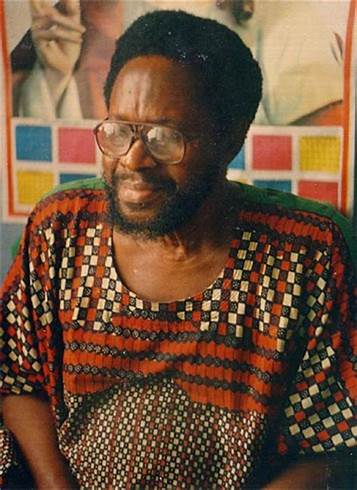
By Babajide AwoyinfaThe Minister of Information and Culture, Alhaji Lai Mohammed, has eulogised one Pa Abayomi Barber, one of Nigerias foremost modern artist for his foresight in modern art.
Mohammed made the remarks at a special exhibition of Barbers artworks held at the National Art Gallery to commemorate his 92nd birthday on Tuesday in Lagos.
Represented by the General Manager of the National Theatre, Iganmu, Prof. Sunday Ododo, the minister said that the elder statesman has devoted his life to the service of the arts.
The Ministry of Information is glad that this nonagenarian has remained active and continues his mentorship of the young ones till date.
It is no wonder that the core of students he trained while at the Centre for Cultural Studies, University of Lagos is waxing strong today as professionals in visual arts and entrepreneurs.
They have well-equipped studios with students eager to learn.
Indeed, many of his students have graduated and set up on their own outfits and training others.
This aligned very well with one of the cardinal points of President Muhammadu Buharis administration of encouraging entrepreneurship among the youths.
We salute the foresight of Abayomi Barber in ensuring that products of his Art School of Thought become employers of labour rather than job seekers.
He is a visionary and the federal government is glad to be part of his celebration today.
It is my ardent wish and desire that the arts sector takes its prime place in contributing to the GDP of the country.
This is why the National Gallery of Art has my support in its quest to become a revenue-generating agency, the minister said.
Welcoming dignitaries to the special exhibition, the Director-General, National Gallery of Art (NGA), Ebeten Ivara, remarked that he was humbled that today we have in our midst a living legend in the visual arts sub-sector
At 92, he said Barber is as relevant to the sector as he was when he started out more than four decades ago as a youngster.
Ivara noted that going through the art book on the foremost artist was very enlightening.
I must say that going through the book on this foremost artist was very enlightening.
One of the interesting aspects of his life is his penchant for self-improvement and appetite to hone his innate skill as an artist.
He was never satisfied as he always yearned for more and by so doing blazed a trail even with little formal education.
This is a lesson for a younger generation.
I urge all of you to get out of your comfort zone and strive to improve whatever skill you have, the director-general said.
The News Agency of Nigeria (NAN) reports that the event, which took place at the exhibition arena, National Museum, was attended by dignitaries in the government parastatals, artistic industry and well-wishers.
Abayomi Adebayo Barber, born Oct. 23, 1928, is a Nigerian contemporary artist, who founded the Abayomi Barber Art School in Lagos.
He is best known for the application of naturalism and surrealism methods in his artworks.
Some of his signature works include life-sized busts of former Nigerian president, Murtala Mohammed; the former Oba of Ile-Ife, Adesoji Aderemi another famous work is an oil painting of Shehu Shagari.
The painter and sculptor Abayomi Barber is known for artworks that manage to combine superrealism with intense expressionism.
In his remarks, the Chairman, Governing Board, National Gallery of Art, Ambassador Azores Sulaiman described the celebrant as an exceptional artist and master of masters.
It always gives me pleasure to be in the gathering of artists.
This is even more so with the calibre of the personality we are celebrating today.
This outstanding artist through his Art School of Thought has raised the bar in art teaching and mentoring.
His style, which does not impede or rush knowledge but strives towards each student learning at his or her pace, is an idea our higher institution should understudy, NAN quotes Sulaiman as saying. (NAN)
Source: NAN News
-
adminposted in News & Trends • read more
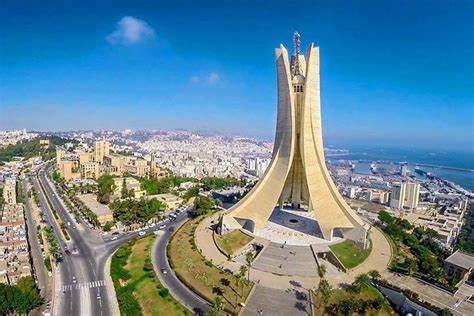
Algeria has backed off a decision to reopen land borders closed because of the coronavirus pandemic.But it will go ahead with a plan to partially resume international flights from next month, the presidency said on Tuesday.
The North African country had said on Sunday it would reopen land and air borders on June 1, but with only five flights a day to and from Algerian airports.
It was decided to keep land borders closed, except in case of necessity, the presidency said in a statement after a meeting of the High-Security Council, chaired by President Abdelmadjid Tebboune.
It did not elaborate.
Algeria has reported 125,693 coronavirus cases, including 3,388 deaths. (Reuters/NAN)
Source: NAN News
-
adminposted in News & Trends • read more
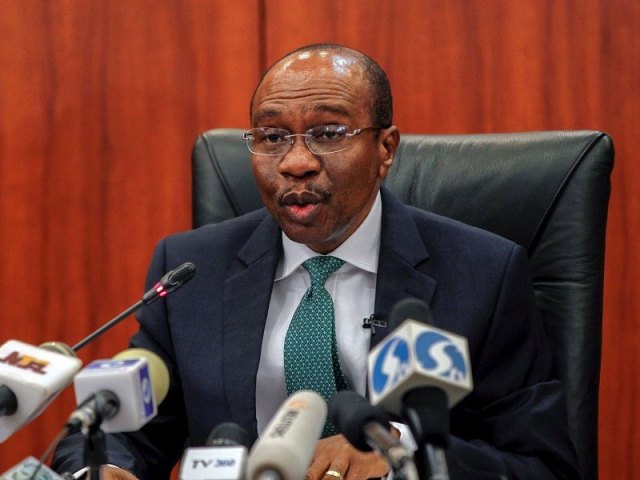
By Kadiri AbdulrahmanThe Governor of the Central Bank of Nigeria (CBN), Mr Godwin Emefiele, says the apex bank plans the cultivation of one million hectares of rice in the 2021 farming seasons, to boost food security.
According to information in CBNs official Twitter handle, Emefiele made the statement while unveiling rice pyramids in Ekiti state, the first in the South West under the Anchor Borrowers Programme (ABP).
The News Agency of Nigeria (NAN) reports that the apex bank had earlier unveiled similar rice pyramids cultivated under the ABP in Kebbi and Gombe states .
Emefiele said that the one million hectares of rice would be cultivated through combination of Rice Farmers Association of Nigeria (RIFAN) farmers and private anchors for each planting season in 2021.
He added that the CBN was already financing about 3.1 farmers for the cultivation of 3.8 million hectares across 21 commodities through 23 Participating Financial Institutions across the country.
He faulted claims in certain quarters, that the banks targeted interventions in the agricultural sector were tilted in favour of a certain section of the country.
Emefiele pushed for more private sector investment in Nigerias agricultural value chain, while urging farmers to repay loans promptly to ensure sustenance of ABP.
The CBN is positioned to ensure the integration of our farmers into the Governments Economic Sustainability Programme, aimed at providing five million homes with electricity using solar energy
We believe significant improvements in domestic production of staple food items would help in attaining our price stability goals while reducing our dependence on imported food items, he said.
He urged Nigerian youths to deploy their talents, energy and enthusiasm into boosting agricultural production.
He assured that the new improved Nigeria Commodity Exchange (NCX) would soon commence operation to aid production and sales of agricultural produce.
Nigerian youths have the talent, energy, enthusiasm, technological adoption capacity and drive to revolutionise agricultural production in Nigeria.
Revamped NCX is to commence operation by the fourth quarter of 2021 to be more responsive to challenges encountered in the production and marketing of food and agriculture produce in the country, he said.(NAN)
Source: NAN News
-
adminposted in News & Trends • read more
By Folasade AkpanThe Federal Government and Public Service Institute of Nigeria (PSIN) have expressed their readiness to partner on strengthening fiscal transparency and accountability in states.
National Programme Coordinator, SFTAS Programme for Results, Mr Stephen Okon, made the disclosure on Tuesday in Abuja.
The News Agency of Nigeria (NAN) reports that the partnership isunder the federal government/World Bank-assisted States Fiscal Transparency Accountability and Sustainability (SFTAS) programme.
A statement issued by Communications Specialist for SFTAS, Mr Ibrahim Mohammed, quoted Okon as stating this at a four-day pilot workshop for Curriculum Development on Public Financial Management and Open Government Principles (OGP).
He said that the workshopwas organised by PSIN, in collaboration with West Africa Institute for Financial and Economic Management (WAIFEM).
Okon said that strengthening fiscal transparency and accountability in states through SFTAS programme for results would go a long way in ensuring good fiscal governance for the sustainable development of Nigerias economy.
He explained that the technical assistance component of the programme required implementing agencies and partners to deliver capacity-building to states on the Disbursement Linked Indicators (DLIs).
This, according to him, is to ensure that they were supported to achieve results, a situation that would attract handsome financial benefits to the successful states.
Aside PSIN, Okoh listed other implementing agencies and partners to include: Office of the Auditor-General of the Federation (OAuGF), Debt Management Office (DMO), Nigeria Governors Forum (NGF) and Open Government Partnership (OGP).
Earlier, Administrator of the institute, Mr Abdulganiyu Obatoyinbo,said that under the SFTAS programme, PSIN was assigned the mandate of providing capacity-building to the states in six core areas.
The core areas, according to him, are improved financial reporting and budget reliability, increased openness and citizens engagement in the budget process, improved cash management and reduced revenue leakages through implementation of state Treasury Single Account (TSA).
Others areas, he said, were strengthened internally- generated revenue collection, biometric registration and bank verification number used to reduce payroll fraud and improved procurement practices for increased transparency and value for money.
Obatoyinbo, however, restated the institutes resolve to deliver on its mandate so as to enable the programme realise its objectives of engendering efficient and sustainable public financial management system in the country.
Director-General of WAIFEM, Mr Baba Musa, said the agency was hired by SFTAS programme coordination unit/PSIN to design curriculum-based and structured face-to-face learning courses on Public Financial Management (PFM) and OGP to ease delivery of capacity-building activities to states.
NAN reports that SFTAS is a programme which focuses on strengthening the fiscal sustainability, transparency and accountability of states across the federation. (NAN)
Source: NAN News
-
adminposted in News & Trends • read more
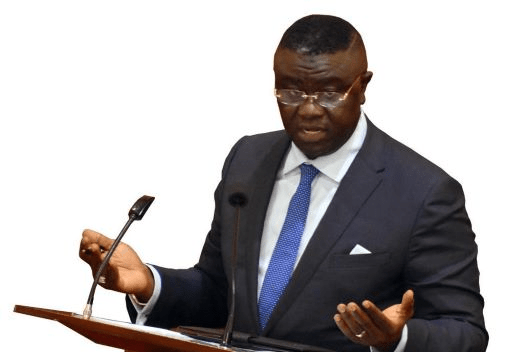
By Nana MusaThe Minister of State, Finance, Budget and National Planning, Prince Clement Agba has called for urged new approach in implementation of second phase of the National Action Plan (NAP II).
Agba made the call on Tuesday in Abuja at the 2021 Open Government Partnership (OGP) Week for Nigeria OGP National Steering Committee on interactive dialogue with all the Thematic Working Group Co-Chairs.
He urged all government partners in OGP in Nigeria to work hard towards achieving the set goals and objectives of NAP for accelerated progress on OGP.
The minister said the Independent Reporting Mechanism (IRM) of the OGP published a review of the implementation of the first phase of National Action Plan (NAP l) with rich recommendations that the committee needed to reflect on.
The IRM review of NAP I found that Nigeria substantially implemented three out of 14 commitments in the action plan.
Nigeria, notably advanced commitments in the areas of open budget, ease of doing business and reviewing open government laws.
Nine commitments saw limited implementation, two of these were not started during the implementation period.
The two relate to information-sharing among anti-corruption agencies and building technology for citizen engagement and have been carried over to the next action plan.
For some of the commitments, the details of IRM findings and recommendations are damning and calls for deep reflection from all of us, the minister said.
Agba said the committee must immediately get to the work of implementing the second action plan for better outcomes, seeing that we have about one year left of our implementation cycle.
We cannot use the pandemic as an excuse, especially as the action plan has been extended by one year, he said.
The minister suggested some new approaches including early warning signs of the possibility of not fully implementing any commitment and measure impact of the work by working closely with the M
-
adminposted in News & Trends • read more
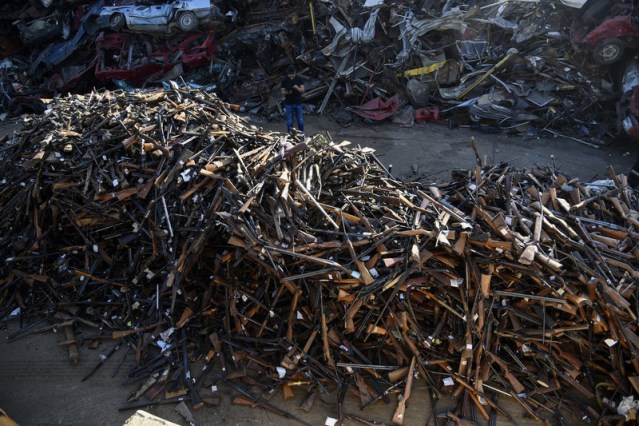
Tackling insecurity and imperative of arms controlBy Sumaila Ogbaje, News Agency of Nigeria (NAN)
Proliferation of small arms and light weapons have become a global challenge. This is due to light weapons lethal efficiency, easy accessibility, indiscriminate usage and devastating havocs they wreak.According to Small Arms Survey of 2018, cited by SB Morgans Report on Small Arms, Mass Atrocities and Migration in Nigeria, there are over 40,009,000 small arms in the hands of civilians or non-state actors in Africa.
The report added that 10,972,000 of that number are concentrated in West Africa, where Nigeria is the most populous and dominant power.
The report also puts arms in the hands of civilian non-state actors at 6,145,000, while the armed forces and law enforcement collectively account for 586,600 firearms.
According to the report, this worrying trend of arms proliferation has an impact on Nigerias internal security.The various armed groups used their access to firearms to challenge the states security forces, which had resulted to deaths and injuries.
According to preliminary findings from the National Small Arms and Light Weapons Survey (NSALWS), locally manufactured arms, which are normally fabricated in small-scale factories, without legal permits, contribute to a large percentage of arms in circulation in Northern Nigeria, especially in North-Central.
There are also many different points of entry for internationally sourced weapons. Nigerias porous borders facilitate the sourcing of weapons from countries bordering Northern Nigeria such as Chad and Niger that are also tackling insurgencies as well as challenges of documenting the flow of small arms.
According to the report, ammunitions from at least 21 different nations have been used in the herders versus farmers conflicts in North-Central.Some of these nations include Israel, Poland, Brazil, Iran, USA, Czech Republic, Algeria and Egypt.
The Small Arms Survey, a publication of the Graduate Institute of International and Development Studies, Geneva, Switzerland, estimated small arms in the hands of civilian non-state actors nationwide at 6,145,000.
Another report by SMB Intelligence and Open Society Initiative for West Africa (OSIWA), revealed that the armed forces and law enforcement agencies collectively account for 586,600 firearms, representing about 8.71 per cent of the total small arms and firearms in circulation.
Former Head of State, Abdusalami Abubakar, at a recent meeting of the National Peace Committee (NPC), expressed concern over the proliferation of all calibre of weapons in the country, which he estimated at six million.
Abubakar, who is also the Chairman of NPC, at a dialogue session of the committee with stakeholders held in Abuja, decried the proliferation of weapons.
Abubakar said that the proliferation of weapons has heightened insecurity in the country and led to over 80,000 deaths and close to three million internally displaced persons, across the country.
The Minister of Defence, retired Maj.-Gen. Bashir Magashi, while receiving the report of the committee set up to facilitate the reform of the Ministry of Defence and Armed Forces, acknowledged that arms proliferation was a major factor threatening the nations peace and security.
Magashi said that since the fall of Libya coupled with security challenges in some of the neighbouring countries, they had been massive inflow of arms and ammunitions all over West African, adding that measures were in place to stem the tide.
He assured that the government was committed to ensuring that its laws are obeyed and illegal possession of arms and light weapons checked.
A renowned security expert, Dr Ona Ekhomu, who spoke on arms proliferation, called on the nations intelligence agencies to redouble effort in tracking the movement of small arms and light weapons into the country.
Ekhomu said that investigation by the intelligence agencies was necessary, adding that weapons did not just come one by one, but through cartels that stockpile them.
He said that the Defence Intelligence Agency (DIA), National Intelligence Agency (NIA) and Department of State Service (DSS) had important roles to play in this regard, adding that DIA works from outside the country where some of the weapons come from.
According to him, there is intelligence in exporting countries about the weapons that are leaving as well as the cartel map, through which some of the weapons being imported could be interdicted.
On legislation, Ekhomu said that Nigeria has legislations on the control of small arms and light weapons, adding that enforcement has been the problem.
He said that the best approach to addressing the problem was to block the flow through the nations borders.Ekhomu said that it would be more useful to stop the illegal inflow of weapons into the country before thinking on how to retrieve weapons held by criminals.
While the security agencies, especially the armed forces are grappling with this challenge, policy makers are finding ways to upscale their search for solution through Whole-of-Government and All-of-Citizens approach.
In this regard, President Muhammadu Buhari, on May 3, approved the establishment of the National Centre for the Control of Small Arms and Light Weapons (NCCSALW) to be domiciled in the Office of the National Security Adviser (ONSA).Retired Maj.-Gen. Abba Dikko was appointed the pioneer coordinator.
ONSA disclosed that NCCSALW replaced the defunct Presidential Committee on SALW.NCCSALW is to serve as institutional mechanism for policy guidance, research and monitoring of all aspects of SALW in Nigeria.
The establishment of NCCSALW was part of ongoing restructuring of Nigerias security architecture to address emerging threats and strengthen regional mechanism for the control, prevention and regulation of SALW.
According to ONSA, the impact of the proliferation of SALW across national borders in Africa and the Sahel region has resulted in terrorism, human trafficking, organised crime, and insurrections in West Africa.
According to the ONSA, the new centre is fulfilment of the requirements of the ECOWAS Moratorium on Import, Export, and Manufacture of Light Weapons as well as the UN Plan of Action to prevent, combat, and eradicate illicit trade in SALW.
The NCCSALW will serve as the National Focal Point on SALW in Nigeria and lead a multi-stakeholder process, involving government Ministries, Departments, Agencies and the civil societies in implementing all national, UN and ECOWAS Plans of Action on the control of SALW.
The Centre will maintain international cooperation and also operate zonal offices in the six geopolitical zones to ensure quick response and effective mobilisation of resources, ONSA stated.Stakeholders are optimistic that with the establishment of NCCSALW the proliferation of small arms and light weapons in Nigeria will be greatly reduced, (NANFeatures)
**
Source: NAN News
-
adminposted in News & Trends • read more

By Adenike Ayodele/Vivian IboboPastor Olayide Babatunde of the Glorious and Divine Calling Ministry in Ayobo, Lagos, has called on parents to regulate internet use by their children as a strategy to curb sexual assault.
Babatunde gave the advice in an interview with the News Agency of Nigeria (NAN) on Tuesday in Lagos.
According to Babatunde, use of the internet had contributed much to rape and defilement.
Internet has done more bad than good and has corrupted the minds of our little ones.
What do you want to say about a six-year-old girl operating her mothers phone and dancing stark naked while videoing herself with the phone?
Imagine children between ages five and 12 years singing and listening to worldly music while viewing it on their parents phones, the cleric said.
She added that some children watched porns and other illicit images on the internet.
A five-year-old boy who sees a man lying on a woman in a movie will one day try it on an opposite sex either in school or at home.
We need a serious re-orientation in the country in order to bring back the sanity of our offsprings.
Gone are those days when children didnt have access to iPad, android tablets and other smart phones, she told NAN.
Babatunde also decried fake new spread on social media platforms.
There is no way internet wont be shut down sooner or later in the country with the high level of fake news parading the cyberspace.
Some fake news are being spread by teenagers that are exposed to internet.
For instance, incidents that happened in other countries are falsely spread by teenagers stating that such happened in Nigeria without taking into cognizance consequences of spreading such fake news.
The pastor appealed to parents to be watchful of what their children were being exposed to on the internet.
Parents should stop giving phones to their little children all in the name of pampering.
According to the pastor, internet is a powerful weapon which must be kept away from children. (NAN)
Source: NAN News
-
adminposted in News & Trends • read more
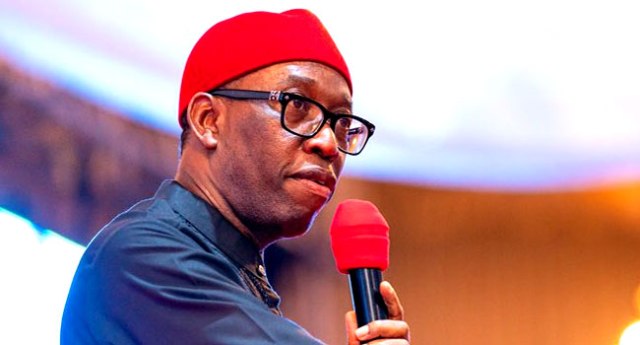
By Ifeanyi OlannyeGov. Ifeanyi Okowa of Delta on Tuesday dissolved the State Executive Council, sacked the Secretary to the State Government, his Chief of Staff, Special Advisers and Chief Strategist.
The immediate past Commissioner for Information, Mr Charles Aniagwu, announced this while briefing newsmen on some of the decisions reached by the executive council in Asaba, before the cabinet dissolution.
According to Aniagwu, the commissioners have been directed to hand over to the Permanent Secretaries in the respective ministries.
He said: All special advisers including the chief strategist, the SSG and the political adviser are to hand over to the next person in the line.
The governor, before announcing the dissolution of the council, thanked everybody including those who have been there for the past six years and those who joined two years ago for their contributions.
He noted that the dissolution would also create opportunity for other persons to become members of the cabinet to make their contributions to the development of the state.
Aniagwu added that the governor was aware of the peoples demand for democratic dividends.
The former commissioner said that before the dissolution of the executive council, a number of projects were approved.
He said that the council had dismissed one Mr Bernard Onanomovo, a staff of the state Ministry of Finance, for fraudulently including some names into the payroll of government.
Aniagwu said the council also approved a power purchase agreement with Banktuary Power Solution Nigeria Limited for the provision of electricity to government institutions in Asaba.
The company which came on stream two months ago has a generating capacity of over five Kilowatts of electricity.
The council approved that the total five Kilowatts of electricity that would be generated will not be consumed by government alone.
The excess will be shared to persons that can pay for it or sold to the Benin Electricity Distribution Company (BEDC), he stated.
The former commissioner said that the council also approve N2.8 billion for the upgrade of the three newly established universities in the state.
Government also approved the state participation in the CBN oil palm development programme which will enable it to access over N7 billion loan to be made available to farmers in the state as soft loans, Aniagwu added.
He said that the council also approved the constructions of a road in Osubi, Okpe Local Government Area of the state, as well as three new secondary schools and a primary school in parts of the state.
On the retuned of the state fund looted by former Gov. James Ibori to Delta, he said that the state government was on touch with the FederalGovernment, adding I believe it would do the needful as a father. (NAN).
Source: NAN News
-
adminposted in News & Trends • read more
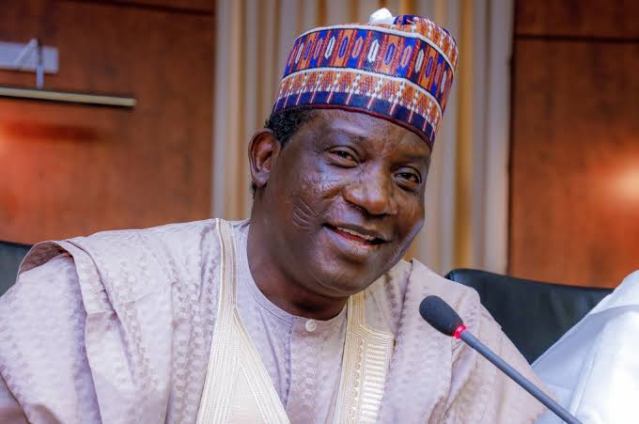
By Martha AgasThe Northern Governors Forum, has called for calm and dialogue between Kaduna State Government and organised labour, to resolve the ongoing warning strike by workers in the state.
The Chairman of the forum and Governor of Plateau, Mr Simon Lalong, made the call in a statement by his Director of Press and Public Affairs, Dr. Makut Macham, on Tuesday in Jos.
He said the forum was concerned of the impact of the strike on the state and its residents following the lockdown of economic activities in the state.
The chairman noted that dialogue and negotiations were effective tools of addressing dispute in labour relations.
He called for restraint and de-escalation of the situation to enable amicable resolutions.
He pointed out that peaceful resolution was only possible when both parties operate within the law in ventilating their grievances.
The chairman explained that inciting comments and some actions would further aggravate the situation and increase tension.
Lalong urged the labour leaders to guard against the hijack of its protests by hoodlums, who may want to take advantage of the situation to cause destruction of lives and property.
He also tasked security agencies to ensure the enforcement of law and order to protect the people and their properties.
The News Agency of Nigeria (NAN), reports that the Nigeria Labor Congress, on Monday declared five days warning strike following the sack of workers in the state, allegedly without following due process.
NLC has shut down power supply, rail and air operations as well as other commercial activities in the state.(NAN)
Source: NAN News
-
adminposted in News & Trends • read more
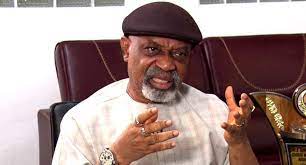
By Joan NwagwuThe Federal Government has waded into ongoing strike and picketing in Kaduna State by the organised labour.
The Minister of Labour and Employment, Sen. Chris Ngige said this in a statement signed by Mr Charles Akpan, Deputy Director, Press and Public Relations in the ministry, on Tuesday in Abuja.
The News Agency of Nigeria (NAN) reports that the Nigeria Labour Congress (NLC) and the Trade Union Congress(TUC) had embarked on a five-day warning strike that commenced on Monday over sack of 4000 workers by the Kaduna state government.
Ngige appealed to the Kaduna state Governor, Malam Nasir El Rufai, President of the NLC, Mr Ayuba Wabba and the President of the TUC, Mr Quadiri Olaleye to immediately cease fire.
We are not unaware of what is going on in Kaduna state . It is a labour issue which has snowballed into a national strike and picketing by the two labour centres and affiliate unions.
We hope and also urge the Kaduna state governor not to escalate matters to such a level where it becomes uncontrollable.
We also appeal to leaders of the labour centres to step down action to make way for discussion .
My ministry is wading into the matter and therefore calls on the warring parties to give peace a chance, he said.
The minister also appealed to all workers on essential duties, including doctors and nurses not to join the strike.
He added that, importantly, I appeal to workers in critical sectors not to tamper with electrical or water installations so as not to bring more sufferings to the people of Kaduna state and the nation at large.
This is because we have it on good authority, following complaints by the Minster of Power that workers have threatened to trigger a nationwide blackout by interfering or switching off the national grid, Ngige said.(NAN)
Source: NAN News
-
adminposted in News & Trends • read more
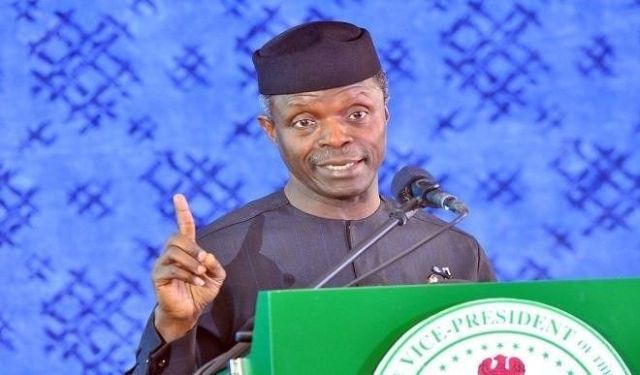
By Chijioke OkoronkwoVice President Yemi Osinbajo says there is need for synergy among stakeholders in order to promote road safety in the country.
Osinbajo made the call on Tuesday at the Presidential Villa, Abuja, while receiving on courtesy visit a team led by Sen. Adeleke Mamora, Minister of State for Health, in commemoration of the Global Road Safety Week.
The slogan chosen for 2021 UN Global Traffic Safety Week is Street for Life, to call for 30 km/h (20 mph) speed limits to be the norm for cities, towns and villages worldwide.
Osinbajo, who is Chairman of the National Road Safety Advisory Council, congratulated all of the agencies, ministries of health and transport, and the lead agency on road safety administration and safety management.
We must commend the UN, especially for the resolution, which has brought all of these about.
I think that making road safety a public health issue is one of the very creative ways of ensuring that we all able to synergise as the Ministry of Health is properly brought into the picture properly; which explains why the minister is a key part of the activities of this week and of course the second decade of action.
I think that those synergies are important; the synergies between the ministries and the synergies between the Federal Government, the states and the Local Government Councils.
Many of our streets belong to states and local governments; so, there is absolutely no way we can talk about road safety in any sensible way without bringing in the states and local governments; I think those synergies are important.
And I am sure also that you are walking with the ministries of health and transport in the states of the federation.
According to him, what the federal government is trying to do is first to encourage states to do not just their roads, but federal roads, where they can.
He said that federal roads were practically in all the states.
With this administration, the president was able to open up the states for states to do federal roads and be compensated for where they have sought appropriate permissions in order to do those roads, he said.
Mr Boboye Oyeyemi, Corp Marshal, Federal Road Safety Corp, who is a part of the team, later told State House correspondents that the initiative was geared at promoting reasonable speed limit in the urban areas.
Displaying a card with the inscription 30km/H, Oyeyemi said that the Global Road Safety Week was being celebrated globally.
Speed is the major challenge in the highways; 50 per cent of the fatalities is as a result of speed violations and the global bodys focus is to promote the need for people to be more safety conscious in reducing the speed.
I have seen that a lot of young ones are been killed in urban areas; hence the need to compel member bodies to make sure that the maximum speed limit in urban areas is 30 km per hour.
And we are happy for the vice president for spear-heading this as the chairman of the National Road Safety Advisory Council; so the same thing is going on in other parts of the country.
It is promoting the need in urban areas to cut down the speed maximum of 30 km per hour and we believe we will be able to achieve this with the cooperation of all the road users, he said.
Oyeyemi added that the corps would work with the Federal Ministry of Works and Housing to ensure that appropriate road signs were installed in the urban areas as well as stop signs at the junctions.
On his part, Mamora said there was need to eliminate the burden of accidents; hence the focus on prevention which, in itself, was part of managing the health of human beings as well.
Speaking, Dr Sydney Ibeanusi, the Country Director and Focal Person for the United Nations Decade of Action on Road Safety and Injury Prevention for Nigeria, said the benefits of the initiatives would be immense.
The short time benefit of this will be to save lives; saving the number of people who are killed or injured on the roads.
In the long term, the huge economic impact, we lose between three to five per cent of our Gross Domestic Product annually from road crashes; that translates to about N6 trillion to N9 trillion every year; so the long time impact is huge.
Most developed countries have realised that and took up road safety as a major economic investment and are reaping the benefits, he said.
He said that the target was to reduce deaths and disability by 50 per cent by the year 2030. (NAN)
Source: NAN News
-
adminposted in News & Trends • read more
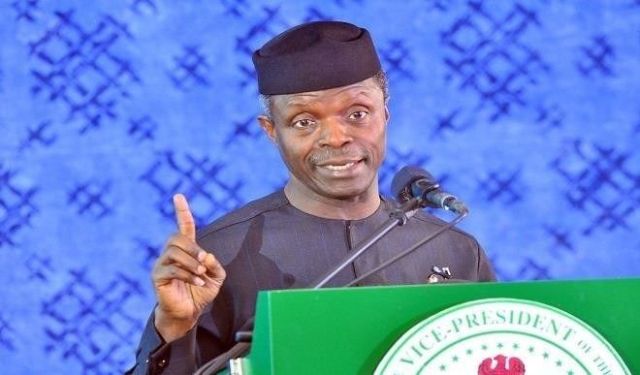
By Chijioke OkoronkwoVice President Yemi Osinbajo says Sub-Saharan African will require annual investment of 40 billion dollars to implement a robust energy transition plan.
Osinbajos spokesman, Laolu Akande, in a statement on Tuesday in Abuja said that the vice president said this in his keynote speech at the virtual 7th Annual New York-based Columbia University Global Energy Summit.
The summit was organised by the Columbia Centre on Global Energy Policy.
This years edition focused on shaping current energy system, what is ahead for energy policy, energy markets, geopolitics, technology and efforts to reduce emissions.
Osinbajo said that while investments in fossils were being sustained in wealthier countries, banning gas investments in developing nations raised questions around equity, justice and inclusion.
He said that the questions were pertinent as the global community approached the Net-zero emission target of 2050.
Therefore, a just, equitable, and inclusive global energy transition especially for developing economies is an imperative.
The global energy transition must be inclusive, equitable and just, taking into account the different realities of various economies and accommodating various pathways to net-zero by 2050.
Nigeria and countries across Africa are committed to a net-zero future, especially given their vulnerability to the adverse effects of climate change.
All have expressed commitment to their national development contributions under the Paris Agreement, however greater support in developing and implementing robust energy transition plans is needed.
Clearly the continent will require an unprecedented scale of investments.
An energy mix compatible with a 1.5C pathway would require 40 billion dollars to flow into Sub-Saharan Africa annually; a fourfold increase compared to the billion invested in 2018.
The vice president said that a just energy transition for developing economies was central to the right to sustainable development and poverty eradication as enshrined in relevant global treaties including the Paris Agreement.
He regretted that wealthier nations and institutions were banning all public investments in fossil, including natural gas.
Examples include the EU, UK and Denmark to name a few, as well as specific institutions such as the Swedfund from Sweden, CDC from the UK, the European Investment Bank, and the Investment Fund for Developing Countries from Denmark.
Inclusive and equitable transition will also take into account the principles of common but differentiated responsibility and leaving no one behind that are enshrined into global treaties around sustainable development and climate action.
It means building sustainability into our economic planning.
So, we have developed an Economic Sustainability Plan, which includes our flagship Solar Power Naija programme aiming to electrify five million households and 25 million people by 2023 leveraging solar mini-grids and stand-alone systems.
We believe in the potential of off-grid renewables to close the energy deficit in Nigeria and across Africa, he said.
He said pathways to reaching net-zero by 2050 had to include, first, ending energy poverty by 2030.
Osinbajo warned that if energy access issues were left unaddressed, there would continue to be growing energy demand being addressed with high polluting and deforesting fuels such as diesel, kerosene, and firewood.
On her part,MrsDamilola Ogunbiyi,the Special Representative of the UN Secretary-General for Sustainable Energy for All and Co-Chair of UN-Energy, said the funding of projects that would guarantee cleaner energy sources was critical to the attainment of net-zero by 2050.
Earlier in his opening remarks,Prof. Jason Bordoff,the Founding Director of the Centre on Global Energy Policy at Columbia University, said the annual gathering of energy experts was part of the contributions by the Centre in addressing pressing energy issues.
Heexpressed delight in having the vice president share perspectives at the 2021 summit.
Other participants at the summit included American energy expert and Vice Chairman of IHS Markit, Daniel Yergin, who moderated a fireside chat with Osinbajo after his keynote address.
Ms Caitlin Norfleet, the Event Manager of the Centre on Global Energy Policy, among others also featured. (NAN)
Source: NAN News
-
adminposted in News & Trends • read more
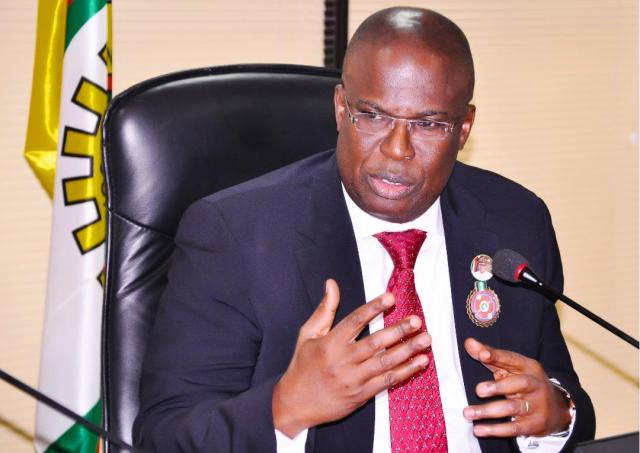
By Edith Ike-EbohThe Minister of State for Petroleum Resources Chief Timipre Sylva says that efforts to ensure passage of the Petroleum Industry Bill (PIB) before the National Assembly are still on course.
Sylva made this known at an interactive session with newsmen in Abuja on Tuesday.
I want to tell you that PIB is fully on course and we are very happy because we have focused on that for a long time and we had many meetings with the National assembly and stakeholders.
Today, I believe that we are all basically satisfied with where we are.
The National Assembly has given a timeline, they actually gave April but a few things, but give or take, I still believe that the passage of the PIB will not go beyond June.
We are hopeful that between now and June, they will pass the PIB, I dont think we are faraway with the passage of the PIB, he said.
Commenting on subsidy, he said that the common man is worse hit with subsidy, but usually the one that fights government anytime it is said it would be removed.
He said subsidy had created opportunity for people to transport products to nearby countries to make more profit as the price is high in those places.
People are ready to take all kinds of risk to transfer products to places like Benin Republic. So when the prices are at par, it might help to reduce some of these risks, he said.
He noted that until Nigeria bridges the price differentials in the pump price of petrol, people would continue to take all risks to smuggle the product.
The price differential is a major incentive for smuggling that is why until we are able to bridge that gap, people will continue to do that.
Because, it is very difficult for government to police all the border of Nigeria, he said
He said government had exhibited political will and commitment to announce deregulation for the downstream sector March 2020.
He urged Nigerians to support governments efforts to ensure full deregulation of the sector for economic growth and development.
The truth is that the common man is not benefiting from the subsidy, he said. (NAN)
Source: NAN News
-
adminposted in News & Trends • read more
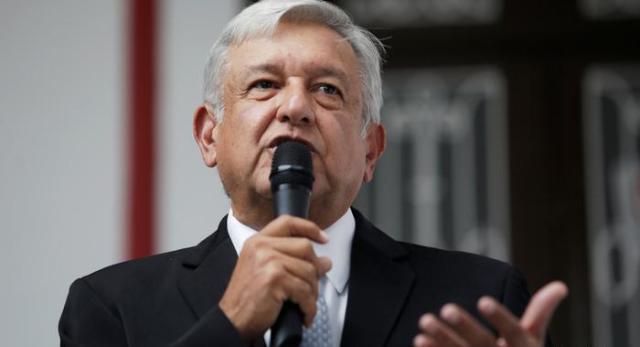
Mexican President Andres Obrador has apologised to China on behalf of his country for the massacre of more than 300 Chinese by rebels in the northern city of Torreon.The massacre which happened 110 years ago during the Revolutionary War claimed over 300 Chinese lives between May 13, and 15, 1911.
A total of 303 Chinese people were killed in Torreon.
Mexico must not only recognise its responsibility and guilt, but also vow to never to allow racism, discrimination and xenophobia again, Lopez Obrador said at a joint ceremony with the Chinese ambassador to Mexico, Zhu Qingqiao, in Torreon.
Thousands of these Chinese went to Mexico to work from the late 19th century. Many worked on the construction of the railway network, while others worked on farms, in mines, as traders or in laundries.
They encountered hatred, violence and discrimination, which led many to leave Mexico again in the decades that followed.
According to figures from the Mexican Government, the Chinese population shrank from 15,960 to just 4,800 between 1930 and 1940.
Lopez Obrador noted that Mexico had been largely silent about the massacre in Torreon for the past 110 years. (dpa/NAN)
Source: NAN News
-
adminposted in News & Trends • read more
By Muhammad Lawal
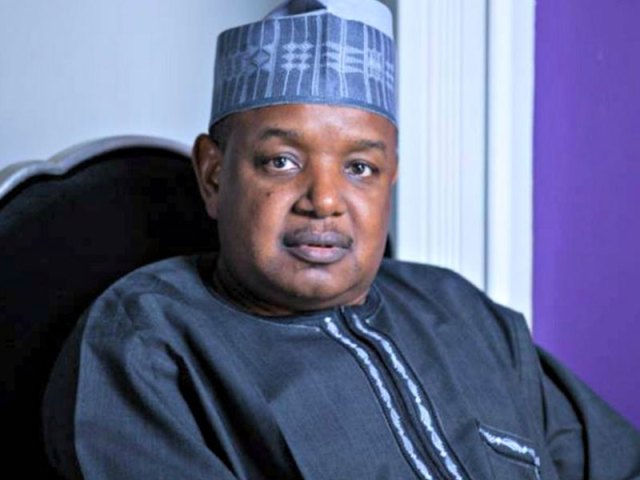
Gov. Atiku Bagudu of Kebbi State on Monday appealed to the private sector to invest more in fish production to meet the nations demand.
The governor made the plea during a visit to Kitari Fish Farm in Bunza Local Government Area of the state.
He said the visit was part of the sustained efforts by the state to encourage private sector participation in agriculture and also to ensure the promotion of other value chain.
Bagudu said: The visit to the farm located at Sabon Gari Jika in Bunza Local Government is aimed at encouraging fish production in large and small scales in the state by private individuals.
I am delighted with the big fish ponds I saw at the farm, which is at its first phase of development, it is equally important to note that I was elated when I went round.
The Proprietor of the farm, Alhaji Abbas Umar-Bunza, said various species of fish were being bred inside the ponds.
He expressed satisfaction with the level of patronage received both from within and outside the state since he started production.
Umar-Bunza said he had trained many youths on fisheries who subsequently became employers of labour by setting up their fish farms.
One of the overseers of the farm, Abubakar Ladan, said the farm started with five fish ponds, while additional five were now under construction.
Work started here a year ago with five fish ponds, presently, additional five more ponds are being constructed to make it ten, he said. (NAN)
Source: NAN News