-
adminposted in Children • read more
- Knowledge: it can influence value because only knowledge that influence you will influence your character. What you learn will help you in shaping how to take care of children but the knowledge you get from studying early childhood education will help you in taking care of children. The kind of music a person hear in their environment also influence value formation
- Formal education: it can also influence value formation, it makes us acquire more and do to inculcate more, it is a skill, knowledge, attitude values that you learn in school that will shape you into who you become. These things influence in your value life. Example, you have to go to school before you can become a lawyer, doctor etc. it will make you become a better person and know what you want in life
- Experience: exposure with learning in the classroom, student, lecture, experiences in life leads to value formation. Learning is permanently change in behaviour as a result of past experiences. The experiences will shape who become. If you expose yourself to good things, you will get good values and vice-versa. One can also get experience from their parent either good or bad
- Individualism: an individual can make a determined decision to be what he/she will be either negative or positive, no matter what advice you give the person
- Sex :Pre-marital sex can lead to value formation, it can make you change your ways and decide to follow the wrong path. e.g. a person that has pre-marital sex can contact HIV/AIDS and ends up having to marry another person with HIV/AIDS will want to change their ways and also to teach their children good values
- Technology: Technology can influence your values. It can either be positively/negatively through the use of phones laptops etc. what you see on the internet either good or bad will shape your behaviour and can influence your values
VALUE CLARIFICATION
It can be simply be defined as sorting out one’s own value from the value of others and acting on them. -
adminposted in Children • read more
- A good person is very honest that is the person is upright and plays the game according to establish rules and regulation
- A valued person is fair and just in his every day dealing with people irrespective of their status in the society
- A valued person is very intelligent, humble and unassuming, his academic score sheet surpass that of peers or contemporaries and yet is not proud about it he is consistent and committed to the things he believes in his words are respected because people know he does not double speak
- A valued person is tolerant and also have good listening skills he appreciate people for who they are and for they have, he does more of listening to people more than talking.
BASIC HUMAN VALUES
Values are ideas, beliefs principles standards or qualities that are important to use desirable and highly priced. The basic human values are numerous from society some of them are:
- Honesty
- Fairness
- Respect
- Self-Control: Is one of the basic human value in all society
- Dignity of labour: in all society dignity is value even children recognise it
- Promise keeping: is recognised in high extreme in our society, in the church, in the mosque e.t.c
SOURCES OF VALUES
- Family: is the first and basic source of value. Mother are the best teacher
- Place of worship
- School environment
- Media
- Society
- Peer group
-
adminposted in Children • read more
These are the tips on how children can defend themselves to avoid being attacked by anybody
- The teacher should teach them about their body e.g. in a girl, I’m 5 years old and that their body belongs to them
- No one should physically hurt me especially my private part
- My private part are special and meant for me alone and they should always be covered as soon as they can talk
- Nobody will kill me even when I say the truth
- My teacher is not my uncle or my aunt but my teacher
- I will not be quiet! Because I have every right to report anybody who touches my private part to my parent, teacher or any trusted adult around at the moment
- If anybody touched any of my private part if anybody touch any of my private part I must scream.
-
adminposted in Children • read more
We can protect or defend our body against body attack by taking any of the following actions
- We should be careful about the type of people we move with or keep as friends
- Avoid the practice of night clubbing/going to club at night apart from the fact that this practice can expose you from both physical and emotional attack or can easily be lured to hard drug and other immoral act which can jeopardize your future dreams and aspiration
- Don’t put on sexual attractive and provocative dresses especially in public places and event so as not to give yourself undue attention
- Do not receive gift from people especially when you are in doubt of the source and motive behind such gift
- Do not hesitate to report to your parent, teacher or other trusted but mature people when you are sexually harassed
- Be conscious of the nature of issues or topics you discuss when you are in the midst of opposite sex and know how to leave when the situation appear to be getting out of control
-
adminposted in Children • read more
Another concept that we value in Africa is security. Therefore self- defense is another value that we hold in high self-esteem in Africa. Self- defense can be define as: the art of protecting one’s self against attack or something bad. The modern human society is the complex arrangement of people of different social cultural background and experience as a result of this individual exhibit different attitude whether good or bad in their everyday interaction.
This bad or negative attitude may be in form of inflicting body injury, rape, sexual harassment, when such things happen, we have the right as well as the duty to defend our self against this attack or aggression e.g. if a girl is facing rape the first thing you do is to shout for help, if it doesn’t work negotiate then try self-defense, then you can beg him to use condom, in conclusion we may highly define opportunity one-self as the use of force to protect one-self against someone that is attacking us ideally, every person in a society is expected to be security conscious so as to protect one-self against sudden and unexpected attack.
-
adminposted in Children • read more
What is value? Value is ambiguous and has different meaning but it may be defined as the extreme quality or importance which a person or a group of person attach to certain ideas, belief or principle. Fundamentally, values are not what we believe in. Value is a virtue which every individual in a society strives to possess. This is so because the value that one attaches to things or certain object defines who we are and the kind of behavior exhibited in our social interactive/every human society either democratic or not is given by established principle rules and regulations which every citizen must convey for peace and harmony to run in the society
Importance of values
- The existence possession of value good values help to guild and regulate human behavior, give a sense of possess and direction to our lives e.g. respect in Yoruba land, love for business in Igbo land and love for their cow and belief in Hausa land
- Value can help us to resist pressure from peer groups or all other external focus to conform or submit to other values and behaviors that may not be accessible to our societal values
- Individual with good value system are better equipped or informed and exposed to social political and economic activities of their society
- A society with established human value tends to experience political stability and rapid economic growth
- Value system upheld by a society will go a long way in determining one type of leader of leader. It and now to direct the affairs of the society
- When a society fall short of the expected value that particular society will be ashamed and disappointed
Types of Values/Forms
- Justice: It is the art of being fair reasonable and right in the way that people are being treated it also refers to the absence of sentiment or biased when dealing with issues of conflict between two or more people for instance an ECE teacher who favour pupils from rich homes are not showing the good aspect of profession teachers should love and care for all the pupils in the pupils in the class irrespective of their age, gender or socio economic background
- Selflessness : This is the ability to work and care for other people children like our own children in other words it is the habit of saving and giving for other people children with love and determination
- Hard work: It is the ability to develop interest in what one without preference, the country can make it when majority of the citizens are indolent and have wrong lukewarm attitude to government work e.g. as student you must learn to be hard working and serious with our studies and also as teacher we must learn to work with all our mind in order for our student to excel
- Discipline: This is the quality of being able to behave and work in a strict standard by obeying particular rules or pattern of behaviour, in other words it is the attitude of doing the right things at the right time
- Integrity: A man or woman of integrity is someone that is honest and firm
- Honesty: is the quality of being truthful, sincere and transparent, in their relationship with people and students ,it may also involve such attitude as openness, uprightness e.t.c. As teachers we are also expected to be honest and responsible in our dealings and relationship with one student, parent, and school. Authority and government
- Contentment: This is the quality of being satisfied with one or in a situation one finds himself or herself, a contented person will not envy another person as if is satisfied with what he has essentially he humble, discipline and not a corrupt person
- Patriotism: It is the love and loyalty one has for one’s country and all that is represented as a citizen of Nigeria. You are expected to be patriotic or loyal to your country and always think in good defence or anywhere you find yourself
-
adminposted in Children • read more
The concept of reading readiness has it rules in developmental psychology which views the development of a child as a gradual unfolding of the laton powers within.
This view has been supported by recent research study that says readiness to do such things as learning and studying appear at appropriate age and time.
The age limit varies in individual children. It has been discovered that forcing a child to begin any activity causes dislike for that thing and negative attitude.
The term “reading readiness” refers to the point at which the child is ready to begin the process of learning to read to the point at which the child recognize and remembers that the symbols on the page represents meaningful sentences. Reading doesn’t suddenly appear but subject to a process of development where in each successive stage is built upon that which has gone before.
-
adminposted in Children • read more
Learning to read is facilitated when children are exposed to activities of pre-reading activities. The teacher therefore, needs to take every care to ensure success by dividing appropriate practical activities for children.
A period of time, where the child is given considerable support by providing these practical activities, motivation and reinforcement that the pre-reading activities erent hurriedly done and that they are taken seriously by both the teacher and the children.
Some of these activities include:
- Explore the world around them: the use of drama even in a very limited way creates creativity in children and helps involvement in the classroom. Just getting them to represent the characters in a story can be enough in second language situation.
Demonstrate of simple stores to help children in learning how to read
This involves using characters names and labels which can be attached to children to show which characters they are playing.The aim of all story telling and drama in children's life is to provide enjoyment and stimulation of conversation, the teacher should therefore ensure that every child is engaged in ongoing activities.
-
Pictures: pictures taken from books or drawn on the black board provide an easy way of getting children to talk in a second language. Bright colourful pictures appeal to children, birds, animals and families, environment stimulate conversation in the classroom. Short stories using folktales and nursery rhymes can be used as basics for teachers.
The use of pictures sequence can be used to create a situation or form a story. This can provide encouragement for the use of language. -
Drawing and printing: these offers opportunities to involve children in conversation any picture drawn or printed by the child could generate questions, facilitates dialogue and story telling which can get children to explain, discuss or argue their action.
-
Curiosity corner: this is liked to an area that stimulates the interest of children e.g. learning corners which includes literacy areas, mathematics area and it is done during the spare time of a child. It enables the teacher to know the learning abilities of each child.
-
Walk and visit: while going a walk or visit, the teacher shows them things around as well as being able to explore.
-
adminposted in Children • read more
Literacy is language in use that is speaking, listening, reading and writing. Literacy is the ability to read and use written information appropriately in arrange of content for instance to speak or to acquire information to develop critical thinking.
During the first 3 years, young children begin to learn about print and writing. (printing wood) and how oral language is reflected in written symbols. Literacy skills are promoted and supported, directly or indirectly through play, reading books, scribbling, oral communication and interaction with other children and adult.
Importance of reading in Children
- Reading helps children or individual normally to succeed in school and to discharge his/her responsibilities later has a citizen.
- Reading is the foundation of much of the enjoyment that individual gets out of life and closely related to vocational efficiency.
- Reading opens up marvelous history for those who possess sufficient skills and willing to use them.
- Reading is powerful: it can promote civic consciousness, connection to others, foster civic engagement is from complacency.
- Reading is magical: reading can transport ones to wards unknown reveal aspect to the inner self previously undiscovered.
- Reading is transforming: it can promote personal development or cause us to retain cherish attitudes or strongly held opinions.
- Reading is comforting: it can foster acceptance of one’s own and those of others. It helps us to reconcile ourselves to things we can enter change or control.
- Reading ids mysterious: it can energize the spirit, tickle the imagination, the passion someone and leave a deep pleasure.
The following are some of the skills needed for learning to read:
- Intelligence
- Language facility
- Visual abilities
- Auditory abilities
- Emotional factors
-
adminposted in Children • read more
A bilingualists is someone that can speak two (2) languages e.g. Yoruba, French. Research has shown that children can be bilingual if their parents help them.
Why Children Learn language easily
- Children usually can explore the special ways their mother speak to them i.e. they imitate.
- They make errors on self consciously i.e. they are not shy to make errors.
- They are motivated to communicate.
- They like to confirm.
- They are not set in their ways i.e. they are flexible.
Process of developing Bilingualism in children
Children should be given opportunities to hear and practice both languages. Such opportunities should include:
-
Conversation about interesting topics that constitute occasions to use relevant words e.g. talking during meals or while driving to school, etc.
-
Book reading can also be a rich source of new vocabulary and discussion of topics that might never come up.
-
Quality of pre-school setting: is another key of promoting children development having a context rich curriculum can be a rich genis room in this aspect.
-
Story telling
-
Encourage children to write stories.
-
adminposted in Children • read more
This is a Childs native language. It is expected to be L1 of the child.
Why is the mother tongue important?
- It facilitate better understanding and it enalisation of concepts and promotes continuity in their thinking.
- The early use of mother tongue will facilitate the person’s expression of intelligence, capacity and adaptability.
NPE stipulates that the language of instruction should be the language of environment or mother tongue till the end of Primary 3.
The mother tongue is not easily able to go into extinction.
Disadvantages of mother tongue
As describe as the policy statement there are some technical and pedagogical problems associated with the use of mother tongues as medium of instruction.
Some of the disadvantages are:- Few natural languages have developed orthography for writing them.
- Very few of the languages have textbooks written in them.
- There are sometimes conceptual problems resulting from the difference in the mode of thought, in Nigerian Language and English.
To solve some of these problems the government will need to:
- Develop the orthography of many more Nationalized languages.
- Publish textbooks in Nationalized language.
- Have educational graduates become linguists.
-
adminposted in Children • read more
- For communication: most of the things communicated in early years are self centered i.e. they are based on egocentric speech. Egocentric speeches are speech that is not communicated. Communication only takes places when ideas are shared in social center speech.
- Language is used to regulate and control their behaviour: this is used for example to obey rules.
- Children use language in thinking to solve problems.
-
adminposted in Children • read more
Process of Language Acquisition.
- At 18 months: nouns and interjection make up 60% of a child’s utterance. At this period, the child begins to utter single words that refers to specific things they have had contact to e.g. ma-ma. They talk predominately about food, people, part of the body, etc. as they use these words they become aware of their roles in community settings.
- At 2years, the child sentence has 12 words, states simple request and description and sentence lacks auxiliaries, articles, connectives and preposition, it is during this stage that child start to combine words with two utterance
- At 2-3 years, the child’s speech consists mainly of nouns, verbs, adjectives and a few pronouns and also hardly any corrections/connectives
- At 3-4 years, child’s distribution of parts of speech in his conversation approximates that of adults
- At the age of 4, children use complete sentences, 6-8 words get longer, complex and complete with plurals, past and future tense. The importance of language in communication makes it necessary for children to acquire it.
Both the environment and innate abilities of a child should be stimulated to encourage language development.
-
adminposted in Children • read more
Language is a system of sounds and words used by humans to express their feelings and thoughts.
Language is a combination of words used by nation, race or people.
Is language acquired or innate?
Language acquisition refers to the learning of language for comprehension and production.Language comprehension refers to how much a Childs understand a language i.e. the depth of what is spoken from birth. While language production refers to a child ability to use language e.g. daddy, mummy.
Some psychologist like Garot says that language operating principles are part of our biological heritage i.e. it is not necessary to sit a child to learn a language but they have an ability to adapt the language of their environment.
The behaviorist who are of the opinion that language is learned in the environment i.e. children learn language only through conditioning. The environment teaches the child its language. Whether language is acquired or innate, imitation is very important used by the child.
-
adminposted in Children • read more
Firstly you need a generalist teacher. Generalist teachers are teachers that can teach a subjects.
- The first you do is to teach them how to hold a pencil.
- Give room for scrabbling to help develop fine motor skill
- Tracing the dotted lines to develop their eye contact.
TEACHING ADDITION
- Making them know the addition sign
- Introduce to the concept of all together, put together, total, equal to
Steps in Teaching Children Addition
- Making them know the addition signs +
- Introduce children to the concept of all together, put together, total, equal to, etc.
- You teach children with object they are familiar with and what they can handle because children respond to visual object e.g. bottles, cartons, cantars, bags, pencils, etc.
- Provide children item in small groups
- You can provide children with a set of object e.g.
- You can use games to teach addition e.g. ludo, snake and ladder, coin and money
-
adminposted in Children • read more
- Comparing object and describing them with words like longer, shorter, smaller, greater, equal, less than, heavy, large.
- Playing with and describing 2- D and 3D shapes.
- Describing where things are position e.g. north, outside, under, behind, above, opposite, etc. they can be found in calculating degree, bearing, etc.
- Describing, copying and extending patterns found in every day situation.
- Saying number names forward in sequence 10,20 and beyond
- Using numbers to describe and compare collection
- Matching names, symbols and quantities 4D to 10
-
adminposted in Children • read more
- They learn mathematics with concrete materials. They need these such as blocks, counters, cowries, sticks, legs in order to make sense of new mathematical concretes, this helps them to connect and to abstract maths symbols such as +, -, x and =
- They need lot of time to learn maths: they need ample time to play with these materials before the teachers can make meaningful use of them.
- They learn maths with meaningful vocabulary: they need to link maths to their everyday activities, experience and language.
-
adminposted in Children • read more

- The use of shapes: playing with shapes, talking to them about different types of shapes, counting, putting shapes in different perspective, describing the shapes, encouraging them to make their own shape and telling them to do something with it.
- Counting and sorting. Helping them to gather different types of toys e.g. matches sticks, cowries, etc. and encouraging counting and sorting them based on shapes, size and likeness fosters mathematical skills in them.
- Using size: encouraging children to notice the sizes of object around and helping them describe using less, smaller, bigger equal fosters mathematical skills in them
- Using sand and water: These skills can be fostered by encouraging them to fill, stir, build and pour through these activities, children learn to measure, count, add and estimate, etc.
- Exploring the environment: it gives children opportunities to assess, evaluate, make judgement and compare similarities and differences e.g. estimating distance.
- Picture time: the majority deals with distance measuring 1cm,angles, etc.
-
adminposted in Children • read more

Mathematics is the study of such types like quantity, structures, space and change. Mathematics developed from counting, calculation, measurement and systematic study of shape and motion of physical object.Early Numeracy in children refers to the funding of mathematical require in early childhood
Pre- math in childhood is a term used to refer to mathematical skill learned by pre-school such as learning to count numbers and learning the prefer sequencing of numbers.
- Number sense: this is the ability to count accurately first forward and later backward as children grow older. E.g.1,2,3,4,5,6,7,8,9,10 and 10, 9,8,7,6,5,4,3,2,1.
- Pre- presentation: this is making maths idea real by using words, pictures, symbols and objects e.g. building blocks.
-
Sparfial sense: this is the geometry but in the early years. It is simply the introduction of shapes, sizes, space, position to children as they advance, you talk about cone, cuboids etc.
-
Measurement: this is finding the length, height, weight of an object using unit like inches, but in the early years, measurement is simply limited for heipina children to help fill measurement car waters, sand, granulated sugar, gravel.
- Estimation: this is the ability to make a good guess about the size of something in comparison between object. In ECE, measurement is reduced to the understanding of the meaning of words like less, smaller, bigger, etc. e.g. my ball is bigger than her ball.
- Pattern: it refers to thing like numbers, shapes and images that continue in a logical way. They have children make predictions, understand what comes next, make logical connections and use reasoning skills.
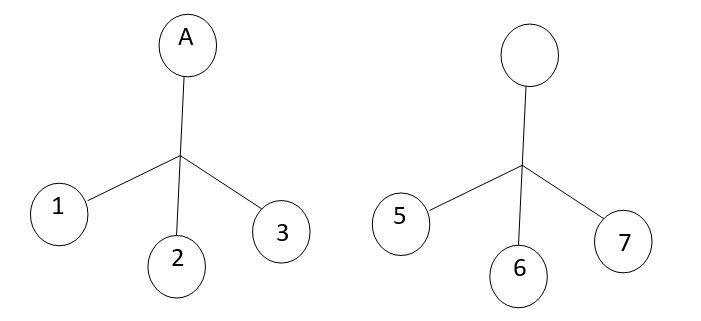
- Problem solving: it is the ability to think through a problem i.e. using logical thinking to find answers.
Example:-
Jeffrey has 2 apples, mummy gave him 2 more apples, and how many does he have altogether.Solution
00 + 00 = 0000
What teachers need to do for these children in early years is to provide the necessary building blocks for the entire academic carrier by introducing them to all simple math skills.IMPORTANCE OF MATH IN EARLY YEARS OF CHILDREN.
- Maths helps children to develop logical thinking and reasoning strategies in their everyday activities.
- It helps them to make sense of numbers, line, patterns and shapes for activities like cooking, reading, instructions, etc.
- It helps them to gain the necessary foundational skills for success in life
- It helps them to develop the skills for accessing the broader curriculum.
- Early maths helps them prepare for employment.
-
adminposted in News & Trends • read more

The national leader of the All Progressives Congress, Asiwaju Bola Ahmed Tinubu, has responded to the state of the nation address by the former vice president and presidential candidate of the Peoples Democratic party, Atiku Abubakar. He described most of the issues raised by Atiku as anchored on tissues of lies.The PDPs presidential candidate, former Vice President Atiku, recently made comments regarding suspension of CJN Onnoghen. Atikus release is entitled State of the nation address. I encourage everyone to read it. In its disregard for the truth and patent misrepresentations, it will go down in political history as a classic of self-incrimination. Atiku thinks the piece exalts him. Instead it evinces his penchant for wilful misstatement that make him unfit for the office he now seeks and has always coveted.
In the statement, he claims to have dedicated all his life to the defence of democracy. Those of you who know him, and even those who dont, know this is not true. If all of his life has been dedicated to support for democracy, then he is far too young to run for president; however, I must congratulate him for having somehow managed to find or begin a second life. This rebirth as a defender of democracy must have taken place only a few short hours ago.
His previous life of over seventy years was one of skirting democracy and of blatant impunity in attempting to enshrine reactionary government and installing an unjust political economy on the backs of the people.
In his address, he claims the nation has entered a difficult moment. To my dear and good friend Atiku, I say the difficulty is not so much with the moment but with your memory.
When you lorded over Nigeria in tandem with President Obasanjo, there were myriad court orders mandating that your government render to Lagos state the funds due it to improve the lives of its millions of inhabitants. Instead, you gladly and without dispute joined Obasanjo in utter disregard for these unambiguous legal verdicts. In so doing, you demeaned the rule of law. You also readily sacrificed the economic development and welfare of millions of innocent people in Lagos just to gain some illicit political advantage that proved to be fleeting and of no avail to you in the end.
You now speak of democracy and the need for executive restraint. But such verbal finery never crossed your lips or traversed your pen when you and Obasanjo improperly removed Senate Presidents more easily than a trendy cad exchanges a pair of shoes or changes the subject of his false affections. Your love for democracy is such that you were recently observed apologising to the PDP for not rigging the Lagos 2003 gubernatorial polls as you did the polls in the other Southwestern states.
When you lorded over Nigeria in tandem with President Obasanjo, there were myriad court orders mandating that your government render to Lagos state the funds due it to improve the lives of its millions of inhabitants. Instead, you gladly and without dispute joined Obasanjo in utter disregard for these unambiguous legal verdicts. In so doing, you demeaned the rule of law
Source: NAN