-
adminposted in News & Trends • read more
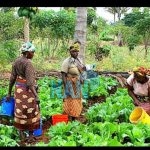
By Abujah RachealClimate change and environmental degradation represent a great threat to poverty reduction and to achieving the Sustainable Development Goals (SDGs).
Women bear the brunt of climate change but they are the worlds best bet in the fight for a clean, healthy and sustainable planet.
Given their traditional roles in agricultural production, and as the procurers of water, cooking fuel, and other household resources, women are not only well suited to find solutions to prevent further degradation and adapt to the changing climate, they have vested interest in doing so.
Across the globe, agriculture is recognised as an important engine of growth and poverty reduction.
The sector which grew by 3.58 per cent, contributed 26.84 per cent to the overall GDP in real term in the fourth quarter of 2021, lower than the contribution in the fourth quarter of 2020 and third quarter of 2021 which stood at 26.95 per cent and 29.94 per cent respectively.
According to the Food and Agriculture Organisation (FAO), the sector is under-performing in many countries in part because women, who are often a crucial resource in agriculture and the rural economy, face constraints that reduce their productivity.
Thus, this brief draws on the available empirical evidence on how climate change affects women in agriculture, to what degree and suggest solutions to mitigating the impacts on women farmers for effective productivity and food security.
The word climate change refers to the significant and long-lasting change in the Earths climate and weather pattern. Evidence indicates that climate change, such as rising sea levels, changing weather patterns, heat waves, drought, and other natural disasters, have particularly adversely impacted those who depend on agriculture for their livelihood and survival, especially women.
The productivity of crops and livestock is directly impacted by temperature, precipitation, water concentration, and extreme weather. In some of these contexts, women are mostly vulnerable to their effects primarily because they constitute the majority of the worlds poor and are more dependent for their livelihood on natural resources that are threatened by climate change.
According to the United Nations Population Fund (UNFPA), the poor are especially vulnerable to the effects of climate change, and the majority of the 1.5 billion people living on US$ 1 a day or less are women.
Meanwhile, women constitute 60 per cent of the agricultural labour force, 80 per cent of food producers and 50 per cent of animal husbandry and other related activities in Nigeria.
Despite this population, they have poor access to information on climate change mitigation, especially on good farming practices, seasonality, data on yields, soil health, and weather patterns.
Also, small holders women farmers are often confined to traditional tools, which in most cases prolong working hours and reduce productivity. This makes them more vulnerable to the impact of climate change.
The 2022 allocation to Womens Economic Empowerment (WEE) projects, however, recorded 101 per cent increase (N103 billion) compared to the 2021 (N51.3 billion) budget.
This implies that less than 1 per cent of the 2022 budget was allocated to WEE programmes in a year that the Nigerian President, Muhammadu Buhari, promised gender-responsive budgeting.
An analysis of the 2022 budget by the Development Research and Project Centre (DRPC), shows that the N103 billion allocated to WEE projects constitute 0.60 per cent of the budget.
The organisation defined the concept of WEE as the transformative process by which women and girls go from having limited power, voice, and choices at home and in the economy to having the skills, resources, and opportunities needed to access and compete equitably in markets and the agency to control and benefit from economic gains.
It identified four basic elements: Human Capital (education, skill and training), Financial Capital (loan, grants, saving), Social Capital (mentorship, network, etc.) and Physical Capital (land, machinery, etc.), which are parameters, the DRPC considers necessary preconditions for sustainable economic and social development.
The organisation said it uses the elements to categorise MDAs according to the degree of relationship between their mandate and WEE.
This led us to come up with 17 ministries whose mandates are core to womens economic empowerment. However, if the criterion is extended to ministries with women-specific (and women ) interventions and projects, the number increases to 24.
The analysis is guided by codes that were used to identify and track projects.
These are classified into two categories: (a) Women-core WEE projects with the keywords: female, girl, widow, ladies, and wives. (b) women others with the keywords: men and women, female and male, women and youth, women and people with disability, women and children, women and graduates, women and farmers, women and artisans, women and elderly, etc.
The data was analysed using a quantitative method, including comparative and trend analysis, DRPC said.
With an overview of the 2022 budget of Economic Growth and Sustainability, the 2022 budget is based on the oil price benchmark of US$ 62 per barrel with a daily oil production estimate of 1.88 million barrels.
The exchange rate was pegged at N410.15 per US Dollar while the Gross Domestic Product (GDP) growth is projected at 4.2 per cent at the end of the budget cycle.
The lawmakers approved a total expenditure of N17.1 trillion against the N16.3 trillion proposed by the president in October. Over N700 billion was added to the proposed appropriation which the president later signed but complained about.
A further breakdown of the DRPC analysis shows that the Ministry of Agricultural and Rural Development has the highest WEE funding with N33.18 billion. The new figure is a N19 billion (136 per cent) increase compared to 2021.
The Ministry of Women Affairs has the second-highest WEE allocation with N18.82 billion; Ministry of Education, N14.17 billion; Ministry of Labour and Employment, N10.47 billion; and the Ministry of Industry, Trade and Investment, N5.6 billion.
According to FAO, it is estimated that roughly 3040 per cent of all food produced is lost between harvest and consumption. In underdeveloped countries, about 40 per cent is lost on farm or during distribution due to poor storage and distribution.
On the other hand, the increasing role that rural women are playing in smallholder agriculture provides an important opportunity to positively impact food production and security in a changing climate.
Women Farmers said that they are experiencing changes in rainfall duration and intensity, more erratic rainfall patterns and more prolonged droughts.
As a result, they said it is increasingly difficult to plan and make agricultural decisions. They associate the emergence of new crop diseases and pests with climate change.
They also said that the changes in agricultural practices in villages are lower incomes, less household food availability, less access to resources for improved agricultural production and, on the positive side, more opportunities for training.
They said that they are looking at several strategies in order to cope with perceived changes in climate patterns.
According to them, the most frequent change they have seen is intercropping, followed by dry planting before the rains starts, earlier planting, adopting drought-resistant varieties and making adjustments in the timing of weeding and harvesting.
Mrs Maimuna Abdullahi, Health Economist, said that climate change affects everything from geopolitics to economies to migration, and shapes cities and life expectancies.
Abdullahi, who is also the Head of Monitoring and Evaluation, African Health Budget Network (AHBN), said if Nigeria wants to see its economy prosper, it must enact the domestic policy and structural reforms that would empower women and MSMEs.
Flexing what has been an underutilised muscle will enable us to realise new and measurable gains including a credible response to the concerns around growing wealth inequality, she said.
She said that the empowerment of Nigerian women in the economy and closing the gender gaps in the country are key to achieving the 2030 Agenda for SDGs.
She added that the SDGs Goal five is to achieve gender equality, and Goal eight, to promote full and productive employment and decent work for all.
Also Goal one on ending poverty, Goal two on food security, Goal three on ensuring health and Goal 10 on reducing inequalities.
More than budgetary allocation which is needed, is the use of what is allocated transparently with accountability, using what is allocated for intended purpose and networking with other players and stakeholders to avoid duplication of efforts, she said.
Dr Edwin Isotu Edeh, Public Health and Environment (PHE) Programme Coordinator, World Health Organisation (WHO) in Nigeria, said that climate change is driving health inequities and conflicts across the world, with women and girls facing increased vulnerabilities to all forms of gender-based violence, including conflict-related sexual violence and human trafficking.
Edeh said that it is, therefore, imperative to push for increased financing for programmes and women-focused initiatives, especially in rural communities and fragile settings to address climate concerns in the country.
Changes in ozone, greenhouse gases and climate change affect agricultural producers greatly because agriculture and fisheries depend on specific climate conditions.
Temperature changes can cause habitat ranges and crop planting dates to shift and droughts and floods due to climate change may hinder farming practices, he said.
According to Mrs Talibat Hussain, Senior advisor on gender and livelihood on the DRPC-PAWED project, as the compelling reality of climate change sets in, there is the need for government at all levels to provide irrigation facilities and equipment to women farmers to mitigate the impact of drought.
Hussain said that there is also the need to promote the use of alternative energy sources such as biofuel to curb the deforestation and the need for government to carry out gender-specific in-depth evidence-based research on climate change.
There is also the need for government at the national and sub-national levels to develop a framework that will ensure that gender-sensitive indicators are used during government climate change adaption and mitigation planning. This will integrate gender perspectives into governments climate change action plans.
There is the need for government to provide affordable modern technology for women farmers to adapt and mitigate the adverse effects of climate change, and also a need for the government at all levels to act on the recommendations of the Beijing Declaration, as follows
To increase training in technical, managerial, agricultural extension and marketing areas for women in agriculture, fisheries, industry and business, arts and crafts, to increase income-generating opportunities, womens participation in economic decision-making.
This in particular is through womens organisations at the grass-roots level, and their contribution to production, marketing, business, and science and technology, she said.
She said that there was need for government to redeem the pledged to reduce Nigeria greenhouse gas emissions by 20 per cent by 2030 in line with the Paris Agreement ratified in 2017.
According to her, effective implementation of the National Climate Change Policy for Nigeria 2021-2030 as well as the National Action Plan on Gender and Climate Change for Nigeria 2020-2025 will go a long way to mitigating the effect of climate change on women. (NAN) (www.nannews.ng)
(If used, please credit NAN and the writer)
Source: NAN News
-
adminposted in News & Trends • read more

By Cecilia OlogunagbaNigeria and Mauritius have retained their seats to serve for another four years in the UN Committee on Economic, Social and Cultural Rights (CESCR) from 2023 to 2026.
The UN correspondent of the News Agency of Nigeria (NAN) reports that the candidates from the two countries are re-elected to occupy the two remaining vacant positions for Africa in CESCR.
CESCR is the body of 18 independent experts that monitors implementation of the International Covenant on Economic, Social and Cultural Rights by its States Parties.
Egypt and Morocco were elected to occupy two seats of the four seats for African Group in 2021 and Egypt currently chairs the committee as a member of the Africa Group.
The remaining two were contested for on Wednesday at UN headquarters by Nigeria, Cameroun, Malawi and Mauritius.
Nigeria won at first ballot scoring 39 out of the 54 ballots of Member States.
Malawi lost out and Mauritius and Cameroun competed for the remaining one seat because they were both even on votes.
Mauritius clinched the second seat knocking out Cameroun. So, Nigeria and Mauritius retained their two seats.
The Nigerian candidate who won the seat, Amb. Peters Emuze told NAN in New York after the election that the committee was saddled with the responsibility to ensure that parties abide by treaties on economic, social and cultural rights.
Nigeria is a State Party to the covenant rights. Our duty is to ensure that State Parties adhere to the covenant rights by ensuring best practice. This is why periodically State Party reports are reviewed.
However, a number of questions emanating from the provisions of articles of the covenant are advanced to State parties in the process of its review.
During the review, a State is expected to provide answers to a number of questions or issues raised during the dialogue.
At the end an evaluation process is done and issues raised on those aspects of the covenant rights the State party is not fulfilling, he said.
According to him, it is imperative to know that the aims and objectives of CESCR are not to benefit a particular nation but humanity in general.
Emuze said the work of the committee would benefit humanity as a whole and the extent to which they enjoy economic, social and cultural rights in order to live a life of dignity.
The Nigerian diplomat, however, thanked the Permanent Representative of Nigeria to the UN, Prof. Tijjani Muhammad-Bande for the role he played in his re-election.
NAN recalls that Muhammad-Bande had on March 31 hosted a reception, seeking the support of Member States for Nigerias candidate for the seat.
Emuze, a retired career diplomat for 35 years, rose to become a Special Grade Director at the Ministry of Foreign Affairs, where he served as Head of the UN department in the ministry.
He had served in Nigerias diplomatic missions in Zambia, the Netherlands, Italy, Hong Kong and the Permanent Mission of Nigeria to the UN in Geneva and Switzerland.
He was President of UN Conference on Disarmament, and he is currently an Independent Expert of CESCR and member of the Committee drafting its General Comment on Sustainable Development and the International Covenant on Economic, Social and Cultural Rights. (NAN)
Source: NAN News
-
adminposted in News & Trends • read more
By Chijioke Okoronkwo
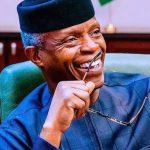
The Osinbajo for President Media Council says it has uncovered a fraudulent plan to malign the reputation of Vice President Yemi Osinbajo.
The News Agency of Nigeria (NAN) reports that Osinbajo is a presidential aspirant on the platform of the All Progressives Congress (APC).
The council, in a statement on Tuesday in Abuja, said the plot had been traced to a cell of smear campaigners led by a United States-based Nigerian and former Students Union President at the University of Lagos.
It said the plan was to use fake audio of faceless individuals with fictitious names to cast the vice president, who is a Christian, as a religious fanatic who discriminated against members of staff of other faith while he was Attorney-General in Lagos State during the Bola Tinubu administration.
The council stated that in the fake video, a woman is seen crying and making frantic allegations that she was discriminated against by the then Attorney-General because she was not allowed to wear the hijab to work.
As observed by someone who was in the same ministry at the time Osinbajo served as Attorney-General, no such incident ever occurred and this is just a malicious and wicked attempt to sully the sterling qualities of Prof. Osinbajo because of his presidential aspirations, the council said.
It added that Osinbajos Secretary as Attorney General and a Muslim, Alhaji Abdul Gafar Bakare, had testified before now that the then Lagos AGF did not only encourage me to further my education even at my relatively old age, he personally sponsored my BSc Accounting Programme.
The council also quoted Bakare as revealing that Osinbajo sponsored his foreign travel then.
It recalled that similar smear campaigns were unleashed against President Muhammadu Buhari, especially during the 2014-15 presidential campaigns, when it was alleged that he was virulently anti-Christian.
The council said the attempt, however, met with failure.
Even though a Christian, Pastor, Prof Osinbajo has always demonstrated himself to be a tolerant Nigerian who believes in the inter-faith harmony and freedom of worship as enshrined in the Nigerian 1989 Constitution as amended.
During his career as a university teacher, he taught Moslems and Christians alike in a convivial atmosphere.
He also had excellent working and private relationships with Muslim bosses over the decades, including Judge, Bola Ajibola, former Governor Tinubu and President Muhammadu Buhari.
Osinbajo remains a firm believer in Nigerias diversity and ardent proponent of Nigerian unity.
For these reasons, the Media Council feels the need to alert the general public to the odious campaign strategy of Osinbajo detractors and urge everyone to ignore same when released to the public, it said.
Source: NAN News
-
adminposted in News & Trends • read more
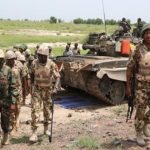
By Sumaila OgbajeTroops of the 34 Artillery Brigade, Nigerian Army, have neutralised a notorious gunman of the proscribed Indigenous People of Biafra (IPOB) and its armed affiliate, Eastern Security Network (ESN), in Imo.
Director, Army Public Relations, Brig.-Gen. Onyema Nwachukwu, stated in Abuja on Monday that the gunman was killed in an encounter at Ihioma Community in Orlu Local Government Area of the state.
Nwachukwu said troops encountered members of the separatist group who were firing sporadically at Banana Junction to enforce their illegal sit- at-home order on law-abiding citizens.
According to him, on sighting the troops, the IPOB/ESN criminals withdrew in a blue Toyota Highlander towards Ihioma community for reinforcement.
In the fire fight that ensued, one of the criminals was taken out, while others fled in disarray.
Troops are combing the general area in a follow-up operation to track down the fleeing dissidents.
Having suffered casualty and effectively denied freedom of action by the troops, the group have resorted to cheap propaganda to whip up public sentiments.
This, they have done by circulating a doctored video on the social media alleging troops complicity in their mindless atrocities.
This propaganda should be disregarded in its entirety, Nwachukwu stated. (NAN)(www.nannews.ng)
Source: NAN News
-
adminposted in News & Trends • read more
By Emmanuella AnokamPetroleum Technology Development Fund (PTDF) says it has trained 9,659 Nigerians on its overseas and in-country scholarships since its inception.
The Executive Secretary of PTDF, Dr Bello Gusau, in an interview with the News Agency of Nigeria (NAN) in Abuja on Monday, said that the beneficiaries had acquired first degrees as well as Master and Doctoral (PhD) degrees.
According to Gusau, PTDF, under its funds strategic direction, provides scholarships to Master and PhD degree applicants in the United Kingdom, Germany, France, China and Malaysia.
He said that the fund sponsored students/awardees in all major disciplines related to oil and gas and energy industries, including engineering, geosciences, environmental studies, computing and management.
This has enhanced the upward shift of local content contribution to the industry, facilitated knowledge transfer and driven the development of indigenous research and the growth of Nigerian companies, Gusau said.
He explained that going by the terms and conditions of the scholarships granted, successful scholars were mandated to return to Nigeria to add value to its economy.
The executive secretary stated that the impacts of the training on the nations economy, upon their return, had been nothing but positive, adding that to a large extent, the beneficiaries were more knowledgeable in their respective fields.
He said that it was the utmost desire of the fund that the knowledge acquired was transferred to others, both in the public and private sectors so as to develop specialised indigenous human capital expected to take over from the expatriates.
The PTDF boss said that the fund had committed hundreds of millions of dollars on sponsoring Nigerians over the years on various training programmes, while striving to achieve its mandate since its inception in 2002.
Information related to the funds spending, as detailed in our audited accounts, can be accessed by any interested party under the provisions of the Public Information Act and other extant regulations.
Gusau, while reacting to the impression that many students, after getting PTDF grants to study overseas, never returned home, thereby defeating the purpose of the investment, said that the beneficiaries were expected to return and contribute meaningfully to national development.
He added that the purpose of the scholarships was to train and equip Nigerians to participate in and contribute to the countrys oil and gas industry, either directly or indirectly, through the academia.
While we are not averse to our awardees remaining temporarily in their countries of study to gain relevant experiences, it is our expectation that PTDF awardees will eventually return to Nigeria and contribute their quota to national development.
Awardees, especially at PhD level, who are drawn from the academia and industry, are bonded to ensure that they return to the country and their places of employment after their studies, he said. (NAN)(www.nannews.ng)
Source: NAN News
-
adminposted in News & Trends • read more
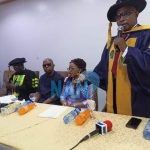
By Emmanuel AfonneThe Irsbaccom University, Parakou Benin Republic has awarded a Nigerian Pharmacist, Dr Napoleon Onyechi, with an honorary doctorate degree in public health management.
Onyechi who isthe Chief Executive Officer (CEO) and President of West Lake Pharmacy Inc, Florida, U.S.A,received the award in a ceremony organised in Abuja on Monday.
Chief Registrar of Irsbaccom University, Dr Tasie Daniels, said that the institution conferred the degree on Onyechi following his achievements in public health.
Daniels also said thatOnyechi had impacted on many lives especially in his home town Abagana inAnambra State.
He said that Onyechis nomination was thoroughly verified and authenticated and was found to have deserved the award.
Onyechi who spoke after receiving the award, expressed gratitude to Irsbaccom University for recognising his contributions to his community and attributed his success to God.
It is interesting that you have assessed my contributions in service to my community and humanity, and found it worthy of this award and recognition.
It is indeed interesting that I am honoured in an area where I got into by divine providence, and so, I hereby pledge that you will never regret this honour done to me, Onyechi said.
Earlier Dr Muntari Malumfashi, Chairman/CEO of a security consulting firm, described Onyechi as a philanthropist and a man bereft of religious and tribal sentiments.
He listed Onyechis philanthropic gestures to include provisions of borehole water to many parts of his town and community in Abagana, in Anambra
According to him, Onyechi has also provided portable drinking water in the communitys police station, St. Peters Anglican Church and Obiagu village square.
He also recently furnished the Abagana Secretariat, Malumfashi said.
Malumfashi further said that the philanthropist had assisted many Nigerians in starting businesses, paid tuition fees for numerous people and donated generously towards many charity events.
I am very glad that I nominated him for this award quietly and strictly confidential, until the university gave the approval. (NAN)(www.nannews.ng)
Source: NAN News
-
adminposted in News & Trends • read more
Bridget Ikyado
The General Superintendent of the Deeper Life Bible Church, Pastor William Kumuyi, has advised Nigerians to shun vices and embrace righteousness, which the event represents.
In the same vein Pastor Adonri Osaretin of the Redeemed Christian Church of God, Spring Forth Zonal Headquarters, Lugbe, Abuja has urged Nigerians not to give up as God has not finished with them.
Osaretin gave the advice at the RCCG Spring Forth Easter Music Concert titled; The Galilee Experience.
He explained that the Galilee experience was what happened to Apostle Peter, who had denied Jesus thrice during the Crucifixion.
He said that Apostle Peter returned to Galilee and he did not give up, he still waited on the Lord and returned to Him.
The cleric said that the truth is that the time for waiting is a period that your faith and patience are put to test.
Your reliance on the Almighty God must be total.
Things may happen in the country as you dont want, or expect but dont give up.
He acknowledged that it was good to give God thanks for all the good things we have received.
Osaretin urged Christians to believe in God and all His deeds with all their faith firmly in place, adding, we are bound to have greater testimonies this Easter and beyond.
The News Agency of Nigeria (NAN) reports that various parishes made songs presentations as various Bible verses were read. (NAN)(www.nannews.ng)
Source: NAN News
-
adminposted in News & Trends • read more
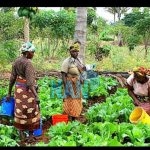
By Abujah RachealClimate change and environmental degradation represent a great threat to poverty reduction and to achieving the Sustainable Development Goals (SDGs).
Women bear the brunt of climate change but they are the worlds best bet in the fight for a clean, healthy and sustainable planet.
Given their traditional roles in agricultural production, and as the procurers of water, cooking fuel, and other household resources, women are not only well suited to find solutions to prevent further degradation and adapt to the changing climate, they have vested interest in doing so.
Across the globe, agriculture is recognised as an important engine of growth and poverty reduction.
The sector which grew by 3.58 per cent, contributed 26.84 per cent to the overall GDP in real term in the fourth quarter of 2021, lower than the contribution in the fourth quarter of 2020 and third quarter of 2021 which stood at 26.95 per cent and 29.94 per cent respectively.
According to the Food and Agriculture Organisation (FAO), the sector is under-performing in many countries in part because women, who are often a crucial resource in agriculture and the rural economy, face constraints that reduce their productivity.
Thus, this brief draws on the available empirical evidence on how climate change affects women in agriculture, to what degree and suggest solutions to mitigating the impacts on women farmers for effective productivity and food security.
The word climate change refers to the significant and long-lasting change in the Earths climate and weather pattern. Evidence indicates that climate change, such as rising sea levels, changing weather patterns, heat waves, drought, and other natural disasters, have particularly adversely impacted those who depend on agriculture for their livelihood and survival, especially women.
The productivity of crops and livestock is directly impacted by temperature, precipitation, water concentration, and extreme weather. In some of these contexts, women are mostly vulnerable to their effects primarily because they constitute the majority of the worlds poor and are more dependent for their livelihood on natural resources that are threatened by climate change.
According to the United Nations Population Fund (UNFPA), the poor are especially vulnerable to the effects of climate change, and the majority of the 1.5 billion people living on US$ 1 a day or less are women.
Meanwhile, women constitute 60 per cent of the agricultural labour force, 80 per cent of food producers and 50 per cent of animal husbandry and other related activities in Nigeria.
Despite this population, they have poor access to information on climate change mitigation, especially on good farming practices, seasonality, data on yields, soil health, and weather patterns.
Also, small holders women farmers are often confined to traditional tools, which in most cases prolong working hours and reduce productivity. This makes them more vulnerable to the impact of climate change.
The 2022 allocation to Womens Economic Empowerment (WEE) projects, however, recorded 101 per cent increase (N103 billion) compared to the 2021 (N51.3 billion) budget.
This implies that less than 1 per cent of the 2022 budget was allocated to WEE programmes in a year that the Nigerian President, Muhammadu Buhari, promised gender-responsive budgeting.
An analysis of the 2022 budget by the Development Research and Project Centre (DRPC), shows that the N103 billion allocated to WEE projects constitute 0.60 per cent of the budget.
The organisation defined the concept of WEE as the transformative process by which women and girls go from having limited power, voice, and choices at home and in the economy to having the skills, resources, and opportunities needed to access and compete equitably in markets and the agency to control and benefit from economic gains.
It identified four basic elements: Human Capital (education, skill and training), Financial Capital (loan, grants, saving), Social Capital (mentorship, network, etc.) and Physical Capital (land, machinery, etc.), which are parameters, the DRPC considers necessary preconditions for sustainable economic and social development.
The organisation said it uses the elements to categorise MDAs according to the degree of relationship between their mandate and WEE.
This led us to come up with 17 ministries whose mandates are core to womens economic empowerment. However, if the criterion is extended to ministries with women-specific (and women ) interventions and projects, the number increases to 24.
The analysis is guided by codes that were used to identify and track projects.
These are classified into two categories: (a) Women-core WEE projects with the keywords: female, girl, widow, ladies, and wives. (b) women others with the keywords: men and women, female and male, women and youth, women and people with disability, women and children, women and graduates, women and farmers, women and artisans, women and elderly, etc.
The data was analysed using a quantitative method, including comparative and trend analysis, DRPC said.
With an overview of the 2022 budget of Economic Growth and Sustainability, the 2022 budget is based on the oil price benchmark of US$ 62 per barrel with a daily oil production estimate of 1.88 million barrels.
The exchange rate was pegged at N410.15 per US Dollar while the Gross Domestic Product (GDP) growth is projected at 4.2 per cent at the end of the budget cycle.
The lawmakers approved a total expenditure of N17.1 trillion against the N16.3 trillion proposed by the president in October. Over N700 billion was added to the proposed appropriation which the president later signed but complained about.
A further breakdown of the DRPC analysis shows that the Ministry of Agricultural and Rural Development has the highest WEE funding with N33.18 billion. The new figure is a N19 billion (136 per cent) increase compared to 2021.
The Ministry of Women Affairs has the second-highest WEE allocation with N18.82 billion; Ministry of Education, N14.17 billion; Ministry of Labour and Employment, N10.47 billion; and the Ministry of Industry, Trade and Investment, N5.6 billion.
According to FAO, it is estimated that roughly 3040 per cent of all food produced is lost between harvest and consumption. In underdeveloped countries, about 40 per cent is lost on farm or during distribution due to poor storage and distribution.
On the other hand, the increasing role that rural women are playing in smallholder agriculture provides an important opportunity to positively impact food production and security in a changing climate.
Women Farmers said that they are experiencing changes in rainfall duration and intensity, more erratic rainfall patterns and more prolonged droughts.
As a result, they said it is increasingly difficult to plan and make agricultural decisions. They associate the emergence of new crop diseases and pests with climate change.
They also said that the changes in agricultural practices in villages are lower incomes, less household food availability, less access to resources for improved agricultural production and, on the positive side, more opportunities for training.
They said that they are looking at several strategies in order to cope with perceived changes in climate patterns.
According to them, the most frequent change they have seen is intercropping, followed by dry planting before the rains starts, earlier planting, adopting drought-resistant varieties and making adjustments in the timing of weeding and harvesting.
Mrs Maimuna Abdullahi, Health Economist, said that climate change affects everything from geopolitics to economies to migration, and shapes cities and life expectancies.
Abdullahi, who is also the Head of Monitoring and Evaluation, African Health Budget Network (AHBN), said if Nigeria wants to see its economy prosper, it must enact the domestic policy and structural reforms that would empower women and MSMEs.
Flexing what has been an underutilised muscle will enable us to realise new and measurable gains including a credible response to the concerns around growing wealth inequality, she said.
She said that the empowerment of Nigerian women in the economy and closing the gender gaps in the country are key to achieving the 2030 Agenda for SDGs.
She added that the SDGs Goal five is to achieve gender equality, and Goal eight, to promote full and productive employment and decent work for all.
Also Goal one on ending poverty, Goal two on food security, Goal three on ensuring health and Goal 10 on reducing inequalities.
More than budgetary allocation which is needed, is the use of what is allocated transparently with accountability, using what is allocated for intended purpose and networking with other players and stakeholders to avoid duplication of efforts, she said.
Dr Edwin Isotu Edeh, Public Health and Environment (PHE) Programme Coordinator, World Health Organisation (WHO) in Nigeria, said that climate change is driving health inequities and conflicts across the world, with women and girls facing increased vulnerabilities to all forms of gender-based violence, including conflict-related sexual violence and human trafficking.
Edeh said that it is, therefore, imperative to push for increased financing for programmes and women-focused initiatives, especially in rural communities and fragile settings to address climate concerns in the country.
Changes in ozone, greenhouse gases and climate change affect agricultural producers greatly because agriculture and fisheries depend on specific climate conditions.
Temperature changes can cause habitat ranges and crop planting dates to shift and droughts and floods due to climate change may hinder farming practices, he said.
According to Mrs Talibat Hussain, Senior advisor on gender and livelihood on the DRPC-PAWED project, as the compelling reality of climate change sets in, there is the need for government at all levels to provide irrigation facilities and equipment to women farmers to mitigate the impact of drought.
Hussain said that there is also the need to promote the use of alternative energy sources such as biofuel to curb the deforestation and the need for government to carry out gender-specific in-depth evidence-based research on climate change.
There is also the need for government at the national and sub-national levels to develop a framework that will ensure that gender-sensitive indicators are used during government climate change adaption and mitigation planning. This will integrate gender perspectives into governments climate change action plans.
There is the need for government to provide affordable modern technology for women farmers to adapt and mitigate the adverse effects of climate change, and also a need for the government at all levels to act on the recommendations of the Beijing Declaration, as follows
To increase training in technical, managerial, agricultural extension and marketing areas for women in agriculture, fisheries, industry and business, arts and crafts, to increase income-generating opportunities, womens participation in economic decision-making.
This in particular is through womens organisations at the grass-roots level, and their contribution to production, marketing, business, and science and technology, she said.
She said that there was need for government to redeem the pledged to reduce Nigeria greenhouse gas emissions by 20 per cent by 2030 in line with the Paris Agreement ratified in 2017.
According to her, effective implementation of the National Climate Change Policy for Nigeria 2021-2030 as well as the National Action Plan on Gender and Climate Change for Nigeria 2020-2025 will go a long way to mitigating the effect of climate change on women. (NAN) (www.nannews.ng)
(If used, please credit NAN and the writer)
Source: NAN News
-
adminposted in News & Trends • read more
By Habibu HarisuThe Bishop of Sokoto Diocese, Mathew Kukah, has lauded President Muhammadu Buhari for accepting the report of the Committee on the Prerogative of Mercy and granting pardon to about 150 Nigerians serving various jail terms.
Kukah made the commendation in his Easter message delivered at a mass service on Sunday, in Sokoto.
He said another challenge was to immediately free all innocent Nigerians held captive and whose only crime was that they were living in Nigeria.
With the news of the purchase of new sophisticated weapons, we hoped that the President and the military would quickly roll out a strategy for rooting out this cancer that had afflicted our country.
The general feeling was that the military had the capacity to end this tragedy. In reality, the military cannot fire beyond the radar set by their Commander-in-Chief.
If the President can end this tragedy, he would immediately get the support of all citizens and hopefully leave office with his head held high Kukah said.
He lamented the increased cases of kidnapping, banditry and other criminality and stressed the need for collective efforts against the menace.
He advised the President to concede that it was within his powers to decide how we are going to end the war that had engulfed and was tearing down our nation.
It seems that the federal government had shown far greater commitment to integrating so called repentant terrorists than getting our children back from kidnappers or keeping our universities open.
Earlier last month, Operation Safe Corridor announced that it had graduated 599 members of various terrorist groups who had acquired new skills and were now ready to be integrated into society.
The total comes to over a thousand now. It is plausible to note that the programme involved psychosocial support, rehabilitation, vocational training, skill acquisition and start-ups.
The larger issue is that their various communities had expressed their reluctance to receive their erring sons back.
As a priest, I cannot be against a repentant sinner or criminals changing their ways. After all, the doors of forgiveness must always remain open.
However, in this case, Nigerians have very little information as to the entire rehabilitation processes He noted.
The Bishop urged religious leaders to strive toward recovery of cordial living among community members and deploying their moral authority as well as avoid falling victim to the schemes of politicians and their material enticements.
The values of Interfaith dialogue had come under severe strain and pressure with extremists from both sides of our faiths denigrating the idea of dialogue with their counterparts of other faiths.
Ignorance and miseducation had combined with prejudice to create the falsehood that somehow, one religion is superior to the others.
With so many ill-equipped fraudsters posing as religious leaders, there is an obsession with defaming the others and widening our differences Kukah said.
He explained that the greatest challenge now was how to begin a process of reconstructing our nation hoping that we can hang on and survive the 2023 elections.
The real challenge before us now is to look beyond politics and face the challenge of forming character and faith in our country.
Here, leaders of religion, Christianity and Islam, need to truthfully face the role of religion in the survival of our country.
The Nigerian Constitution has very clearly delineated the fine boundaries between religion and politics. Yet many politicians continue to behave as if they are presiding over both the political and the spiritual realms in their states rather than governing in a democracy the Bishop added.
The Bishop urged Nigerians to remain steadfast in prayers towards overcoming the challenges.
He stressed that in the 2023 elections there need for increased vigilance to elect credible persons that would work toward ensuring a better country.
The News Agency of Nigeria (NAN) reports that Kukah relayed the virtues of Easter in Christ and enjoined adherents to practice with a good heart and obedience. (NAN) (www.nannews.ng)
Source: NAN News
-
adminposted in News & Trends • read more
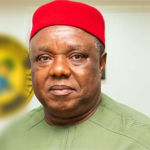
By Obike Ukoh, News Agency of Nigeria (NAN)The leadership of the Revenue Mobilisation, Allocation and Fiscal Commission (RMAFC), inaugurated on June 27, 2020 by President Muhammadu Buhari, on Thursday April 8, submitted the proposed new revenue sharing formula.
This was after a painstaking effort by the commission to gather and synthesise inputs from stakeholders most of which moved for the shedding of weight by the federal government and more allocations to the states and local governments.
The president when he inaugurated the board stressed that it should not compromise the constitutional mandate of the commission for any reason.
The RMAFC was created by law to monitor the accumulation and disbursement of income from the federation account.
The commission is also to advise federal, states and local governments on tax efficiency and the methods by which their revenues should be increased, among others.
The current revenue sharing formula is as follows: federal government 52.68 per cent, states 26.72 per cent, local governments 20.60 per cent, and 13 per cent going to oil producing states. It came into force in 1992.
The proposal by the commission is for the federal government to have 45.17 per cent, state governments, 29.79 per cent and 21.04 per cent for the local governments.
After Buhari received the report from Chief Elias Mbam, the Chairman of RMAFC, he said he would await the final outcome of the constitutional review process before presenting the report of the review of the vertical revenue allocation formula to the National Assembly as a bill for enactment.
Ordinarily, I would have gone ahead to table this report before the National Assembly as a bill for enactment.
However, since the review of the vertical revenue allocation formula is a function of the roles and responsibilities of the different tiers of government, I will await the final outcome of the constitutional review process, especially as some of the proposed amendments would have a bearing on the recommendations contained herein, he said.
Buhari assured that the report will be subjected to internal review and approval processes, while awaiting finalisation of the efforts by the National Assembly.
According to the president, this strategy, rather than issuing an Executive Modification order, as was done in 1992, is more in line with entrenching democratic tenets.
He thanked Nigerians, especially the states and local governments, for making their inputs through the broad stakeholder engagement processes that produced the report.
I am aware that the present revenue allocation formula has not been reviewed since the last exercise carried out in 1992.
Considering the changing dynamics of our political economy, such as privatisation, deregulation, funding arrangement of primary education, primary health care and the growing clamour for decentralisation, among others, it is necessary that we take another look at our revenue sharing formula, especially the vertical aspects that relate to the tiers of government.
This becomes more compelling as we need to reduce our infrastructural deficit, make more resources available for tackling insecurity, confront climate change and its associated global warming and make life more meaningful for our rapid growing population, he said.
According to the president, as an advocate for grassroots development, he has always remained committed to ensuring that all tiers of government are treated fairly, equally and justly in the sharing of national resources.
I want to let you all know that I have keenly followed most of the discussions held in the geo-political consultative process and one thing that struck me clearly was the agreement that a review of our vertical revenue formula cannot and should not be an emotional or sentimental discussion and it cannot be done arbitrarily.
All over the world, revenue and resource allocation have always been a function of the level of responsibilities attached to the different components or tiers of government.
I am, therefore, happy to note that the discussions were held along these lines and rested squarely on roles and responsibilities as spelt out in the 1999 Constitution (as amended).
According to the president, the proposal seeks a 3.33 per cent reduction in the current Federal Government allocation and on the other hand an increase of 3.07 per cent and .44 per cent for the states and local governments.
He added that with regard to Special Funds, the report proposed an increase of .2 per cent for the Federal Capital Territory (FCT) and a decrease of .38 per cent for Development of Natural Resources.
Mbam, who also spoke, said the leading philosophy behind the proposed review was guided by the need for distributive justice, equity and fairness as enshrined in relevant sections of the 1999 Constitution (as amended).
He said that the principles took into cognisance the indivisibility of the country, public opinion and weighted constitutional responsibilities and functions of the three levels of government.
He reiterated that the proposed vertical revenue allocation formula suggested 45.17 per cent for the Federal Government, 29.79 per cent for state governments and 21.04 per cent for the local governments.
Under Special Funds, he said the commission recommended 1.0 per cent for Ecology, 0.5 per cent for Stabilisation, 1.3 per cent for Development of Natural Resources and 1.2 per cent for the FCT.
In arriving at the new vertical revenue allocation formula, Mbam told the president the commission had wide consultation with major stakeholders, public hearing in all the geo-political zones and administered questionnaire.
He said the commission also studied some other federations with similar fiscal arrangements like Nigeria to draw useful lessons from their experiences.
While explaining the major reasons for the exercise, Mbam stated that since the last review was conducted, the political structure of the country had changed with the creation of six additional states in 1996, which brought the number of states to 36 and local government councils to 774 from 589.
There have been considerable changes arising from the policy reforms that altered the relative share of responsibilities of the various tiers of government such as deregulation, privatisation and the lingering controversies over funding of primary education, primary healthcare.
Mbam added that inadequate and decaying infrastructure, as well as heightened widespread internal security challenges across the country also necessitated the exercise, among others.
It was in line with President Buharis warning that the RMAFC should not compromise its mandate that the commission held stakeholders meeting in all the geo-political zones and the FCT.
At the various meeting, Mbam reiterated that the commission would work to increase revenues shared by federal, state and local governments.
We need to increase the sources of revenue for the federation account; in other words, we will focus more of our efforts on how to increase the size of the pie to be allotted to the three levels of government, instead of struggling to share a shrinking pie.
One of our responsibilities is to review the income distribution formula and I say that we will fulfill our mandate.
The problem is not just adding and subtracting; it arises from a process; everything you get is derived from a process; more responsibilities, more money, Mbam added.
Mbam, when he spoke at the South-West stakeholders meeting held in Lagos reiterated that the new revenue sharing formula must follow a process.
He said: If it is confirmed that the Federal Government has a high responsibility, it will get the equivalent of that responsibility as an allowance.
If it is the local government that has more responsibilities, it will be done in the same way. Our position is that the more responsible a level, the more money it makes.
Gov. Babajide Sanwo-Olu of Lagos State, who spoke at the public hearing, said the review would allow states to meet their growing responsibilities.
The governor said the current formula for sharing revenue between levels of government, which became operational about 29 years ago, was long overdue for change.
Nigerian fiscal federalism should be adjusted to develop more spending responsibilities with appropriate allocation of revenues to lower levels of government.
That will enable the Federal Government to focus on issues of national interest, like security and defence, among others.
The Lagos State government proposed a revenue distribution formula: Federal Government: 34 per cent, states 42 per cent, local government councils, 23 per cent and Lagos State (special status, 1 per cent).
Gov. Nyesom Wike of Rivers who spoke at the South-South public hearing held in Port Harcourt aligned with his Lagos State counterpart.
He said that the current revenue allocation formula, a result of the military decree as far back as 1992, has passed 22 years of democratic dispensation, obviously could not meet the current realities of the nation.
He noted that the Federal Government was overloaded and overburdened and could not effectively put in place a federal system as envisioned.
It is only fair that allocations to the Federal Government be reduced.
In this way, most of the responsibilities that belong to the Federal Government will now be taken away and given to the states, he said.
Participants at the South-East Public Hearing held in Owerri also called for greater allocation of revenues to states.
Gov. Hope Uzodimma of Imo reiterated that the current income allocation formula which was last revised in 1992 was obsolete, given the realities of the economy and developments following the last review.
On his part, Commissioner of Finance in Ebonyi, Mr Orlando Nweze, decried the imbalance in the countrys income-sharing formula.
Nweze said the revenue allocation should be revised to 40 per cent for the Federal Government, 35 per cent for state governments and 25 per cent for local government councils.
The consensus during the public hearing across the country was the imperative of review. The proposed shedding of Federal Governments share by 3.33 per cent is a demonstration of the independence of the commission.
The final verdict on new revenue sharing formula is now in the court of the legislature. The national legislators are also expected to be fair to all tiers of government. (NANFeatures)
Source: NAN News
-
adminposted in News & Trends • read more
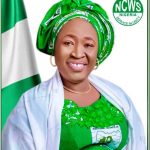
By Dorcas JonahThe National Council for Women Societies (NCWS) has called on Nigerians to intensify prayers for the countrys progress as Christians celebrate Easter.
The NCWS National President, Hajiya Lami Lau, made the call in Abuja in her Easter message to Christians.
According to her, as the world celebrates the death and resurrection of Jesus Christ, the NCWS rejoices with Christians on the occasion.
The period symbolises freedom from all forms of challenge and victory over death; hence, the need for Nigerian women to continue in prayers for God to tackle challenges facing the country.
We need to use this celebration of Easter to pray to God.
I urge you to use the occasion of Easter celebration to promote peace, unity and progress, and imbibe the teachings of Jesus Christ in conduct and relationship with others, she said.
Lau said that the period called for sober reflection due to attacks on some communities.
According to her, Nigeria needs divine intervention.
As elections approach, we call on governments to tackle security challenges as we urge all Nigerians to continue in prayers for the nation.
This is what we can do to draw Gods attention to Nigeria, she said.(NAN) (www.nannews.ng)
Source: NAN News
-
adminposted in News & Trends • read more

Aderonke Ojo/ Georgina AdegbeiBayelsa state team at the weekend in Abuja led the first edition of National Para Sports Games with 93 medals.
The News Agency of Nigeria (NAN) reports Bayelsa won 31 gold, silver 30 and 32 bronze to clinch the premier position with 93 medals in the maiden National para Sports Games, which ended at the Moshood Abiola National Stadium on Abuja.
Ismail Abubakar, permanent secretary Federal Ministry of Youth and Sports Development who represented the minister at the closing ceremony, commended all participating states for their cooperation in the seven days event.
I want to thank the Almighty God for the huge success recorded in the games and also wish to express my profound gratitude to all the state governments that participated in the first edition.
I want to thank all the team officials and athletes, sponsors for their participation, he said.
Peter Nelson , the Chairman of Local Organising Committee (LOC), said the next edition would be more interesting than the first edition.
Para athletes had been making the nation proud in international tournaments for the Federal Government to show them what they intended for them in the maiden show.
The second edition of the National Para Games is expected to take place next year, and there after, every two years.
This was put in place to lessen the burden on States in having to fund athletes for both the National Para Games and National Sports Festival in the same year, he said
NAN reports the final medals table thus;
States Medals Position
Gold sliver Bronze total
Bayelsa 31 30 32 93 1st
Oyo 24 15 21 60 2nd
Kano 21 13 8 42 3rd
Edo 17 5 1 23 4th
Ondo 15 11 3 29 5th
NAN report that 21 states participated in the maiden edition of Para Sports Games which stated on April 9 and ended on Friday. (NAN)(www.nannews.ng)
Source: NAN News
-
adminposted in News & Trends • read more
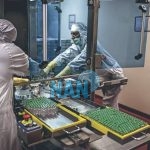
By Oluwafunke IsholaMedical laboratory and research scientists from West Africa are set to chart a course that will assist in building local capacity for the manufacturing of vaccines and other medical products in the sub-region.
This was disclosed in a statement by Ms Efam Dovi, Public Relations and Outreach Lead, CelebrateLAB Conference, on Sunday in Lagos.
Dovi noted that the outbreak of COVID-19 disease saw West Africa, and indeed Africa, suffer inequity in access to masks, diagnostic devices, testing kits and other medical supplies, as well as vaccines.
While health inequity against the continent is not new, the COVID-19 pandemic reopened the conversation on ensuring the continents self-sufficiency in healthcare products and solutions through local manufacturing in order to expand access to healthcare.
This effort will require wider collaboration across the region to ensure that the needed expertise and resources are available to create the right environment for product manufacturing.
Critical among these initiatives will be building professional expertise in clinical research and health diagnostics, to ensure that medical products manufactured in Africa are suitable for Africans, she said.
Dovi said that medical laboratory and research scientists from West Africa would converge at the CelebrateLAB West Africa Conference in Accra, Ghana, from April 21 to 22.
CelebrateLAB Conference is an annual meeting of medical laboratory and research professionals, regulators, policy makers, academia and medical product manufacturers and suppliers.
The first conference took place in Liberia in 2014, following the outbreak of the Ebola virus disease that claimed several lives and revealed major gaps in the regions healthcare systems, especially in the area of disease surveillance and diagnostics.
Dovi added that the conference would proffer solutions to enhance laboratory capacity in the area of human resources, clinical research, vaccines and other medical products manufacturing in West Africa.
According to her, the theme of the conference is, Ensuring Diagnostic Capability and Vaccine Sufficiency as Panacea to Combating Infectious Diseases in West Africa.
She added that Mrs Ellen Johnson-Sirleaf, former President of Liberia, would deliver the keynote address, with emphasis on strengthening West Africa health systems through lessons learnt from the current COVID-19 pandemic and previous disease outbreaks.
Other speakers at the event include Ghanas Minister of Health, Mr Kwaku Agyeman-Manu; Prof. James Damen, National President, Association of Medical Laboratory Scientists of Nigeria; among others.
The conference is organised by Africabio Enterprises Inc., in collaboration with the Ghana Association of Medical Laboratory Scientists and Ghana Health Service with support from the Association of Medical Laboratory Scientists of Nigeria. (NAN)
Source: NAN News
-
adminposted in News & Trends • read more
By Sumaila OgbajeTroops of the Multinational Joint task Force (MNJTF), have eliminated no fewer than 100 Boko Haram/Islamic State of West Africa Province (ISWAP) terrorists,including 10 key commanders in Lake Chad region.
The Chief of Military Public Information for MNJTF, Col. Muhammad Dole, in a statement on Sunday, said the forces successfully hit the enclaves in a well coordinated land and air offensives.
Dole said the offensives were conducted under Operation Lake Sanity, joint operations involving the MNJTF troops from Nigeria, Niger and Cameroon and troops from Operation Hadin Kai (OPHK- Nigeria).
He said the operation also included the combined Air Task Forces of MNJTF and OPHK other security agencies and the Civilian Joint Taskforce (CJTF).
Dole said the troops raided the insurgents dens in Zanari, Arina Woje, which served as major fabrication workshops, and several other locations around the Islands from different corridors in the last one week.
According to him, the terrorists were neutralised following intelligence -driven lethal air strikes in the Lake Chad islands by the combined air taskforces.
Some of the commanders include Abubakar Dan Buduma, Abubakar Shuwa, Abu Ali and Abu Jubrilla among others.
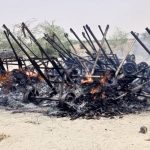
Relatedly, sophisticated weapons of different calibres including a 105 mm artillery piece, several canoes/boats, motorcycles, bicycles, several Improvised Explosive Devices (IED) making factories and bunkers were destroyed.
In the course of the operation, significant number of innocent citizens, mostly women and children held captive by the criminals, were rescued.
Large quantities of food stuff (grains), fuel dumps, illicit drugs, terrorists uniforms and other house holds materials were recovered and destroyed immediately, he said.
MNJTF spokesman said that logistics and foodstuffs, including several bags of maize and beans, motorcycles, some immobilised military and civil vehicles, were discovered at Fedondiya settlement in a clearance operation.
He said that equipment,like grinding machines, vehicle fabrication tools and military uniforms ,were also destroyed and set ablaze in the location.
According to him, it was obviously a big Boko Haram /ISWAP camp having another large IED making and vehicle borne IED making factory that was cleverly camouflaged to prevent detection from the air.
Dole said the MNJTF troops on clearance patrols in Kimeguna near the Lake Chad in Niger Republic accosted terrorists logisticians ferrying 457 bags of fish in several carts.
He said the bags of fish were immediately destroyed in line with the MNJTF standing operating procedure, adding that the suspects were currently being profiled.
According to him, the obviously frustrated BHT/ISWAP criminals have resorted to indiscriminate laying of IEDs and use of vehicle borne explosive devices attacks.
He said the troops had encountered four of such attacks, saying that 18 soldiers including an officer had been wounded in these attacks.
Dole added that the wounded had been evacuated to various military medical facilities for treatment ,while three soldiers and one member of the CJTF paid the supreme sacrifice.
According to Dole,the Force Commander (FC) MNJTF, Maj.-Gen. Abdul-Khalifah Ibrahim, commended his deputy, sector commanders, officers and men of MNJTF and other operations, including the CJTF for their courage and commitment.
Dole said Ibrahim paid tribute to the troops who paid the supreme sacrifice and prayed for quick recovery of the wounded heroes.
Ibrahim urged the troops to be resolute and bold to finally eradicate the criminals from the Lake Chad areas and promised continuous logistics support to the troops.
The force commander advised the terrorists to lay down their arms like thousands of their colleagues who had done so instead of pursuing a futile and failed cause.
He also appealed to communities in the areas of operation and beyond to always support security forces by passing credible information on the terrorists quickly to bring an end to the scourge of terrorism in the area. (NAN) (www.nannews.ng)
Source: NAN News
-
adminposted in News & Trends • read more
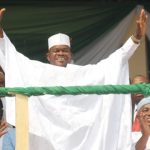
By Emmanuel OloniruhaDr Hafsat Abiola-Costello, the Director-General, Hope 23, Yahaya Bello Presidential Campaign Organisation, says the masses will be the godfather of Gov. Yahaya Bello of Kogi , when he is elected president of Nigeria.
Abiola-Costello stated this while addressing a World Press Conference in Abuja on Sunday on the candidacy of Bello for the 2023 presidency.
She said the fact that Bello was independent and never accepted to have a godfather was a big plus for him, noting that the Nigerian people (masses) would be his godfathers once elected President.
I am leading this campaign because I believe in the candidate.
I think that the Nigerian people deserves to listen to Bello. He is exceptional, he has certain qualities even beyond anything that I have said.
One of the major qualities is that this is a person that is willing to be independent, a person that is willing not to have a godfather.
The people that will be the godfathers of Bello when he becomes president are the people of Nigeria, and it is about time that we have that, Abiola-Costello said.
Reacting to the possibility of Bello emerging APC candidate considering perceived heavyweights in the likes of Asiwaju Bola Tinubu, Vice President Yemi Osinbajo vying for the ticket, Abiola-Costello said that Bello would defeat other aspirants in the forth-coming primaries of the party in a free and fair contest.
The D-G, however, said though it was clear that Bello had resisted the idea of godfathers for long, he would carry the older politicians along when be becomes the president of Nigeria.
It is good that you said heavyweights. But he will win in a free and fair contest.
His chances are actually the best of the group because in a competition, it is about the voters and 60 per cent of Nigerians are under 30.I am his Director-General because I believe in him.
There have been a ground swell in our country by young people to play a bigger role in our political affairs.
You do know about the not too young to run campaign that has been going on for a long time, which led to the President signing the Not too young to run Bill into law.
Nigerian young people are ready to take more responsibilities in the governing of our affairs and this is the young peoples candidate.
But we really value and appreciate the heavyweights and those you call tested politicians, and they can be sure that if, God willing, we have president Yahaya Bello come 2023, he will carry them along, he will be consulting them and seeking their counsel.
He will be wanting to build on their networks and resources because the country belongs to all of us, it belongs to the tested politicians and most especially, the young people of Nigeria, the campaign D-G said.
On zoning, she said that the APC as of today had thrown open the contest, not restricting it to any zone, noting that everyone was eligible to contest regardless of the zone.
At this time, the APC has said that all aspirants are free to contest. They have given no restrictions by zone and we are guided by that and our aspirant has the freedom to put his ambition forward.
I can assure you that his aspiration has been done with a lot of consultations from within the party to the highest level and there have been no reservations to his aspirationThe support across Nigeria is overwhelming, she noted.
Abiola-Costello described . Bello as a unifier which her late father represented, adding that when he emerged, he would also tackle issues of poverty, insecurity and other challenges facing the country.
I see in Bello that he is a unifier in Nigeria. We need a Nigerian leader that is a unifier that believe in all Nigerian people and will fight for all Nigerian people.
MKO was such a man. This Gov. Bello is also such a person. In his own cabinet in Kogi , all six geopolitical zones are represented.
This is also somebody that fights for young people. His government has 95 per cent of young people in his cabinet.
He doesnt just use them for campaign, he put them in government with opportunity to have dignity, she said.(NAN) (www.nannews.ng)
Source: NAN News
-
adminposted in News & Trends • read more
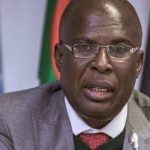
By Edith Ike-Eboh and Emmanuel AfonneThe Nigerian National Petroleum Company Limited (NNPC Ltd.) started its activities for the week with a tour of the Port Harcourt Refinery, to ascertain the level of ongoing rehabilitation of the plant.
The Minister of State for Petroleum Resources, Chief Timipre Sylva, and members of Board of Directors, NNPC Ltd. who were also on the tour expressed satisfaction with the progress of work at the refinery site in, Rivers State.
Sylva who was elated at the level of progress recorded on the project, said he was particularly impressed with the high sense of time management exhibited by the project team.
He said that the Federal Government was interested in the prompt delivery of the project to achieve energy security for Nigeria.
Speaking on behalf of the Board members, the Chairman of the NNPC Board, Sen. Margery Chuba-Okadigbo, pointed out that the rehabilitation was aimed at boosting in-country refining capacity and cost reduction.
Chuba-Okadigbo said that the rehabilitation also signals the companys intention to exit from petroleum products importation and associated challenges of foreign exchange issues, adding that she was impressed by the quality of work done so far.
On his part, the Group Managing Director /Chief Executive Officer of NNPC Ltd., Malam Mele Kyari explained that the project was uniquely designed with efficiency and sustainable maintenance culture in mind to enable the refinery generate funds.
He assured that the whole process was well thought-out and will enable the company introduce a new business model for the operation of the refinery.
Earlier in his technical report to the visiting team, the Managing Director of the PHRC, Mr Ahmed Dikko stated that the company was determined to deliver on the mandate by all means.
He acknowledged the support of the NNPC leadership, its Board, the National Assembly and other stakeholders towards achieving the current milestones.
Dikko emphasised that the progress made so far could not have been possible without their cooperation and timely approvals.
Project Manager, who spoke on behalf of the contractor handling the rehabilitation, Tecnimont SpA, Mr Davide Broggini, said they would deliver the project in record time.
The visit saw the tour of areas one, two and three of the refinery that housed some major plants including, crude distillation and vacuum units.
Other plants visited were the naphtha hydro-treating unit, catalytic reform and kero hydro-treating units, fluid catalytic cracking and gas unit, and gas treatment and merox units.
It is expected that the PHRC, which comprised of the old and new refineries with a combined refining capacity of 210,000bpsd, would commence partial operation from the first quarter of 2023 by processing 60,000 barrels per stream day into the market.
The refinery would commence full operation on completion of the rehabilitation project scheduled for the last quarter of 2024.
Meanwhile, the House of Representatives said it was committed to ensuring that the new NNPC Ltd. took off on a solid foundation without any encumbrance from the old NNPC.
This was said by the House of Representative Ad-hoc Committee set up to investigate the inventory, assets, liabilities and joint ventures of the old NNPC during an oversight visit.
The visit was to the Frontier Exploration Services Division of the NNPC and the Port Harcourt Refining Company (PHRC) recently.
Speaking during the visit, Chairman of the Committee, Rep. Uju Chima, said the exercise was not a probe but a measure intended to help the new NNPC Ltd. to take off on a solid footing.
He explained that the Committees duty was to ascertain the assets of the old NNPC and ensure that those that were supposed to be transferred to the new entity, as envisioned in the Petroleum Industry Act (PIA), were properly documented.
We are only here to help you ascertain those assets in order to make sure that valuable assets that are supposed to be transferred or reverted to NNPC Ltd. are not left out and at the same time to help you ascertain the value of those assets.
He said the exercise was not only focusing on assets but also on liabilities.
The committee chairman demanded information on the total worth of PHRCs houses, assets, monetary value of liabilities and total amount expended so far on the rehabilitation of the plants.
Chima urged NNPC to sustain the tempo to ensure that the target for the completion of the rehabilitation was not missed.
In his response, the Managing Director of PHRC, Mr Ahmed Dikko commended the National Assembly, especially the House of Representatives, for their support for PHRC.
He said the visit of the committee demonstrated support, not only for the PHRC, but for the NNPC Ltd.
This support, we hope, will translate to overall success of the rehabilitation for the benefit of Nigerians in view of the current energy crisis.
Dikko assured the committee that the job would be delivered on time and to specification, stressing that efforts were already at an advanced stage to introduce an Operations and Maintenance model to guarantee maintenance of the refinery.
Earlier in a similar visit to the Frontier Exploration Services Division of NNPC in Abuja, the Committee sought to know the activities of the Division and its assets and liabilities
The Chairman of the Committee said they were interested in the sustainability mechanisms which the Frontier Exploration Services Division had put in place for the transition.
The Group General Manager, Frontier Exploration Services Division, Mr Abdullahi Bomai, took the lawmakers through the operations of the division, explaining that the division was in the business of deploying high standard technology for seismic data collection.
He said that the seismic data collected in the course of the divisions operations were part of NNPCs assets.
On the liabilities of the division, Bomai said there was need for the upgrade of technology to enable it scale up its capacity and expressed hope that the provision of 30 per cent exploration fund in the PIA would be able to help address the challenge.
The Ad-hoc committee at the end of the visit expressed confidence in the ability of NNPC to implement a successful transition to a limited liability company.
Also in the week, the NNPC said it would deliver the Ajaokuta-Kaduna-Kano Pipeline Project (AKK) on schedule with the first gas to be delivered in the first quarter of year 2023.
Speaking at the project site at Abaji, Abuja, during a tour of the project, the Group Managing Director/Chief Executive Officer of the NNPC, Malam Mele Kyari, said efforts were on to ensure that the project was completed on schedule.
He stated that a critical deliverable of the AKK project was the injection of over eight billion standard cubic feet (scf) of gas injected into the domestic pipeline to revive the moribund industries.
Kyari said it would also open up economic opportunities for the country.
He described the AKK Gas Pipeline as a signature project and hinted that it was time for Nigeria to take advantage of its gas reserve in Africa to develop its economy.
There is no country that has access to this volume of gas that did not develop.
In her remarks, the Chairman of the NNPC Board, Sen. Margery Chuba-Okadigbo, expressed optimism that the project could deliver its first gas by the first quarter of 2023 based on the magnitude of work done so far.
She noted that the country could leverage on the Russia-Ukraine situation to provide solution to the global gas supply challenge.
On the feasibility of achieving the 2023 target, the Chairman of Oilserv, the Engineering, Procurement and Construction (EPC) contractor for the project, Mr Emeka Okwuosa, confirmed his companys readiness to deliver the project on schedule.
He said NNPCs interventions at various periods of challenge helped in getting the job to the current appreciable level.
He also assured that the project managers and teams were more than competent to deliver the project within record time.
Also speaking at the KP 171 Welding Site during the tour, the Managing Director of the Oilserv, Mr Chigozie Obi, and General Manager, AKK Project, NNPC, Mr Barwa Muhammed, explained that apart from deployment of modern technologies that guarantee durability, the project had great economic effects for the nation.
The construction of the 614km AKK Pipeline project was flagged-off simultaneously in Kogi and Kaduna states by President Muhammadu Buhari in 2020 to encourage gas utilisation and serve as a springboard for the nations industrialisation.
Visit us on www.nannews.ng for more details. (NAN)(www.nannews.ng)
Source: NAN News
-
adminposted in News & Trends • read more
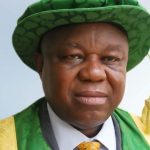
By Vivian EmoniThe Vice Chancellor, University of Nigeria Nsukka (UNN), Prof. Charles Igwe, on Sunday bemoaned the absence of budget in research institutions for efficient environmental research in the country.
Igwe said this at the Environmental stakeholders review on Resources and Environmental Policy Research Centre, Environment for Development (REPRC-EfD), for five years strategic plan on environmental issues in Abuja.
Igwe said that serious work such as setting up more programmes needed to be done to help Nigeria solve its numerous environmental problems.
According to him, the absence of allocation funds for research in annual budget for universities is a challenge to the efficiency of research institutions in Nigeria.
I commended the Centre for its achievements on the strategic plan which will help the centre to carry out a focused intervention in the core areas of its mandate.
I am also commending TETfund for its intervention in research funding.
Meanwhile, the absence of allocation of funds for research in the annual budget of universities is a challenge to the efficiency of research institutions in Nigeria, he said.
Dr Nnaemeka Chukwuone, Director of REPRC-EfD Nigeria, said that the centre has produced over 28 high impact research publications since its establishment in 2019.
Chukwuone said that the centre has developed pilot natural capital accounts for Nigeria, for review of the countrys fishery Act, capacity building training for government technical staff among others.
The strategic plan will last for five years from 2022 to 2026 and will help the centre to achieve specific objectives through research, policy engagements and capacity building for researchers.
Our target is to use research to influence policies that will make our environment better, he said.
Chukwuone said that the objectives of the REPRC-EfD are to conduct policy-impact researches that will help Nigeria solve its environmental challenges.
Prof. Emmanuel Oladipo, the Chairman of REPRC Policy Advisory Panel, called on government to set up a National Research Council that would determine the countrys problems and proffer solutions.
Oladipo said that the council would help to carry out solution-based research on environmental issues.
Also, Prof. Anthonia Achike, the Chairman of REPRC strategic planning committee, said that the event was organised to solicit suggestions of environmental experts and stakeholders in order to fine-tune the strategic plan. (NAN) (www.nannews.ng)
Source: NAN News
-
adminposted in News & Trends • read more
By Fortune AbangA former Minister of Special Duties, Kabiru Turaki, has called on Christians across the country to exemplify the values of Jesus Christ as they celebrate Easter.
According to a statement from the Turaki Media Office in Abuja, the former Presidential aspirant on the platform of the Peoples Democratic Party (PDP) defined Easter celebration to be a season of peace and unity.
Easter is another opportunity for people of the Christian faith to be their brothers and sisters keepers, as well aswork towards the peace and unity of Nigeria and pray for the development of the nation.
Today is a day when we must all reflect on and pray for the way forward for our dear nation, Nigeria. This is because we are approaching a crucial crossroad which is next years general elections.
We must all ask the Almighty God whose reasoning surpasses our understanding for guidance on the way forward, he said.
He, however, noted that as Christians celebrate, Muslim faithful celebrate with them, and together they would work to build a nation that Nigerians would be proud of. (NAN)(www.nannews.ng)
Source: NAN News
-
adminposted in News & Trends • read more

By Emmanuel AfonneAll Progressives Congress (APC) presidential aspirant, Mr Tein Jack-Rich, has urged Christians to always love and forgive one another as a reminder to what Jesus Christ did for mankind at Calvary.
Jack-Rich said this in a statement on Sunday in Abuja to celebrate Easter.
He said that love was a necessary ingredient for peace as the country moved toward the 2023 general election.
Jack-Rich expressed the optimism that the security and other challenges confronting the nation would be a thing of the past as Nigerians joined the rest of the world to commemorate the death and resurrection of Jesus Christ.
I bring warm wishes of peace and hope to you and your loved ones.
It is my fervent prayer that in this season of sober reflection and celebration, our hearts may find thoughts of peace toward our neighbours and one another.
That we may be patient and forgive one another, support the weak and embrace peace.
In the same vein, as our nation enters the season of transition in the midst of global economic challenges and uncertainties, I equally bring you the message of comfort and hope for a better tomorrow.
The times may be tough but we are tougher together in unity. This is in the strong resolve that the fervent spirit of the Nigerian people can never be shaken, Jack-Rich said.
He urged the Christian faithful to imbibe the virtues of Christ and extend love to all Nigerians for the country to achieve the prosperity it yearns for.
This is a great, beloved and blessed country; always love Nigeria. Pray for Nigeria, believe in Nigeria.
Together we can make history in building the nation of our dreams where love and peace, justice and joy reign.
As you celebrate Easter, may this season be a turnaround in your lives and may the joy of the Risen Lord fill your hearts and restore hope in our country, Nigeria, Amen, he added. (NAN)(www.nannews.ng)
Source: NAN News
-
adminposted in News & Trends • read more

By Mohammed TijjaniPolice in Kaduna State rescued four kidnap victims on Friday, the spokesman, ASP Mohammed Jalige, stated in Kaduna on Sunday.
Jalige stated that an unspecified number of bandits stormed Gabari Community, Samaru, in Sabon Gari Local Government Area of Kaduna state on Friday.
An anonymous caller promptly reached out to the Divisional Police Office at Danmagaji, Zaria, he stated.
The caller said an unspecified number of suspected bandits, dressed in military gear invaded the community, shot sporadically and whisked four victims into the forest, Jalige also stated.
He added that on receiving the information, men of Operation Puff Adder II, a police unit, and local vigilantes mobilised and ambushed the bandits on their anticipated escape route.
Jalige stated that the strategy yielded dividends as two of the victims were rescued during a fierce encounter with the bandits.
He added that with the assistance of the local vigilantes, the team laid a second ambush at Gwada Village, another escape route for bandits.
Those who escaped from the first ambush were intercepted just as two other victims were rescued unhurt.
Unfortunately, the bandits had earlier shot and killed one person at Kufena Village, Wusasa, for refusing to be kidnapped, he stated.
He urged members of the public to always alert the police with prompt information as the Commissioner of Police, Mr Yekini Ayoku, has assured of confidentiality on information received.
The commissioner also condoled with the family of the deceased and prayed that he foundeternal rest, Jalige stated. (NAN)(www.nannews.ng)
Source: NAN News