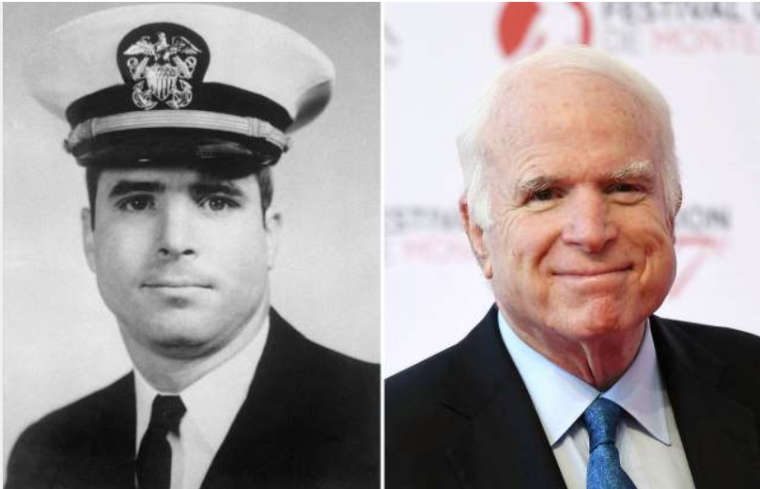
John McCain, a giant of the Senate who survived years as a prisoner of war in Vietnam to become a leading actor on the political stage for decades, died Saturday at the age of 81.
In a statement, McCain's office wrote that the Arizona senator died at 4:28 p.m., where he was accompanied by his wife, Cindy, and their family.
"At his death, he had served the United States of America faithfully for sixty years,” McCain's office wrote.
McCain’s death from brain cancer came more than a year after he announced he had the condition in July of 2017.
His family announced Friday that he had chosen to discontinue medical treatment for an aggressive gioblastoma because the “progress of disease and the inexorable advance of age” had rendered “their verdict.”
The news prompted an outpouring of tribute and sympathy from Republicans and Democrats alike, a testament to the respect McCain built among colleagues in both parties despite his habit of calling them out during clashes over politics and policy.
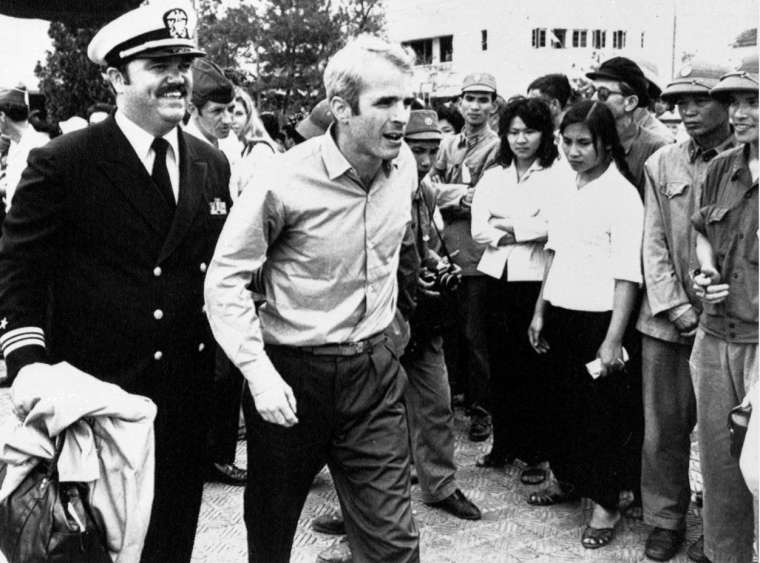
McCain has been absent from the Senate this year, and cast his last vote on Dec. 7. Before he left, treatment has forced him to use a wheelchair in his final days in Washington. But that did nothing to move the political spotlight from the Arizona Republican, whose maverick reputation was underlined in his final months in office.
Even while battling for his health at home in Arizona, McCain influenced the debate in Washington.
In July, he criticized President Trump for not taking a tougher stance with Russian President Vladimir Putin at the Helsinki summit, blasting the president’s performance as “disgraceful” and the summit itself as a “tragic mistake”
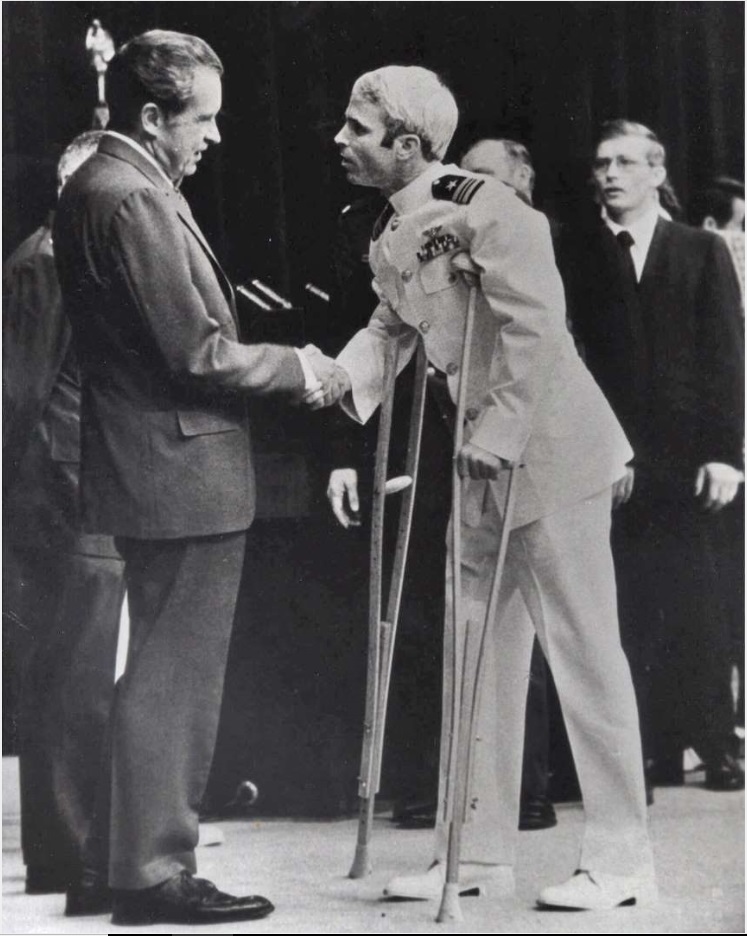
The month before, McCain slammed Trump’s trade policies, telling allies after the G7 summit that “Americans stand with you, even if our president doesn’t.”
He also urged the Trump this year to stop attacking the media, warning in a Washington Post op-ed that some foreign leaders were using his words as cover to silence critics in their own countries.
The criticisms did not sit well with the president, who declined to mention McCain, the chairman of the Senate Armed Services Committee, when he signed the defense authorization bill into law, even though it was named after him.
Whether in Washington or Arizona, McCain put his stamp on Trump’s first two years in Washington.
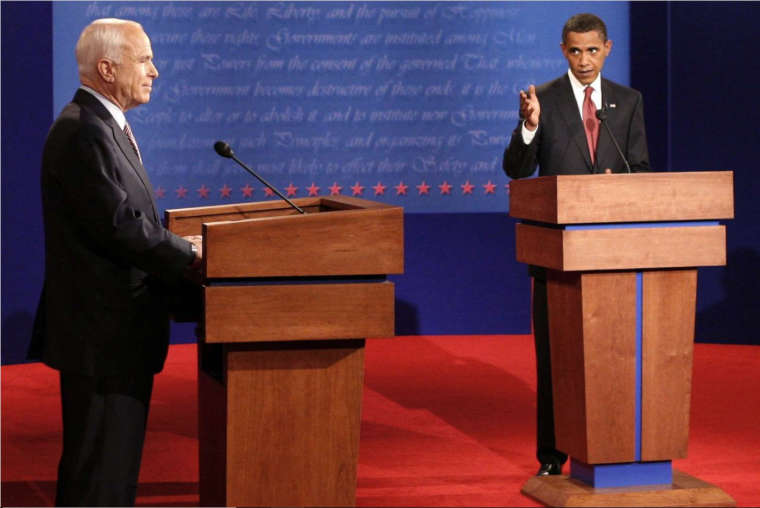
Just more than a week after his diagnosis, McCain walked to the Senate well to give a thumbs-down on an ObamaCare repeal bill, killing the measure and essentially saving the signature law of Barack Obama, the man who defeated him for the presidency in 2008.
It was the kind of vote that only a senator with McCain’s stature could have made, and it underlined his place as one of the chamber’s all-time members.
Afterward, he simply told reporters, “I thought it was the right thing to do.”
For six terms in the Senate, McCain was full of surprises.
The senator challenged George W. Bush for the Republican presidential nomination in 2000, burnishing his reputation as a friend of reporters on a campaign bus nicknamed the “Straight Talk Express.”
McCain lost the nomination, but discovered his political brand: party maverick.
He voted against the Bush tax cuts and backed campaign finance legislation opposed by many in his party.
He backed Bush on the Iraq War, and supported the “surge” of 20,000 U.S. troops in 2007 that brought some stability to the country.
As 2007 opened, McCain was the frontrunner for the GOP nomination to succeed Bush, but his campaign faltered and was all but finished by the summer.
Source: The Hill