Groups
-
adminposted in News & Trends • read more

By Sumaila Ogbaje
The Chief of Defence Staff (CDS), Gen. Lucky Irabor, says the Defence Headquarters is implementing several new strategies that will bring about an end to various security challenges in the country.
Irabor stated this while delivering a Graduation Lecture for Course 30 of the National Defence College (NDC) on the topic National Security and Development: Strategic Options for Nigeria on Wednesday in Abuja.
He identified the need to deepen strategic communication, implement a press code for responsible Journalism and pursue proactive security measures to reduce the impact of regional dynamics in the country.
Irabor said there was need to encourage a Whole-of-Society Approach to security by deepening strategic communication to educate the populace on the fact that issues of security are a collective responsibility.
According to him, everybody in the society ought to be a relevant stakeholder.
Timely information on suspicious movements of strangers in a community might be the main lead to provide the needed early warning for the relevant government agency to swing into action.
Accordingly, we need to formulate a robust and proactive communication strategy that draws all citizens to the realisation of their roles in protecting the nation while also using the same medium to pre-empt and counter narratives of the insurgents.
The strategy could also incorporate modalities for the reorientation and practicable re-integration of surrendered insurgents into the society.
The National Orientation Agency (NOA) needs to be reinvigorated, reorganised and properly funded alongside all other relevant stakeholders in the society.
This will encourage the populace to have renewed confidence in the government and they will be encouraged to provide relevant information to the relevant government agencies.
This will enhance national security and development in Nigeria, he said.
On the press code for the media, Irabor said the strategy required the development of guidelines for reporting difficult stories including stories of conflict and terrorism.
According to him, the German Press Code for example, says in reporting actual and threatened acts of violence, the press should carefully weigh the public interest in information against the interest of victims and other people involved.
He said that media should report on such incidents in an independent and authentic way, but not allow itself to be made the tool of criminals.
He urged the Nigerian media to emulate and domesticate the German Press Code as its guiding principle in reportage.
CDS said it had become imperative that Nigeria should constantly keep abreast of the security and development dynamics within her strategic neighbourhood especially in West and Central Africa.
To this effect, we are working on upgrading the intelligence management procedures of the defence and security sector to strengthen the overall security architecture in the country.
In addition, the thrust of our foreign policy should also be re-engineered to ensure that Nigeria is actively engaged in the promotion of peace and security within our sphere of influence in West and Central Africa.
To this effect, the Federal Government through relevant Ministries, Departments and Agencies (MDAs), could as a matter of priority, explore available bilateral and multilateral opportunities at our disposal to steer the course of security and development within the countries of interests bearing in mind the realities of the domestic base of our foreign policy, he added.
Irabor said an overview of the plethora of security challenges bedevilling the country indicated the need to consider a review of the strategic approach towards addressing them.
He said the appraisal of the current security architecture revealed concerns with respect to limited divergent approach to tackling the emerging threats, ineffective media management as well as regional security dynamics.
The Commandant of NDC, Rear Adm. Murtala Bashir, said it was the tradition of the college to organise a graduation lecture to commemorate the graduation ceremony of each course.
Bashir said that Nigeria had faced and still facing several security challenges such as terrorism, banditry, militancy secessionist agitation, kidnapping amongst others in recent times.
He said the security challenges were aided in very large measure by illicit arms proliferation and the emergence of cult groupings that engage in banditry, kidnapping, political violence and other mafia-style violent activities.
The situation, he said had impacted negatively on the development in the country with attendant implications for national security, adding that Nigeria currently ranks low in the global rating of Human Development Index.
The commandant said there was need to think out of the box and develop strategies that would enhance security and national development.
He urged the participants of Course 30 to begin to realise that success could only come from carefully cultivated attitudes, commitments and management processes that accrue slowly and steadily.
Imbibing these attributes, could therefore see you contributing positively to the development of the country.
It is not too late for us to begin to build these attributes to move our society forward.
So, I urge you to listen carefully to the lecture and thereafter, self-reflect on how you, your service or your organization can better contribute to society, particularly on the issues surrounding security and development, he said.
The News Agency of Nigeria (NAN) reports that the graduation lecture is one of the activities lined up for graduation of NDCs 30 set of graduates as well as its 30 anniversary celebration. (NAN) ()
Edited by Julius Toba-Jegede
Source: NAN News
-
adminposted in News & Trends • read more
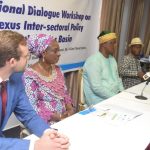
By Tosin KoladeThe Minister of Water Resources, Engr. Suleiman Adamu, has called for co-operation among Nigerias water, energy and food security sectors towards addressing all challenges hindering socio-economic development.
Adamu made the call on Tuesday at the opening of a three-day Inter-Sectoral Policy National Dialogue on the Nexus of Water -Energy-Food Security held in Abuja.
The workshop was organised by the Niger Basin Authority (NBA) and German International Cooperation (GiZ).
He said mismanagement of one sector could affect the viability of other sectors and compromise the livelihoods of the people and the ecosystem.
Adamu, represented by the Director, Water Quality and Sanitation, Mr Emmanuel Awe said the nexus approach reflected the interlink between Water, Energy, Food Security and Environment.
He expressed the need to integrate all sectors towards promoting positive impact, socio -economic development and management of resources.
Adamu said increasing activities due to urbanisation, agriculture and industrialisation, had resulted in the pollution of fresh water with serious adverse effects on health and wellbeing.
While expressing the Federal Governments gratitude to the NBA and experts, he urged all participants to show more commitment for effective and efficient implementation of all NBA projects and programmes.
Regional Coordinator, Nexus GIZ and EU, Robert Kronefield and NBA representative, Bamidele Olatunji, said the workshop would strengthen stakeholders capacity in planning, policy development and implementation of the NEXUS approach.
The News Agency of Nigeria (NAN) recalls that the first phase of the NBA and German Cooperation (NBA-GIZ) NEXUS Project (2016-2020) placed strong emphasis on regional integration of the NEXUS approach and capacity building.
The NEXUS project takes an integrated view of the water, energy and agriculture sectors, as these are all competing for the same scarce resources.
It allows an optimal balance of interests in the use of resources, manage conflicts and human rights risks appropriately, and respect the limits of the planets ecological resilience. (NAN)(www.nannews.ng)
Edited by Benson Iziama/Razak Owolabi
Source: NAN News
-
adminposted in News & Trends • read more

By Naomi Sharang
Muhammad Babandede, the Chief Executive Officer and Founder of Sure 4U Rescue and Resettlement Initiative, has urged the Federal Government to tackle the challenge of out-of-school children.Babandede, a former Comptroller-General Nigeria of the Nigeria Immigration Service (NIS), who made the call at the unveiling of the NGO in Abuja on Tuesday, said this would help in eliminating the current security challenges in the country.
He said he established the NGO in order to give back to society.
After my 36 years of sevice to the country, I still believe I can give something to the society.
A lot of crisis come because of vulnerability of out-of-school children. A lot of people are in a very dire situation not by their making, but society made them so.
Nigeria has the highest number of out-of-school children. This is not because of the making of government but because of the crisis Nigeria is facing in banditry and uprising from different sectors, he said.
Babandede further said that stakeholders could not continue to close their eyes on the number of children on the streets.
The Almajiri is a shameful system in the north. We cannot allow children to roam the streets begging for food with dirty plates.
These are the people who have no mercy on us because they have no parental love, he said.
Babandede further said that Nigeria was facing a dangerous security situation as a result of out-of-school children.
We are threatened by criminality, banditry, Boko Haram, kidnappings. These threats come from negligence mostly.
Resources in the country are not evenly distributed and when resources are not adequately distributed, the chances of people to look for money by all means is possible, he said
Babandede, who noted that law enforcement agencies could not fight crime alone, solicited the support of civil society organisations.
We need to soften their hearts by the use of persuasion and training to help the children before they become criminals.
This organisation was formed to ensure that we remove them from the risk of being recruited by criminals and to enroll them in schools, he said.
The Chief of Naval Staff, Vice-Adm. Awwal Gambo, on his part, said advocacy was needed to bring up children that one could afford to train.
The whole world is in crisis. While countries like Canada are looking for youths to run their system, we are having the crisis of population growth.
In essence, we have the population but no jobs for them, he said.
He called on political leaders to create the environment for the youths to be self-employed.
If the youths are employed, they wont rush into the urban communities to flood it, he said.
Gambo also said that the navy would support Sure 4U in combating human trafficking.
We will ensure that we support any cause that will take care of the youths so that they can be better citizens, he added.
Earlier, the Capacity Building Officer of the NGO, Ms Annan Temiloluwa, said that the vision of Sure 4U was to create a safe and caring world for vulnerable children and migrants.
She said that other objectives included working in collaboration with relevant stakeholders in discouraging trafficking in persons and smuggling of migrants.(NAN)
(Edited by Mufutau Ojo)Source: NAN News
-
adminposted in News & Trends • read more

By Bukola Adewumi
A new World Bank Task Team Leader (TTL) has been assigned for the Agro-Processing, Productivity Enhancement and Livelihood Improvement Support (APPEALS) Project.
Mrs Aishat Onusi, National Communication Specialist for National Project Coordinator made this known on Tuesday in a statement issued to the News Agency of Nigeria (NAN) in Abuja
Onusi said the incoming TTL, Dr Manievel Emmanuel formally took over from the outgoing TTL Dr Adetunji Oredipe, at a brief ceremony held at the APPEALS National Coordination Office.
The newly task team leader commended the outgoing TTL for the tremendous progress the Project has so far made in achieving its target objectives, he also urged the Project staff to double their efforts to ensure the successful conclusion of the Project by September 2023.
In his remarks, Oredipe thanked the project team for their support, urging them to support the new leader.
He noted that the project had achieved its PDO so far and pledged his continuous support towards the successful implementation of the project.
I feel highly fulfilled looking at where we started and what we have achieved today, Dr Oredipe said.
The National Project Coordinator of the APPEALS, Alhaji Mohammed Jobdi, assured the new task leader of his cooperation and commitment of all members of the project staff to work with him to ensure that he successfully carries out his assignment.
The handover ceremony was witnessed by some World Bank-Nigeria officials; as well as Management and Staff of the APPEALS National Coordination Office.
NAN reports that the APPEALS project objective for Nigeria is to enhance agricultural productivity of small and medium scale farmers and improve value addition along priority value chains in the participating states.
APPEALS Project is a six-year project developed by the Federal Ministry of Agriculture and Rural Development (FMARD) in collaboration with the World Bank and other stakeholders.
There are six participating states, Cross River, Enugu, Kaduna, Kano, Kogi and Lagos and the project direct beneficiaries are estimated at 60,000 individuals (10,000 beneficiaries per state) translating into 300,000 farm household members.
It is anticipated that 35 per cent of the total direct beneficiaries will be women while between 5% and 10% is reserved for People Living with Disability and Special Needs (PWDSN).(NAN)(www.nannews.ng).
Edited by Ekemini Ladejobi
Source: NAN News
-
adminposted in News & Trends • read more

By Zainab Oyekan
Dr Hosea C, the Plateau State Commissioner for Agriculture says that farmers in the state lost potatoes worth N18 billion to potato blight disease.
Finangwal disclosed this when delegates from the National Root Crops Research Institute; Umudike paid the ministry a courtesy visit on Tuesday in Jos.
The commissioner said that out of the 150,000 hectares of land cultivated; 52,000 hectares were infected with blight resulting to 2,000 farmers losing N18 billion worth of potatoes.
Finangwal said that the ministry was proactive in reporting the case to Gov. Simon Lalong who immediately reported to the Federal Ministry of Agriculture.
He said that the Federal Ministry of Agriculture sent delegates from the research institute to the state to seek ways to proffer solution in curbing the disease.
In his response, head of the team Dr Joseph Onyeka, Director; Biotech Department said that they were in Jos to discuss with stakeholders on how to develop viable resistant seedlings.
Onyeka said the team would also look into the tissue culture laboratory to make it functional.
We want to find preventive measures, upgrade the tissue culture so that quality materials and disease-free materials can be gotten, he said.
Onyeka said the team would also interface with the state government to work on storage facilities, tolerant varieties and processing facilities.
The director said that the team had come to help resolve reoccurring outbreak of the disease.
He said that farmers need to learn how to use fungicides as fungicides are protective not curative.
Farmers must be sensitized and properly taught how to use fungicides and also take instructions from extension workers, Onyeka said.
He said that the group of professionals available on ground would work with stakeholders in the state to resolve the problem. (NAN) (www.nannews.ng)
Edited by Razak Owolabi.
Source: NAN News
-
adminposted in News & Trends • read more

By Ruth Oketunde
Mr Mustapha Ahmed, Director-General, the National Emergency Management Agency (NEMA), says it has identified 233 local government areas, in 32 states and FCT that have been predicted to experience flooding in 2022.
He said this at a National Consultative Workshop on 2022 Flood Preparedness, Mitigation and Response, organised by the agency, on Tuesday in Abuja.
He said that the workshop was one of the steps outlined by the agency to bring stakeholders together.
He said it was to collectively prepare and provide strategies to strengthen flood risk mitigation and effective response.
This followed the 2022 Seasonal Climate Prediction released by Nigerian Meteorological Agency (NiMet) and the Annual Flood Outlook released by Nigeria Hydrological Services Agency (NIHSA).
Efforts must be made to mitigate and respond effectively to flooding.
We have sent advisory letters and maps showing predicted flood risk areas in various states to the respective state governments.
We have also produced risk maps for vulnerable local government areas as forecasted by NIHSAs Annual Flood Outlook, he said.
He added that state emergency management agencies as well as local emergency management committees must be proactive.
He said this would ensure effective and efficient flood preparedness, mitigation and response.
On her part, Minister of Humanitarian Affairs, Disaster Management and Social Development, Hajia Sadiya Farouq, called on relevant stakeholders to take proactive measures in addressing flood and its associated impacts.
Farouq, who was represented by Deputy Director, Disaster Management, at the ministry, Dr Abubakar Suleiman, added that adequate information must be sent out to the public for effective preparation.
Intensification of public enlightenment campaigns, targeting vulnerable communities to undertake mitigation actions and prepare for evacuation to safe ground.
Identification of high grounds for possible internally displaced persons camps, to shelter evacuated communities.
De-silting river channels and canals and removal of all refuse, weeds, water hyacinths and floats from water channel, drainage and on all avenues for river run offs so as to allow free flow of flood waters, she said. (NAN)(www.nannews.ng)
Edited by Bashir Rabe Mani/Julius Toba-Jegede
Source: NAN News
-
adminposted in News & Trends • read more

By Emmanuella Onah/ Funmilayo Adeyemi
UNICEF, in collaboration with the Teachers Registration Council of Nigeria (TRCN), has developed a draft national action plan targeted at ending all forms of corporal punishment in schools.
The Minister of Education, Malam Adamu Adamu, who congratulated UNICEF and TRCN for the initiative, said the action plan would improve enrollment, retention, transition and completion in education.
Adamu, represented by Hajia Binta Abdulkadir, the Director, Senior Secondary Education Department, said this at the National Awareness Creation Meeting on Ending Corporal Punishment in Schools.
According to him, we are beginning to see a global change of how corporal punishment is considered, and now it is easier to see that it is not effective and that there are alternatives.
The Federal Ministry of Education, therefore, endorses this plan to serve as a roadmap for ending corporal punishment in schools in line with the Childs Right Act passed into law in 2003.
It will help to protect childrens right to a life of violence, he said.
The Registrar, TRCN, Prof. Josiah Ajiboye, said that learning and safety could no longer be thought of as separate entities, hence the need to build a safe education to build back better and safer children.
Ajiboye called for more effort to educate parents and teachers on the implication of corporal punishment as well as the alternatives that were available to them.
According to him, good school discipline depends on skilled and properly trained teachers rather than students bad behaviour.
Globally, there is a paradigm shift from corporal punishment in schools because of its effect on pupils.
It has been proven to be ineffective, dangerous and an unacceptable method of controlling and maintaining behaviour and discipline.
This is because it brings negative rather than positive consequences in the whole process of teaching and learning, he said.
He, therefore, said the campaign was committed to seeing a school culture that ensured a safe and respectful environment for everyone.
Representative of the Technical Working Group of the action plan, Mr Noah Ashibi, said over 62 per cent boys and 59 per cent girls were reported to have experienced some form of physical abuse.
He said the pupils had the abuses such as corporal punishment in schools and at home.
Ashibi, who is also an Assistant Director, TRCN, Cross River Coordinator, said the findings had huge implications for childrens right to education in Nigeria and the achievement of the Sustainable Development Goals (SDGs) 4.
Nigeria is presently struggling with a large number of out-of-school children, a phenomenon largely attributable to the various forms of violence affecting children.
In a recent survey of learners, teachers, parents and traditional leaders in northern Nigeria, 62 per cent of learners reported experiencing various forms of corporal punishment such as flogging, slapping, kicking, frog jump and other physical violence.
Over half of the respondents identified teachers as the main perpetrators of corporal punishment.
These violent disciplinary practices persist with the large body of research that acknowledged the physical, emotional, developmental and psychological harm that they inflict on children.
He, however, called for serious action from all stakeholders to eradicate the practice from schools.
In the same vein, Mrs Odinakachi Ahanonu, the Policy Advisor, Civil Society Action Coalition on Education for All (CSACEFA), called for a strong synergy in ensuring that the plan contributed to ending corporal punishment in schools.
Highlight of the event was a call to action at federal, state, local governments and schools levels to create awareness on the dangers of corporal punishment, coordinated at all levels.
It also called on stakeholders to develop and implement a policy framework focusing on ending corporal punishment in schools, among others. (NAN)(www.nannews.ng)
Edited by Abubakar Ahmed/Donald Ugwu
Source: NAN News
-
adminposted in News & Trends • read more
By Busayo Onijala
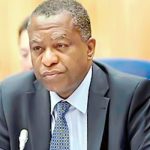
The Nigerian Consulate in Johannesburg has condemned the recent attack on a 22- member movie crew at a mining dump in West Village, Krugersdorp, Gauteng Province, South Africa.
The consulate in a statement on Monday described the July 28 attack on the crew as atrocious, noting that a Nigerian-owned firm was involved in the movie production.
It alleged that eight ladies were sexually assaulted with their valuables stolen by the attackers.
The mission conveys its heartfeltcondolences to the victims and their families, and pledges to support them to overcome their trauma.
We stand ready to collaborate with South African authorities to ensure the perpetrators are brought to justice, the consulate said.
The consulate also urged members of the Nigerian community in South Africa to lend their full support to the authorities in their ongoing investigations.
He also urged them to remain law-abiding in their host country. (NAN)(www.nannews.ng)
Edited by Kevin Okunzuwa/Julius Toba-Jegede
Source: NAN News
-
adminposted in News & Trends • read more

Hitham Al-Ghais of Kuwait on Monday assumed office as the new Secretary General of the Organisation of Petroleum Exporting Countries (OPEC).
Al-Ghais was appointed as the new chief of the Vienna-headquartered OPEC in January this year, and his tenure will last for three years.
Al-Ghais said he looked forward to working with all our member countries and our many partners around the world to ensure a sustainable and inclusive energy future which leaves no one behind.
An OPEC press release states that Al-Ghais served as deputy managing director for international marketing at the Kuwait Petroleum Corporation (KPC) before taking up the role of OPEC chief.
He was also Kuwaits governor for OPEC from 2017 to 2021.
Al-Ghais succeeded the late OPEC Chief, Nigerias Mohammad Barkindo, who died on July 5.
Late Barkindo was appointed Secretary General of OPEC in June 2016 for a period of three years, but took office onA ug. 1, 2016, succeeding the Libyan Abdallah Salem el-Badri, who had been Secretary General since 2007.
Barkindo, who steered the group through the creation of the OPEC Alliance, was due to step down at the end of this month after six years at the OPEC top job. (Xinhua/NAN)(www.nannews.ng)
Edited by Ummul Idris/Hadiza Mohammed-Aliyu
Source: NAN News
-
adminposted in News & Trends • read more
By Justina Auta
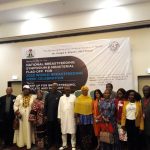
The Minister of Health, Dr Osagie Ehanire, says the Federal Government is targeting an increase of 50 per cent in the rate of exclusive breastfeeding before the 2025 World Health Assembly.
He disclosed this during the ministerial launch of the 2022 World Breastfeeding Week (WBW) in Abuja on Monday.
He was represented by Mr Joseph Ekumankama, the Minister of State for Health, where he reiterated the ministrys commitment toward cost-effective means to eradicate malnutrition.
He said our aim is to achieve the 2025 World Health Assembly target of raising the rate of exclusive breastfeeding to at least 50 per cent.
We recommend early initiation of breastfeeding within one hour of birth, exclusive breastfeeding for the first six months of life, continued breastfeeding up to two years of age or beyond, introduction of nutritionally-adequate and safe complementary foods from six months.
The minister, therefore, reiterated governments commitmentto training of health professionals with information to cascade to mothers on the benefits of breastfeeding.
He added that health professionals play critical roles in supporting women to breastfeed, and to do this effectively, they need appropriate knowledge such as knowledge of the health outcomes associated with different methods of infant feeding.
They also need knowledge on the physiological process of lactation, as well as positive, non-judgmental attitude and effective communication and practical support skills.
Sen. Ibrahim Oloreigbe, the Chairman, Senate Committee on Health, said there was need to provide an enabling environment in work places both in formal and informal sectors to promote breastfeeding.
Oloriegbe, while advocating for the passage of law and implementation of six months maternity leave for mothers, said we need to double our work, I wouldnt know why it is delayed, we need to see it done.
It is one thing to have a law and it is another thing to implement it.
And unless we have enforcement and supportive system mechanism, we will not be able to have exclusive breastfeeding at the level we want it.
The Minister of Women Affairs, Mrs Pauline Tallen, said the 2022 theme of the WBW Step Up for Breastfeeding: Educate and Support is aimed at educating the public on necessary knowledge, attitude and skills to support breastfeeding women.
Tallen, who was represented by Mrs Christine Oliko, Deputy Director, Women Development, called for the need to strengthen, protect,
promote and support breastfeeding for the survival, health, growth and development of the child.Similarly, Dr Victor Ogbodo, the Programme Director, Nigeria Alive