Groups
-
adminposted in News & Trends • read more
By Abigael Joshua.
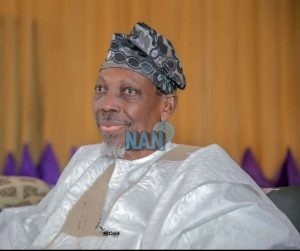
Razaq Abubakre, an Emeritus Professor and former Federal Commissioner, says LP Presidential candidate, Mr Peter Obi, couldnt have defeated the President-elect, Sen. Bola Tinubu, at the last presidential election.
Abubakre, also a former Vice Chancellor of Al-Hikmah University Ilorin
spoke with the News Agency of Nigeria (NAN) in Abuja on Friday.The technocrat alleged that Obis lacklustre performance as former governor of Anambra worked against him.
Abubakre also claimed that Obis inability to build leaders, unlike Tinubu, who had inspired several leaders nationally and internationally, was part of his undoing.
His use of religion in contradistinction to Asiwajus Muslim-Muslim ticket gave him a transient false national spread, Abubakre said.
He recalled the simile employed by Rabiu Kwankwaso, NNPP presidential candidate, during his speech at the Chatham House, London, that Obis electoral fortune was like the foam of Andrews Liver Salt that comes with power and disappears almost immediately.
This is quite apposite to describe his eventual performance, especially during the elections of state governors and House of Assemblies. Unfortunately, desperation is not a good manner, Abubakre said.
He said he could not endorse the permutation that if all the other contestants whose origin was PDP, such as Atiku, Obi and Kwankwaso, joined forces, PDP would have probably won the presidency.
This is underlying the divine intervention favouring Asiwaju Bola Ahmed Tinubu ab initio.
The pattern of voting could have changed. For example, the bulk of votes that Obi received from the South-East, parts of South-South and pockets of North-Central could not have gone to Atiku.
Some of it would have also been cast for Tinubu on his merit and record of performance, Abubakre asserted.
He said the internal evidence of this claim is the undiminishing successes and superiority of the APC in all the elections, such as National Assembly, gubernatorial elections and state assemblies, in spite of the global economic challenges.
He said Tinubus superiority lies in his excellent performance record as governor of Lagos State; his cosmopolitan outlook spread nationally and with global ramifications.
It is instructive to note that Tinubus emergence is divine and critical when the nation needs a true unifier, a performer par excellence and a strategic leader focused on nation-building for sustainable and inclusive growth, Abubakre said.
Abubakre was a Federal Commissioner for the Public Complaints Commission for Osun State between 2012 and 2018, and the Dean of the Faculty of Arts at the University of Ilorin from 2001 to 2003. (NAN) (www.nannews.ng)
========
Edited by Razak OwolabiSource: NAN News
-
adminposted in News & Trends • read more

By Oluwatope Lawanson
The International Press Centre (IPC) in Lagos has announced that it is establishing a Centre on the Safety and Protection of Journalists (CSFPJ) as part of activities to commemorate the World Press Freedom Day (WPFD) 2023.
IPCs Executive Director, Mr Lanre Arogundade, who disclosed this in a statement on Wednesday, lamented the increasing attacks on journalists and the media.
Establishment of the centre is to further address the growing spate of attacks on journalists and the threats on media freedom in Nigeria.
Mrs Melody Lawal has been appointed as the Coordinator of the centre.
Lawal has the task of positioning the CSFPJ to strategically coordinate initiatives to respond to the challenge of addressing the worsening state of journalists safety and press freedom in Nigeria, Arogundade said.
The statement quoted Lawal as saying that the indication of the deteriorating press freedom situation was the fact that there were more attacks on journalists and the media in 2022 than the previous year.
Unlike 2021 when forty-one (41) attacks were documented, the IPCs Safety of Journalists Alert Desk recorded sixty-six (66) attacks in 2022 with the perpetrators including law enforcement and security agents; political thugs and hoodlums, and unknown gunmen among others.
The breakdown shows that four (4) attacks were recorded in the North-West; sixteen (16) in North-Central; six (6) in the North-East; twenty-six (26) in the South-West; four (4) in the South-East and ten (10) in the South-South.
The types of attacks recorded include physical assault, abduction, gun attack, threat to life, denial of access to information, unlawful arrest and detention, harassment, threat to sanction and payment of fine.
Twenty-six (26) broadcast journalists, thirteen (13) print journalists and twenty-four (24) online journalists were among those affected.
In terms of gender, fifty-six (56) male journalists and ten (10) female journalists suffered one form of molestation or the other, Lawal disclosed.
According to her, full details of the attacks and the modus operandi of the new centre on the safety of journalists will be unveiled at a media roundtable to be organised by the IPC on May 5.
The CSFPJ coordinator said that the roundtable would be organised in partnership with the West Zone of the Nigerian Guild of Editors and the Oyo State Chapter of the Nigeria Union of Journalists at Ibadan, Oyo State.
She said that the keynote address at the roundtable would be delivered by Prof. Tokunbo Adaja, Dean, College of Humanities and Social Sciences, Joseph Ayo Babalola University (JABU).
According to Lawal, the keynote address will have the theme Protecting Freedom of Expression in the Age of Misinformation and Disinformation..
She said that the event would be attended by editors, media professionals and leaders of the NUJ, adding that the press freedom situation in the country would be discussed and recommendations made on how the deteriorating situation could be checked.
The News Agency of Nigeria (NAN) reports that the World Press Freedom Day (WPFD) or World Press Day was established on May 3,1993 by the United Nations General Assembly (UNGA).
It is observed annually on May 3rd to recognise the great efforts and contributions of journalists in uncovering the deepest and unknown truths of society.
The theme of the 2023 World Press Day is: Shaping a Future of Rights: Freedom of Expression as the Engine of Other Human Rights.
According to the UNESCO, the 2023 edition marks the 30th anniversary of the United Nations General Assemblys decision to proclaim International Press Freedom Day. (NAN) (www.nannews.ng)
Edited by Oluyinka Fadare/Vivian Ihechu
Source: NAN News
-
adminposted in News & Trends • read more
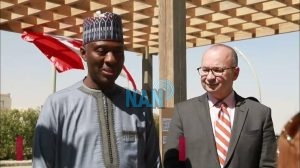
Nura Rimi, Ambassador of Nigeria to EgyptMr Nura Rimi, the Ambassador of Nigeria to Egypt, says Nigeria is being accorded top priority by the Egyptian government in the granting of evacuation approval for its citizens fleeing Sudan.
Rimi told the News Agency of Nigeria(NAN) on Thursday that the feat was achieved because of the cordial relations between both countries.
NAN reports that the sudden slide into violence between the Sudanese army and the paramilitary group, Rapid Support Forces, had left thousands of foreigners, including diplomats and aid workers, stranded in that country.
He said that many countries chose to evacuate their citizens through the southern part of Egypt because of their confidence in the government and people of that country.
Rimi added that foreign countries refused to use some of Egypts neighbours because of the instability in those countries.
He explained that in offering assistance to the countries seeking evacuation approval, Egypt must first think of the security implication.
It was not an easy decision as I said because security considerations were taken, but Nigerians were within the shortest possible time granted approval to be evacuated through Egypt.
Thats why I kept saying those conditions and guidelines that were given were in good faith because Egypt has to preserve its own national security.
If you look at the countries around Egypt, almost all of them are in one form of crisis or the other.
So, it is always necessary for countries to safeguard their territorial integrity and to make sure that they guarantee their own security because if a country is not secured then nobody will want to leave in it.
Even the citizens will run away and leave the country, he told NAN.
Rimi lauded the sincere efforts of the Egyptian government for the priority given in approving the use of its border to evacuate Nigerians stranded in Sudan.
I must thank President Abdulfattah el-Sisi for graciously accepting to opening the Egyptian borders to Nigeria.
These borders were open first and foremost to Nigerians before any other nationality.
I met my colleague ambassadors from other countries waiting and waiting for approvals to be able to bring in their citizens to be evacuated.
Nigeria was, I believe, the first country to be given this approval and then other countries followed suit.
I must also thank my friend, the ambassador of Egypt to Nigeria, Amb. Ihab, who not only facilitated the granting of this approval but also happened to be in Egypt at that time and worked hand in hand with me to make sure that this exercise succeeds, he said.
Rimi further said that the Nigerian embassy in Cairo liaised with its counterpart in Khartoum, Sudan, to arrange for the safe evacuation of citizens residing there.
Colleagues in Khartoum were overwhelmed; so we helped by sending our staff of Sudanese origin from Cairo to go to Khartoum to assist them in evacuation, he said.
The envoy lauded the Nigerian community in Cairo for coming to the assistance of fellow citizens in dire need.
Nigerians in Cairo assisted because they offered food, fruits and water to the victims.
This shows the spirit of Nigerianness. It is a good gesture in the face of such emergency, he said.
He advised Nigerians living abroad to always be prepared in times of emergencies in order to make their passage easy.
It is good to always have your traveling documents in places that are handy.
I am sure the Sudan crisis did not start in one day. There was enough time for people to start making plans for leaving if it gets to an emergency, he said.
Rimi said that the embassy staff in Cairo offered the best service to its citizens and other government agencies involved in the evacuation process.
We try our best within our available resources to give every citizen the best service delivery. And, so far things are going according to plans.
The embassy facilitated the process but other agencies of government whose responsibility it is to arrange and execute the evacuation of Nigerians in war-torn countries and crisis situations were also involved, he said. (NAN) (www.nannews.ng)
(Edited by Mufutau Ojo)
Source: NAN News
-
adminposted in News & Trends • read more
By Collins Yakubu-Hammer
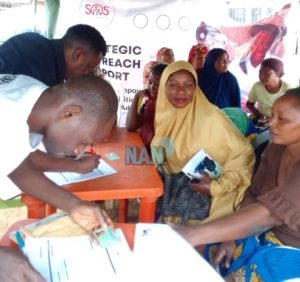
Strategic Outreach Support (SOS), an NGO, has given financial support to 500 rural and market women in the Federal Capital Territory (FCT).
The spokesperson for the group, Mr Raqaz Ivori, told newsmen on Friday, shortly after the empowerment, that the support was to complement the ease of doing business.
He explained that the SOS was a Tax Exempt and Not-for-Profit organisation that focused on providing the relevant elements of sustainable development to communities in the areas of Health, Education, Artisan/Skill Acquisition.
He added that the organisation used strategic partnerships as the necessary tool to sustain humanity.
This Programme is tagged Market Women Support Fund initiative, powered by SOS and in partnership with Zenith Bank.
Over 500 women, including food vendors, retail provision sellers, and farm produce traders became beneficiaries of the Market Women Support Fund.
The capital funding exercise saw a very large turnout of women and women trade associations in Dutse/Bwari Area Council of the FCT.
It started with an account registration facilitated by Zenith Bank. Over 500 unbanked women had new accounts opened and credited with the sum of N10,000 naira each.
The funding was made available by SOS. This exercise would be extended to other area councils in the FCT, after which it will be taken to every local government area of the country, Ivori said.
Ivory explained that the purpose of the funding support was for the renovation of existing market infrastructure and building new markets, and support with providing clean water, sanitary facilities, electricity and safe storage
Others are to support with providing small funds for market women to help their weekly contributions and expand their goods and services, stocks and sales.
Also, working with partners on adult literacy and entrepreneurial training Programmes as well as savings and loans associations and providing daycare centres and playgrounds for children and health facilities for the market.
Lastly, another reason for the funding is spearheading the advocacy movement of market women across Africa and the world, he stressed.
Ivory also hinted that a seminar to promote the establishment of funding for market women to boost trade of small/medium scale enterprises, to also cushion the global economic challenges, would hold soon.
According to him, the title of the seminar is Influencing Global Policy Implementation for Sustainable Development, slated for Tuesday in Abuja.
He explained that the seminar would have Rev F. I. Omobude, President of NCGC Worldwide and former President of PFN Nigeria, as keynote speaker and guest of honour.
Minister for Youth and Sports Development, Chief Sunday Dare, Minister for Women Affairs, Mrs Pauline Tallen and members of the local and international NGO community would be in attendance. (NAN)Edited by Idris Abdulrahman
Source: NAN News
-
adminposted in News & Trends • read more
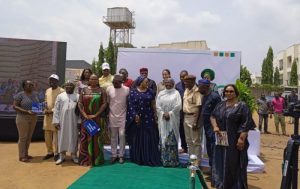
Federal Commissioner, NCFRMI, Hajiya Imaan Sulaiman-Ibrahim with some IDPs stakeholders at its programme on Thursday in AbujaBy Jacinta Nwachukwu
The National Commission for Refugees, migrants and Internally Displaced Persons (NCFRMI) said that 4000 Internally Displaced Persons (IDPs) would be enrolled into the just launched Transitional Learning Centre.
The Federal Commissioner of NCFRMI, Imaan Sulaiman-Ibrahim disclosed this while launching the Transitional Learning Center on Thursday in Abuja.
Sulaiman-Ibrahim said that the initiative was part of the ongoing intervention under its Project Educate All.
She said the Commission had engaged 54 instructors from the IDP hosting communities to serve as facilitators.
We are pleased to announce that 4,000 learners between the ages of five and 18 will benefit from this phase of our programme in eight IDP camps located in the Federal Capital Territory (FCT) and Nassarawa State.
These camps include New Kuchingoro, Takuchara, Karamajiji, Wassa, Waru, New Karshi, Malaysian Garden, and Yimutu, with 700 pupils already enrolled.
Furthermore, to ensure the success of this initiative, we have engaged 54 instructors from the IDP hosting communities to serve as facilitators, she said.
According to her, this engagement has not only provided much- needed employment in this communities but also allowed us to prioritize the localisation of our interventions and promote the sustainability of the programme.
She acknowledged that education played a fundamental role in promoting peaceful coexistence, adding that lack of it during displacement could have severe social and economic consequences for both displaced and host communities.
She further explained that having access to education during crisis was imperative with over 52 per cent of the 69 million displaced individuals globally under 18.
She noted that displacement crises were increasingly protracted and often affect the time a child took to grow, develop, and prepare for adult life.
Despite significant improvements in enrolment access to education over the last ten years, most children living in conflict-affected contexts are often left behind.
We must not forget that education is a fundamental human right, and the right to quality education should not stop because of conflict and displacement.
Children must be able to go to school, learn in a safe environment, and be given a chance to develop their full potential, whether they live in an IDP camp, a makeshift settlement, a town, or are still on the move.
It is important to stress that education is a right enshrined in the Convention on the Rights of Children and a collective responsibility of all stakeholders, she added.
She said the Commission regarded education as an essential foundation for individual, social, and economic development and a pillar for equality, respect, tolerance, and dignity.
According to her, basic education and vocational skills development are priority areas of our integrated approach towards ensuring durable solutions.
Therefore, since 2021, the Commission has scaled up technical and financial provisions in education in emergencies and protracted crises.
In line with the Commissions camp exit strategy and delivering durable solutions to persons of concern (POCs), with strong consideration for host communities, the Commission signed a Memorandum of Understanding with Aid for Rural Education Access Initiative (Areai).
This is to support the implementation and facilitate access to accelerated and informal educational opportunities for IDP, refugee, and migrant children.
This is through a comprehensive multi-layered approach that matches learning and academic skills with psycho-social support and life skills training, she said.
She said the main objective was to promote social integration or re-integration into formal education in camps and host communities.
She further explained that the Transitional Learning Center was an outcome of this very robust collaboration.
The learning center is more than just a school. It is a place where children can regain a sense of normalcy and stability in their lives.
It is also a place where these children will make friends, learn new skills, and dream of a brighter future and build their foundation needed to succeed in life.
Given the human-centred design nature of our interventions as a key fundamental of our Strategic Roadmap, it is important to note that aside from members of the IDP community, host community members are also playing a critical role in co-leading the implementation process of the Transition Learning Centers.
Bi-monthly workshops for key stakeholders are deployed as part of quality control measures.
Sulaima-Ibrahim also said that workshops are also hosted at the Centre that focus on training local stakeholders and women groups on peacekeeping, self-awareness, basic hygiene education, and prevention of violence against children, including gender-based violence (GBV) and disabilities.
In addition to providing comprehensive education, the Commission is committed to promoting sexual and reproductive health and HIV prevention of children in displacement, she added. (NAN)(www.nanews.ng)
======================
Edited by Abdulfatai Beki/Ekemini LadejobiSource: NAN News
-
adminposted in News & Trends • read more
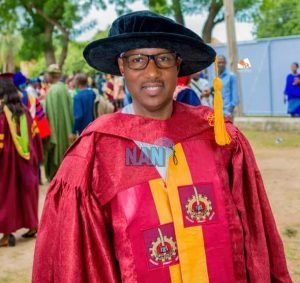
Amb. Hassan TukurBy Deji Abdulwahab
Amb. Hassan Tukur, the Patron of the Unveiling and Rebranding Nigeria Initiative, has called on Nigerians to be hard working and dedicated towards nations building, saying these attributes pay and can never go unnoticed.
This is contained in a statement issued in Abuja on Thursday by the Programme Manager, Unveiling and Rebranding Nigeria Initiative, Malam Abdulkadir Lawal.
Lawal stated that Tukur gave the advice when he was awarded a honorary doctorate degree by the Ladoke Akintola University of Technology (LAUTECH) in Oyo State.
According to him, Tukur, who is also the former Principal Secretary to President Goodluck Jonathan, expressed his high regard for the award, which he described as unique.
For all of us at the Unveiling and Rebranding Nigeria Initiative, this is a milestone. This award speaks volumes as it highlights my hard working and dedication towards nation building.
These pay and can never go unnoticed. I am indeed honoured and grateful. It is my prayers that this begins our thrives, marking great achievements, Tukur quoted as saying.
He noted that he once aspired to become a lecturer, but eventually ventured into diplomacy.
This change was largely influenced by the elimination of my mentor and lecturer, Dr Bala Muhammed on July 10, 1981 in Kano; a traumatising event that altered his view on academic-centred careers.
Therefore, receiving an award in the academic world is a unique feat for him, Tukur said. (NAN)(www.nannews.ng)
==========
Edited by Ekemini LadejobiSource: NAN News
-
adminposted in News & Trends • read more

Caroline PopoolaBy Mateen Badru
Alpha Global, a Non-Governmental Organisation, has advocated for best practices in early childhood education and development.
The Founder, Caroline Popoola, said this in an interview with the News Agency of Nigeria (NAN) in Lagos on Thursday.
Popoola highlighted the significance of leadership in childcare setting and the different qualities a childcare leader should possess.
She said the group was passionate about promoting early childhood education successes with focus on effective leadership and management, and urged educators and practitioners worldwide not to settle for less.
Popoola, also the Chief Executive Officer (CEO) Alpha Childcare and Alpha Chains Limited, stressed the need for value and ethical-driven leadership
Alpha Global is set out to unlock the power of early childhood education, explore practical strategies for success and create a strong foundation for childrens learning and development.
It is a leading organisation in early childhood education, providing innovative solutions, resources, and support to educators and practitioners worldwide.
With a strong emphasis on effective leadership and management, Alpha Global aims to promote the success and well-being of children in their early years, she said.
Popoola said the group had webinars which highlighted its commitment in providing innovative solutions, resources, and support to educators and practitioners worldwide.
She said the group had an upcoming conference on July 8 in Nigeria, and for the first time in Ghana.
According to her, the conference will bring together experts in the field of early childhood education to further explore best practices, exchange ideas and enhance the quality of early childhood education in Africa and beyond. (NAN)(www.nannews.ng)
================
Edited by Chidi Opara/Oluwole SogunleSource: NAN News
-
adminposted in News & Trends • read more

PaymentBy Kadiri Abdulrahman
The Chief Executive Officer (CEO) of eTranzact, an electronic and mobile payment solution company, Mr Niyi Toluwalope, says the Nigerian Payment System is among the best in the world.
Toluwalope said this in Calabar, at the Central Bank of Nigeria (CBN)Seminar for Finance Correspondents and Editors, on Wednesday
He presented a paper titled Designing and Implementing a Robust Payment Architecture.
According to him, Nigerias payment system has developed into one of the most advanced payment ecosystems globally.
In terms of development and adoption of modern payment systems today, our payment architecture is characterised by growing fintec startups and active regulator involvement.
He, however, said that there was still more work to do.
According to him, every payment system possesses attributes that are formed by the quality and standards of the stakeholders.
He listed infrastructure, regulation, talent and capital as factors needed to build an ideal payment system.
No payment architecture exists without the physical infrastructure like servers, network connectivity and software tools supporting the proper collection, storage and transfer of data to facilitate payment transaction processing.
Payment networks have to be governed by regulatory guidelines to enable the responsible deployment of payment solutions to prevent harm to the ecosystem.
However, regulations have to evolve to enable the payment architecture of the future through the adoption of regtech to design and enforce guidelines, he said.
He said that talent was critical to building the payment architecture of the future, adding that the ideal payment architecture could only be delivered also by the sustainable injection of capital.
Payments in Nigeria has entered a new era of growth and requires that stakeholders view payment infrastructure through new lenses.
Efficiency can be achieved by reducing repetitive investment in payment infrastructure while ensuring competitiveness.
This is by empowering a qualified set of fintechs with demonstrable capabilities to provide payment infrastructure needs for the rest of the industry, he said.(NAN)(www.nannews.ng)
=====
Edited by Isaac Aregbesola
Source: NAN News
-
adminposted in News & Trends • read more
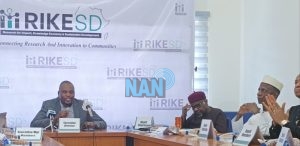
By Ikenna Uwadileke
Researchers under the aegis of Research for Impact, Knowledge, Economic and Sustainable Development (RIKE-SD) have advocated the use of research and innovations to address economic challenges facing communities.
The Executive Director RIKE-SD, Dr Mustapha Popoola, who said this in Abuja on Thursday, said that it would enable communities to feel the impact of research and ensure the attainment of Sustainable Development Goals (SDGs).
According to Popoola, RIKE-SD is looking at connecting research to the communities, hence developing realistic data that will help the economic development of the communities.
Part of what we have noticed is that investments have gone into research and some of them come out with results and outcomes.
Some of these outcomes are littering the African continent whereas when we are not looking at research as a solution we are looking outside to import some of the things we can manufacture locally.
So, in doing all of this there is a great disconnect between people that are actors in the practice of research and the end users, Popoola said.
He said there was a need to change the narrative to enable people to have the feeling of satisfaction and fulfilment derived from research works.
Until when the communities start feeling the outcome of research we cannot be talking about figures and language that researchers understand but do not feed into the communities, Popoola said.
He blamed the failure of the academic system in the country on disconnect between the communities and the institutions of higher learning.
If we are not taking development to the community we are not talking to the society. We need to start creating communities around knowledge.
When we talk about agriculture and we are looking at food security, we need to have a community of practice for food security, not only associations of people that are experts in agriculture, he said.
While emphasising the need for Nigeria to adapt to indigenous solutions to its problems, Popoola said that the country could not meet up with global economic trends due to a dysfunctional knowledge enterprise.
Many of the solutions we are using are copy and paste. Can we start looking at adapting to indigenous solutions to our problems, Popoola said.
He further said that governments should begin to embrace research outcomes in forming policies geared toward improving the lives of the citizens.
What we are going to do is research result evidence synthesis. When you say you come up with some research results, can we synthesis some evidence and when we have that evidence can we feed it into the government.
For example, part of what we are saying is that in drafting legislation in other parts of the world, there are issues that are technical, researchers and technical people are invited to speak to those issues.
That does not mean that they are lawmakers but we have not seen that connection between the political class and the researchers but there are researches that are going on that are supposed to assist, he said.
Popoola, however, urged Nigerians to embrace research and researchers.
Almost everybody needs to have business in research; it is not a business for scientists alone.
Indeed, we expect all of us to take ownership of research, it is not owned by researchers, not owned by the academia, it is owned by all of us, he said.
On his part, the Chairman Board of Governors, RIKE-SD, Mansur Ahmed, said that the time was ripe for Nigeria to embrace research outcomes to solve problems.
This is the time for us to turn inwards and ensure that sustainable development of our people originates from within us.
Communities from different perspectives need to come together to say we need to do this together, particularly the government, private sector, the academia, industries, societies represented by various community groups must come together to decide, Ahmed said.
Also, Prof. Suleiman Bogoro, Chairman Board of Finance Trustee, RIKE-SD, emphasised the need to institutionalise research and development in Nigeria.
He described it as the bedrock of sustainable development the country needs to move forward. (NAN) (www.nanews.ng)
====
Edited by Ismail Abdulaziz
Source: NAN News
-
adminposted in News & Trends • read more
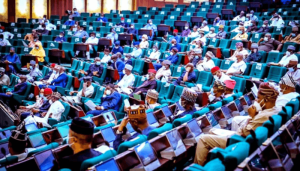
House of Representatives members-electBy Chijioke Okoronkwo
The National Institute for Policy and Strategic Studies (NIPSS), Kuru, near Jos says it is exposing House of Representatives members-elect to tasks ahead in areas of health, education, security among others.
Its spokesman, Prof. Sola Adeyanju, made the declaration on Thursday in Abuja when he spoke with State House correspondents on the side-lines of the Strategic Leadership retreat for newly-elected public office holders.
The essence of this retreat is to make sure that we expose our lawmakers, particularly the newly-elected lawmakers to those researches that had been conducted in specific areas of our national life.
Areas like health, education security; there are lots of works that had been done and recommendations made; and we have a lot of implementation strategies that can help lawmakers to know what their role will be.
We want a situation where the newly-elected lawmakers will come and they will be able to hit the ground running.
We want to give them an idea of what kind of bill and in what areas we actually need some bills and areas needing some law making, he said.
Prof. Adeyanju added that there was the need to implement recommendations already made as they would have far-reaching impacts on the country.
For instance, recommendations had been made on the kind of educational system that we could have where we would not be having incessant strikes.
We have worked on funding healthcare services which concern people at the grassroots and how government can look for funding to make sure that healthcare services are okay.
Some of these recommendations are lying fallow out there and we felt we should expose the incoming lawmakers to them before the next Assembly is proclaimed so as to help the country, he said.
Some of the legislators-elect also spoke with the newsmen.
Inuwa Garba (PDP-Gombe) Yamatu Deba Federal Constituency said the retreat had equipped the lawmakers-elect with the requisite knowledge for law-making.
I have to appreciate NIPPS for this very laudable initiative by organising this programme which I believe will empower members-elect with some basic requirements of the tasks ahead.
I believe we have gained a lot in terms of the quality of presentations and the answers to so many questions that were raised, he said.
On her part, Chinwe Nnabuife, member-elect representing Orumba North and Orumba South Federal Constituency of Anambra, said the retreat was enriching.
This programme is very informative and educative; coming from our backgrounds; we have been made to know what the processes of policy-making are, she said.
Nnabuife added that newly-elected lawmakers had been made to understand policy making, policy implementation and policy evaluation.
For us in the 10th Assembly, we are particular about making policies and ensuring that they are implemented and evaluated for the good of Nigerians; it is not going to be business as usual, she stressed.
The first two days of the retreat were dedicated to governors-elect, their deputies and senators-elect. (NAN) (www.nannews.ng)
=========
Edited by Alli HakeemSource: NAN News