Groups
-
adminposted in News & Trends • read more

By Ishaq ZakiCivil Society Organizations (CSOs) in Zamfara State have advised governments at all levels, to adopt the policy of always involving communities in the selection of projects, to forestall misplacement of priorities.
Executive Director, Zamfara-based CSO, Voluntary Aid Initiative (VAI), Mr. Musa Aboki, gave the advice in Gusau, on Saturday, at a session on Project Monitoring, Information sharing with stakeholders.
The News Agency of Nigeria (NAN) reports that the session was jointly organized by the Join Future Hope Foundation, Voluntary Aid Initiative, Life Helpers Initiative and Millennium Development Center in partnership with Women Environmental Program Abuja.
Aboki said many projects were abandoned in Zamfara, while others had been appearing repeatedly in annual budgets of both the federal and state governments.
According to him, the CSOs had selected and monitored Federal and state governments projects that have direct impact on women and girls, to ensure their implementation based on the budgets.
Mr. Aboki, who lamented over some abundant projects and repetition of same projects in annual budgets, said this called for communities to be fully informed about any projects meant for them and full public disclosure about the projects for transparency and accountability.
On his part, the Zamfara state Commissioner for information, Mr. Ibrahim Dosara, who chaired the session, called on the CSOs to always work with the supervising MDAs for proper guidance and accurate information about the projects, while commending them for organising the session to balance their reports.
The Permanent Secretary, Ministry of Health, Dr. Habib Yelwa explained that, some of the projects in question had been completed, but in different locations for some obvious reasons, and called on the CSOs to pay visits to the sites.
Also speaking, Commissioner for Women Affairs, Hajiya Zainab Lawal, revealed that the state government was working to ensure compatibility of the projects with women and childrens needs, with a special consideration for people living with disabilities.
Many stakeholders who graced the occasion commended the CSOs for engaging governments to stand up to their responsibilities for a better Nigeria. (NAN)
Source: NAN News
-
adminposted in News & Trends • read more
By Rotimi IjikanmiThe Minister of Information and Culture, Alhaji Lai Mohammed says the Digital Switch Over (DSO) will help to boost the Internally Generated Revenue (IGR) of States through its value added services.
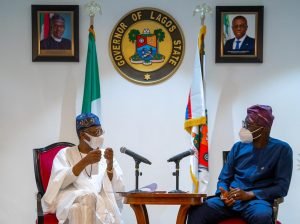
The Minister said this on Saturday when he led members of the Ministerial Task Force on a visit to the Lagos state Governor, Babajide Sanwo-Olu at Lagos House, Marina.
The News Agency of Nigeria (NAN) reports that Mohammed is chairman of the task force saddled with the responsibility of driving the successful execution of DSO, the process of transiting from analogue to digital terrestrial broadcasting.
The minister specifically said the value added services to be provided by DSO and FreeTv would support Local Government Areas in the 36 states in the collection of television and radio license from residents.
He said with the successful completion of DSO project, FreeTV would be available nationwide on both Digital Terrestrial Television (DTT) and Direct To Home (DTH) transmission.
Mohammed said in addition to broadcast services, FreeTV would also provide value added services like, Push Video on Demand, Information Services and Audience Measurement.
The DSO is not just about high fidelity sound and picture, it is about creating jobs, especially for our teeming youths, stimulating local content and empowering channel owners.
In the next three years, the DSO is capable of creating one million jobs, in the manufacturing of Set Top Box or Decoder manufacturing; TV Production, Film Production, Distribution as well as TV and Online Advertising.
He said people could also cash in on the Push Video-on-Demand capability of the FreeTV platform to access premium blockbuster Nollywood movies from the comfort of their homes.
Mohammed said the FreeTV platform could also be used to broadcast information on activities, policies and progrannmes of respective states to viewers.
A major advantage of the DSO is that viewers will not pay subscription fees.
Once they have acquired the Set Top Box and pay the once-a-year access fee, which is a token, its free viewing all the way.
Millions of Nigerians who cannot afford to pay the rising subscription fees being charged by the Pay TV platforms can now enjoy the benefit of digital television.
This is the meaning of bridging the digital divide, he said.
Mohammed recalled that the government inaugurated the DSO rollout in Jos April 30, 2016.
He said after the inaugural launch, they had rolled out in four more states Kwara, Kaduna, Enugu and Osun and the Federal Capital Territory.
The minister said they would begin the second phase of the DSO rollout in Lagos state on April 29, which would be followed by Kano state on June 3, Rivers on July 8, Yobe on July 15 and Gombe on August 12.
He said more states would be slated thereafter, until the entire country was covered.
Mohammed said the courtesy visit was to brief the governor on the roll out in Lagos and to seek the support and cooperation of the government and the people of the state.
In his response, the governor said the state would give its support to ensure the successful execution of the DSO project in the state.
Sanwo-Olu derscored the importance of the DSO in job creation, revenue generation and dissemination of information and bringing government closer to the people. (NAN)
Source: NAN News
-
adminposted in News & Trends • read more
By Florence OnuegbuThe Federal Government announced, on Saturday, that it will rollout the Digital Switch-Over (DSO) in Lagos, on April 29, as the country transitions from analogue to digital broadcasting.
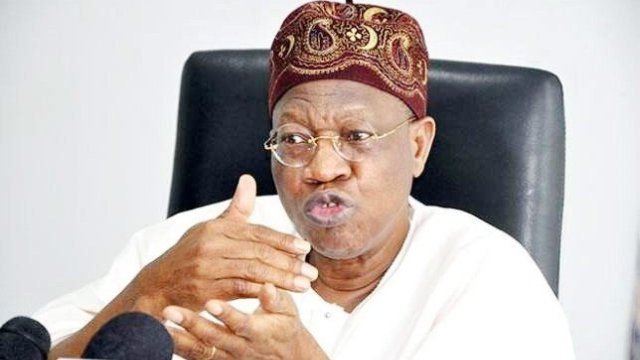
The Minister of Information and Culture, Alh Lai Mohammed, disclosed this when he led the Ministerial Taskforce of the Federal Ministry of Information and Culture on Digital Switch Over (DSO) on a courtesy visit to Lagos State Governor, Mr Babajide Sanwo-Olu at the Lagos House, Marina.
Mohammed said that the decision to transit to digital television followed a treaty agreement signed at the Regional Radio Communication Conference (RRC-06) in Geneva, Switzerland, on June 16, 2006, to usher in all-digital terrestrial broadcast services for sound and television by a target date of June 17, 2015.
He said that this would create a more equitable, just and people-centered information society, which would connect underserved populations and remote communities, thereby bridging the digital divide.
According to him, the proposed rollout in Lagos will be a critical milestone for the DSO and the creative industry, as over one million jobs would be provided nationwide.
We launched the DSO rollout in Jos, Plateau State, on April 30, 2016. Since then we have rolled out in four more states, Kwara, Kaduna, Enugu, and Osun, in addition to the Federal Capital Territory, bringing the total to five states and the FCT.
We are now moving rapidly to cover the remaining 31 states. We are kick-starting the new rollout here in Lagos State on April 29, 2021.
Kano State follows on June 3, 2021, Rivers State on July 8, 2021, Yobe State on July 15, 2021 and Gombe State on August 12, 2021, with more states slated thereafter.
The rollout in Lagos reflects our decision to take the DSO to commercial centres across the country.
With a population of over 20 million, and projected TV households of over five million, the launch of FreeTV in Lagos State will be a critical milestone for the DSO and for Nigerias broadcast and creative industry, he said.
The minister added that with the FreeTV of the DSO, Nigerians would have opportunities to watch over 60 channels with great content, at a cheaper rate, and without subscription to payTV.
Presenting. Sanwo-Olu with the Set-Top-Box for the DSO, he said that it would also enable government to get the data of every household with television.
Mohammed said that this would make the collection of television and radio licenses easier, adding that the Nigerian Broadcasting Code (NBC) had been amended to make provisions for the switch over from analog to digital.
The minister disclosed that six months after the rollout of the DSO in Lagos, the NBC would ask television stations to shut down their analog broadcast equipment, thereby making more spectrum available for data and other telecommunication services.
He stressed that the DSO was relevant to the Lagos Smart City Project and the Lagos Broadband initiative.
Mohammed, therefore, urged Sanwo-Olu to direct the Lagos State Signage and Advertisement Agency (LASAA) to provide out-of-home boards, lamp post and other publicity support for the DSO launch for at least three months.
Lagos State, which is the hub of the Creative Industry, will take a large share of the one million jobs to be created.
Since FreeTV helps to provide Value Added Services, the 20 Local Government Areas and 37 LCDAs in Lagos State will be supported in the collection of Television and Radio Licenses from residents.
With FreeTVs push system for information services, the FreeTV platform can be used to broadcast information on Lagos State activities to all viewers.
A major advantage of the DSO is that viewers will not pay subscription fees. Once they have acquired the Set-Top-Box and pay the once-a-year access fee, which is a token, it is free viewing all the way.
Millions of Nigerians, who cannot afford to pay the rising subscription fees being charged by the PayTV platforms, can now enjoy the benefit of digital television. This is the meaning of bridging the digital divide, he said.
In his response, Sanwo-Olu said that his administration would support the switch-over, as it would enhance job creation and content development.
He said that the DSO would also provide opportunity for government to use the content coming out of it to inform and engage with the citizens, as well as bringing governance closer to the people.
The governor advised the Ministerial Taskforce to make the FreeTV box and after sale support easily accessible.
The movement from analogue set up that we currently have to digital is apt and it speaks to the reality of what we have today.
Everywhere in the world, technology is now a fundamental and critical deliverable of government. It presents an opportunity for citizens to have access to local, national and international space.
As a forward looking state, we are in partnership and we see it as bringing the future to our citizens, so we do not have a problem with it at all.
Even for us as a state, we have been developing what we call a metropolitan fiber optics to provide fiber connectivity as one of the solutions for our citizens to have access to cheaper data.
We will support the DSO. We will help. We want Lagos to continue to set the space for the nation. We will help our people to be exposed to modern and international best practices. We will be willing to work with you and ensure that we deliver jointly on April 29, he said. (NAN)
Source: NAN News
-
adminposted in News & Trends • read more
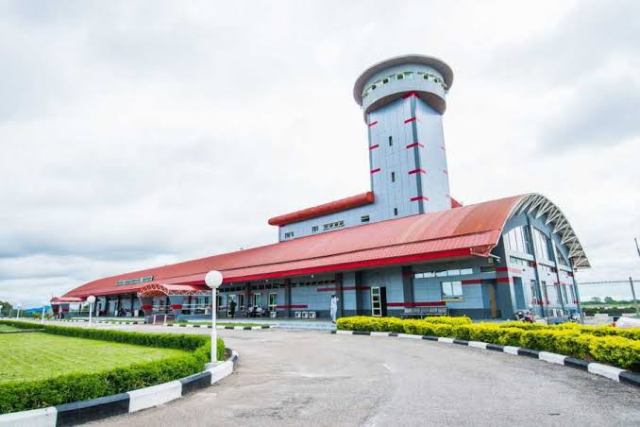
Abdulfatai BekiThe management of the llorin International Airport says it has put in place measures to nip any security threat in the bud.
The Federal Airports Authority of Nigeria (FAAN) had on April 9 issued an alert of security threat of attacks on some airports in the country.
The circular addressed to Airport Chiefs of Security in the country and signed by S.M. Mamman, Deputy General Manager, Administration and Logistics, listed the targeted airports to include Kaduna, Maiduguri, Sokoto, Kano, Abuja and Lagos.
It directed all the airport security chiefs to convene emergency meetings of their security committees to review the security status of the airports and fashion out measures to tackle any threats.
In an interview with the News Agency of Nigeria (NAN), Mr Adeyemi Oluwakayode, the Deputy General Manager, Corporate Affairsof the Ilorin International Airport, said that security had been beefed up at the airport following the alert.
He said that military, para-military and police personnel had been deployed to provide maximum security at all times to combat any form of threat.
There is no problem at the llorin international Airport as all the security outfits are on the alert at the Airport at all times, Oluwakayode said.
The Deputy General Manager said that the management will continue to collaborate with security agencies to ensure security at the airport.
He assured travelers using the airport of adequate protection of livesand property. (NAN)
Source: NAN News
-
adminposted in News & Trends • read more
By Mustapha Sumaila
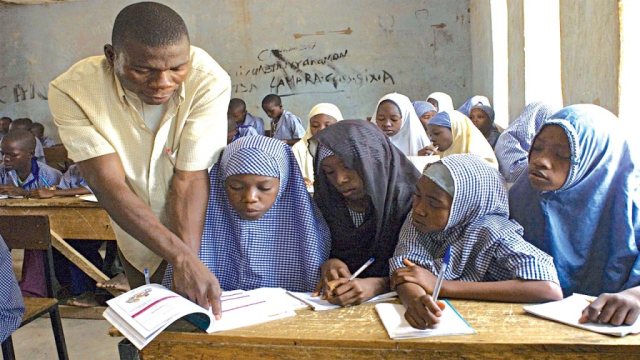
Federal Government says it will develop a national implementation guideline on the Accelerated Basic Education Curriculum (ABEC) programme to address issue of out of school children.Prof Ismail Junaidu, Executive Secretary, Nigerian Educational Research and Development Council (NERDC), disclosed this at a workshop in Abuja on Saturday.
The Workshop on Training of Master Trainers on ABEC was organised by Plan International Nigeria for selected teachers in crisis ridden states in the North-East.
Junaidu explained that the guidelines would be all inclusive where states and stakeholders including non-governmental organisations as well as development partners expected to key into the programme.
The train-the-trainers strategy will give us the opportunity of training a larger number of teachers as we plan for a national rollout of the programme.
Currently, we are at the verge of completing the piloting of the programme in Borno State and environs.
It is important that I inform you that the result from the pilot-testing exercise gives further impetus to stay on course in our intention to use the programme as to bring down the number of out-of-school youths and children in Nigeria.
Let me also inform you that while some teacher support materials have been completely developed others are in the completion stages, he said.
The executive secretary said one of the critical requirements for the successful implementation of the ABEC is the availability of teachers who were adequately prepared to effectively teach the contents of the curriculum.
According to him, ABEC is a specialised curriculum with unique implementation strategy which makes it very essential that teachers are given special training on the use of the curriculum.
One way of getting teachers trained on the implementation of the curriculum is to train a select number of teachers who will in turn train other teachers.
Principally, the training is intended to provide adequate guidance to the teachers towards ensuring that the learners derive maximum benefits from the well-designed curriculum.
It will also give the teachers the opportunity to interact deeply with the curriculum and the programme structure, he added.
Junaidu, however, commended Plan International led consortium for its commitment to the ABEC Programme in the country.
He added that since the beginning of the organisations partnership with the federal government on this project, it had continued to demonstrate unwavering commitment to the successful implementation of ABEC.
In her remarks, Mrs Jummai Musa, Director, Programme Quality and Innovation of Plan International Nigeria, decried the rate of out of school children in the country.
Musa said in the past 11 years of insurgency in the country, there were children that were born that period that had no access to education due to collapse education system in some communities.
She explained that a curriculum had been designed for abridged programme for such children in order to be placed in their appropriate classes with a view to have them in schools.
According to her, the number of out of school children is alarming, hence the need for well meaning organisations to work with the government to address it.
She added that Plan International was committed and ready to support the government to drive the implementation of ABEC initiative. (NAN)
Source: NAN News
-
adminposted in News & Trends • read more

By Lucy Osuizigbo-Okechukwu
The Nigerian Bar Association (NBA), Anambra branch, says the prolonged nationwide strike by the Judiciary Staff Union of Nigeria (JUSUN) is affecting the justice system.Mr Kingsley Awuka, Chairman of the Committee of Chairmen of the eight branches of NBA in Anambra, made the assertion in a statement in Awka on Saturday.
The statement said that the decision of the Governors Forum to suspend discussion and engagement of JUSUN was uncharitable, unpatriotic and totally unacceptable.
The News Agency of Nigeria (NAN) reports that JUSUN began a nationwide indefinite strike on April 6 over the non-implementation of judicial financial autonomy as enshrined in the Constitution.
President Muhammadu Buhari had signed an Executive Order granting financial autonomy to the judiciary and State House of Assembly in May 2020, after several agitations.
However, the gazetting of the order was suspended after Buhari met with governors, who later expressed concern over its constitutionality.
It said: The justice sector of our country is progressively sliding into the destructive dungeon with no hope in sight of its recovery.
All the courts have been under lock and key with many pending cases. Time and space will not permit us to enumerate the inexhaustible evil consequences of this ugly situation,
The committee urged the 36 states governors to commence the implementation of judicial financial autonomy in the country.
We particularly urge Gov. Willie Obiano of Anambra to ignore the decision of the Governors Forum and commence the implementation of judicial financial autonomy in the state.
The statement said that the committee fully lends its support to the demands of JUSUN and shall sustain the support until the demands were met. (NAN)
Source: NAN News
-
adminposted in News & Trends • read more
By Monday Ijeh
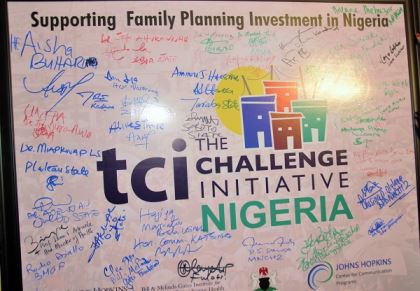
The Challenge Initiative (TCI), Nigeria, an health-based NGO, has called on Community Based Organisations (CBOs) to explore other sources of funding to sustain their activities outside donors support or grants.Dr Victor Igharo, the Director of TCI stated this in an interview with the News Agency of Nigeria (NAN) on Friday in Abuja.
Igharo spoke at the end of a 5-Day training workshop on Resource Mobilisation and Proposal Writing organised for CBOs, under the Family Planning (FP) and Adolescents and Youths (AY) programme.
The News Agency of Nigeria (NAN) reports that the TCI is a three- year urban reproductive health programme funded by the Bill and Melinda Gates Foundation.
Participants at the workshop were drawn from Kano, Bauchi, Ogun, Niger, Edo, and Delta states.The participants were representatives of Faith Based Organisation (FBO), Advocacy Core Group (ACG), Social Behavioural Change Communication (SBCC) and the Media Forum for FP and AY programmes.
The TCI boss, said the training would be taken in phases due to the COVID-19 protocols, adding that with the conclusion of the first phase, the second phase would come up in two weeks.
He noted that the training remained an invaluable resource that any organisation would need to remain afloat.
Igharo urged the participants to make effective use of the training, by thinking outside the box to mobilise additional funds to sustain their various activities and programme in the country.
He said the training was to enable the CBOs build the skills to attract additional resources, either through proposal writing to new donors or employ other ways of increasing their financial flow without solely depending on supports or grants.
In Nigeria, for about five years, we have implemented and supported states to build platforms, structures and even worked with Civil Society Organisations (CSOs) and independent platforms and pressure groups.
One of the challenges that we have in the platform, is that facilitators are not able to sustain the activities without the support of the originators of the programme.
So, we felt that to equip members of these platforms with skills that will help them thrive or survive with or without our funding, they need resource mobilisation skills.
That is the reason we have put this training together, Igharo said.
He said that every project has a life cycle, adding that the idea behind the training was to erase the challenge of sustainability of programmes in the country.
According to Igharo, TCI is a platform with several projects on it.
We do not know what the future looks like, but we are optimistic that even newer projects and interventions will spring up.
Every project has a time frame, and we are currently implementing FP and AY projects and by the original design, the first phase of these projects are supposed to round up in September this year.
But we are already making plans for the second phase of the projects and we have confidence that some states we have partnership with, will follow us through to the second phase.
The kind of mechanism we run is that there is a certain period of exposure that our partner states should have with TCI and then, they should be able to run the things they have learnt during the period of exposure.
So, we are currently in the stage of graduating our first states, graduate our older states, and bring new ones on board.
We are currently operating in 13 states in Nigeria for our combine projects and we have two states lined up to also join us, she said.
Igharo urged the participants not to allow the training to waste, adding that we have equipped you with tools and information that can actually help you way beyond just project engagement.
Also in an interview, Mr Nasiru Gwarzo, representing SBCC in Kano, and Mr Yakubu Abubakar, of Interfaith, from Bauchi, lauded the TCI for the training.
They said that the skills acquired would support their understanding and enable them approach family planning issues for increased impact.(NAN)
Source: NAN News
-
adminposted in News & Trends • read more
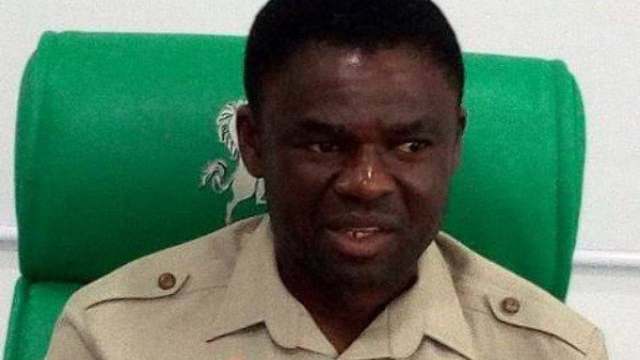
By Ijeoma OkigboPhilip Shaibu, the Deputy Governor of Edo, on Wednesday in Benin said the present state government is on a mission to revolutionise sports in its domain.
Shaibu told the News Agency of Nigeria (NAN) policies were in place to maintain the gymnasium hall which has just been equipped with new facilities.
Edo is back to its number one position, and Edo is the traditional home of sports in Nigeria.
Edo has been on recess for a long time and the governor of Edo has reawakened that consciousness in our people by putting in place this infrastructure.
Also, by bringing out policies that will not only work now but which are also sustainable policies even after this government.
So, when I say there is a sports revolution taking place in Edo, I am not refering to only gymnastics or football but the entiresports.
We have had 38 sports during this Edo 2020 and there was no clash of any of the activities and everything was evenly spread.
This is to tell you that our facility development programme is not fixed but spread to all sports, he said.
Shaibu, whose state recorded the highest number of medals in gymnastics - 27 in total - at the 20th National Sports Festival (NSF), lauded his team for their performance.
He added that the facilities at the gymnasium venue would aid the preparation of the Nigerian team to the Olympics.
It makes me feel so great. In the last sports festival in Abuja, their performance was the same.
It shows that gymnastics has come to stay in Edo and we are the best in the country presently. You can see it from the facilities we have here.
These are world-class facilities, the latest of all equipment as far as gymnastics is concerned in the world.
These facilities are the same facilities our Olympic team will be using at the Olympics in Tokyo in July.
So, for us, it is a huge investment and I am excited that at this NSF the athletes were able to show that that Edo is the home of gymnastics, he added.
Source: NAN News
-
adminposted in News & Trends • read more

Some residents of North-East have attributed the rise in price of Cement to the widening gap between the demand and supply of the product.The News Agency of Nigeria (NAN) survey in Bauchi, Gombe, Borno, Yobe, Adamawa as well as Jigawa, indicated an average of 40 per cent increase in price.
Respondents to the survey said several challenges affected production in factories, one of which is the outbreak of COVID-19, thus reducing supply, while demand kept increasing.
Some of the respondents also condemned the activities of middlemen, saying such people capitalised on the development to further worsen the situation.
They called on government to intervene by checking the unwholesome activities of some dealers and middlemen.
Others however blamed the hike on high cost of transportation and other sundry activities associated with the business of procurement and sales of Cement in the country.
Malam Ibrahim Sanusi, a Cement Dealer at the Gombe main market described the hike as outrageous when compared with the price of same commodity the previous year.
Sanusi said in December last year, he bought a bag of Dangote brand for N2,400 and sold it for N2, 500, same with Ashaka brand.
Now, we buy Dangote Cement for N4, 000 from their depot in Gombe and sell for N4, 200, while the company price of Ashaka Cement is N3,900, and the retail price is N4, 000, he said.
On his part, Chairman of Gombe state chapter of Blocks Molders Association, Alhaji Bello Bose, said the hike in price may be deliberate.
Since October 2020, there had been scarcity of Cement in Gombe state, and now, the price has been hiked. This, to me, is deliberate, he insisted.
He added that many of his members would have left the trade if they had alternatives, and therefore called on government to intervene.
Efforts to secure comment from management of Ashaka Cement Company in Gombe state on the cause of the price hike, did not produce results.
When contacted, Head of Corporate Communications of the company, Mr Sarki Isa, promised to get back to NAN after consultations with concerned departmental heads, but as at the time of filing the report, there was still no response.
In Bauchi, Malam Bako Mohammed, Chairman, Railway Cement Depot, said that low production by manufacturers was responsible for the current high price.
Mohammed told NAN that a bag that was sold for N2,500 last year, is now N3,800.
He said that the low production had led to non-supply of the product to some retailers who had paid for it months ago.
According to him, the situation has also forced retailers who have little of it from the old stock, to determine the price.
When we try to ask questions, the manufacturers would say that the Value Added Tax (VAT) being deducted by the government on the products is too high and that is why they are not producing much.
Before, we used to go to Ashaka cement in Gombe state to procure Cement, but now, even Ashaka is not producing.
Now, because of the lack of supply, we do go as far as Obajana in Kogi, or Benue state, to buy the product.
The situation is worrisome; I had paid for my consignment since November last year but up till now, I am yet to receive my Cement, he lamented.
The chairman also said other circumstances that contributed to the hike in price included cost of transportation, loading and off-loading.
Mohammed suggested that government should discuss with manufacturers on how to address the problem.
In the past, government had done it and the price reduced drastically; the present administration can equally do same, he said.
Alhaji Abubakar Lawal, a customer, who recalled buying a bag of Cement at the rate of N2,500 last year, said same now costs N3,700.
Speaking about cause of the hike in the price, he said he had been told producers were servicing their machines, as such had stopped production.
For that reason, production decreased while demand is still the way it used to be, or even higher, resulting in price hike, he said.
Alhaji Samaila Muhammed, a Cement Dealer in Damaturu, also attributed the price hike to the drastic reduction in supply.
One of the reasons for the hike is that demand for the product is much higher than the supply of the commodity, he said.
He called for intervention of government to close the current gap between demand and supply, just as he argued that increase in ongoing capital projects nationwide, is another factor.
In his contribution, Alhaji Usman Kasim, a Cement Dealer in Yola, observed that increase in price had to do with activities of middlemen, major Suppliers/Dealers, and some top management staff of Cement companies.
I think one of the factors responsible for the increase in price, is the activities of middlemen.
These middlemen are powerful; some of them have connection with top Management officers of Cement Industries.
The only thing that will stabilise the price is for the Cement industry owners to check the activities of some of their top management staff, he advised.
Mr Sunday Haruna, member, Adamawa Builders Association, observed that due to hike in price of Cement , building activities had reduced drastically.
Many people visit our Headquarters on daily basis to hire our members.
Now, we have observed people are no longer coming to patronage our services, as usual, and we believe there is a link with the present high cost of Cement, Haruna said.
Also, a Maiduguri-based Builder, Ibrahim Khalifa, who called for intervention of government, urged the state government to resuscitate the moribund Borno Burnt Bricks factory.
Many estates in Maiduguri were constructed with bricks some years back.
Construction with bricks does not require much cement and its structures last longer, Khalifa said.
In Jigawa, Malam Usman Muhammed, a Cement Dealer for more than two decades, said no one could precisely say what was responsible for the price hike.
He said a bag now costs between N3,650 and N3,700, depending on the brand, as against last year, when the price was N2,700, adding that the development had affected patronage.
Some times ago, we were selling about 4000 bags weekly, but today, we hardly sell 1500 bags per week, Muhammed said.
He also blamed some dealers for manipulating the price in the market.
Another dealer, Musa Musa, told NAN that his sales had dropped by about 50 per cent.
Some customers, mostly private resident developers and operators of block industries in Jigawa, lamented that the price hike had affected their businesses.
Shuaibu Kabiru, a block molder, said he had been forced by circumstances to increase the price of his blocks by 15 per cent.
Alhaji Sani Ibrahim, a private resident developer, said he had been delaying his construction project for a very long time, believing the cement price would drop.
On his part, a Builder, Mr Garba Auwwal, attributed the hike in price of building materials, including Cement, to the outbreak of COVID-19.
According to him, COVID-19 pandemic has made many industries to trim down workforce, thereby reducing quantity of goods being produced, with a corresponding hike in price.
Auwwal also said the restrictions of movement of goods and services due to the pandemic, affected commodity price.
He suggested the establishment of a body that would regulate prices of building materials, including cement.(NAN)
Source: NAN News
-
adminposted in News & Trends • read more
By Muhammad LawalA group under the auspices of Initiative for Conciliation and Right Protection has advocated for palliative for victims of terrorism and banditry to cushion the effect of the ugly trend.
This is contained in a statement jointly signed by Mable Bremah, Godwin Ekoja and Halima Bukar, Assstant Secretary, PRO and Deputy Organising Secretary respectively in Birnin Kebbi on Saturday.
It observed that victims of terrorism, banditry and oppressed deserved better treatment to enable such victims resettle and gradually recover from their trauma.
The statement urged Nigerians irrespective of ethnic, religious and political affiliation to collectively join hands toward ending the insecurity bedevelling the country to pave way for a better Nigeria.
It observed that Nigerians were living in an unprecedented era, an era where humans were fast reverting to their primitive barbaric natures.
The statement added that the country was being subjugated to the days of corruption, terrorism and oppression, adding that matters were getting worse by the day.
Lives are being lost in great numbers, dreams shattered and hopes lost. This has in turn led to great suffering, dejection, and even more terror.
Earlier, it was a group of people termed Boko-Haram, who were said to detest contemporary education.
But then, contrary to the portrayed image of this seemingly phantom terrorist group, their attacks spread to worship centers, markets and innocent gatherings, evoking suspicions from critical thinkers.
These attacks have greatly affected the Nigerian populace, both directly and indirectly. The worst hit region can be said to be North-Eastern Nigeria but the attacks have, over the years, affected many groups of different ethnicities and religions, it said.
It advised that every one has a duty to discharge for the betterment of Nigeria in his/her own little way.
It insisted that victims of oppression and terrorism were presently in difficult situation in Borno, Katsina, Zamfara, Niger, Kaduna states as well as the victims of the #End SARS protest. (NAN)
Source: NAN News