Groups
-
adminposted in News & Trends • read more
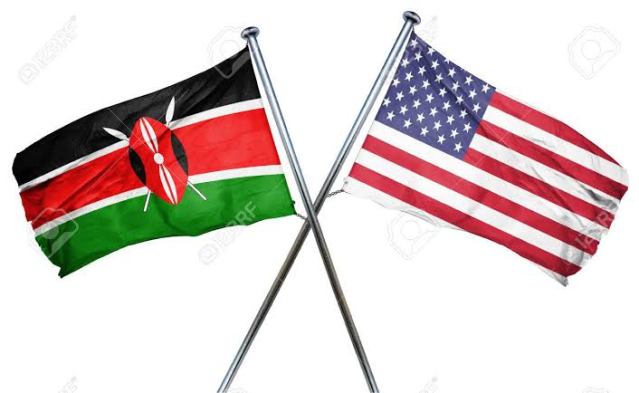
Kenya and the United States have held virtual talks on signing a Free Trade Agreement (FTA).Betty Maina, Kenyas cabinet secretary of Ministry of Industrialisation Trade and Enterprise Development said in a statement on Thursday.
Maina said that she had discussed with Katherine Tai, the U.S. Trade Representative, following up on the FTA negotiations that has been going on since 2020.
The two officials underlined the need for Kenya and the U.S. to be guided by a robust trade policy that will promote the mutual interests of the majority of the Kenyan and American people.
This will ensure that trade partnerships support the development agenda of the two countries, including creating jobs and promoting economic growth, Maina said.
The negotiations for FTA which commenced on July 8, 2020, stalled due to the COVID-19 pandemic and the recent U.S. elections.
Two rounds of negotiations have been conducted so far.
The two countries said that they will explore a viable medium to long-term approach to their future trade relations in the context of the wider agenda of the U.S. trade and development of policy for Africa.
Tai requested Kenya to partner with the U.S. in developing this strategy and supporting the regional integration drive in Africa.
The fate of trade talks remains uncertain as Washington realigns its interests under the new Biden administration. (Xinhua/NAN)
Source: NAN News
-
adminposted in News & Trends • read more
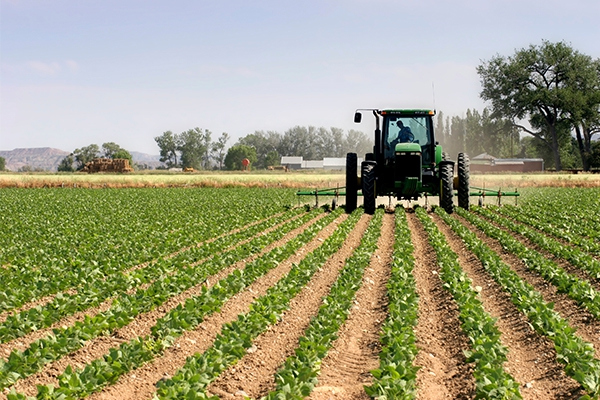
By Fortune AbangThe Civil Society Group for Good Governance (CSGGG) says the National Fadama Development Project (NFDP) will help tackle issues around poverty in Nigeria.
The President of CSGGG, Mr Ogakwu Dominic, made this known while briefing newsmen on Thursday in Abuja.
The term Fadama is a Hausa name for irrigable land, usually low-lying plains under laid by shallow planes along major rivers.
He said that the need to reassure Nigerian farmers of potential of the project had become important, to promote confidence building in ongoing fights against poverty and to discourage false narratives.
Ogakwu said: The public domain has been inundated with all sorts of false narratives about the project; ordinary Nigerians have been left in dilemma about actual state of the nation.
Such fake news is currently threatening our polity, if this ugly trend is not nipped in the bud early enough, it could obstruct the unity currently enjoyed in the country.
Therefore, CSGGGs reaffirmation to fight against this fake news, balance the narrative and set records straight through investigative and objective reportage of activities of Fadama project.
According to him, the Fadama project worth million was established in 1990 and is in its third phase being implemented in 36 states, and the Federal Capital Territory (FCT).
He described Fadama as World Bank Project which started in 1990 with the first of its series designed to bring basic irrigation and productive support to farmers in selected Nigerian states.
Furthermore, he noted that Fadama-II started in 2003 with groundbreaking Community-Driven Development (CDD) model in Nigerias rural areas and helping to institutionalise local stakeholder engagement in community decision making.
Fadama-III interventions began in 2009; the Projects geographical scope was expanded and became well-known National Brand of Local Agricultural Development Project.
The Fadama-III Project which was originally approved by the Board on June 1, 2008, with credit facility of US million, became effective on March 23, 2009, and closed by Dec. 31, 2013.
Despite successes recorded, government saw a lot still needs to be done if rural farmers are to benefit from this World Bank scheme and requested for additional financing for special interventions.
The World Bank responded to the request by providing additional financing to the Fadama-III project, to meet the urgency of the Agricultural Transformation Agenda (ATA), he added.
He said the additional financing used business approach model that support cluster of farmers through off-taking arrangements in six selected states producing Cassava, Rice, Sorghum and Tomato value-chains.
He listed Anambra, Enugu, Kano, Kogi, Lagos and Niger as the six states, saying additional 28 states including the Federal Capital Territory to had benefitted from the project having met set criteria.
These achievements were recorded due to the adoption of Good Agronomic Practices (GAP), capacity building of farmers, engagement of Advisory Services and Inputs support Consultants (ASIC), linkages to off-takers.
Again, in 2019, cassava farmers under Fadama-III, AF I and AF II realised more than N20.6 billion as revenue and a gross margin of N13 billion.
In the same vein, rice, sorghum and tomato farmers realised a gross margin of N104.4 billion, N60.9 billion and N19.2 billion, respectively, during the projects life span.
Hence, the Fadama-III has contributed substantially to the Gross Domestic Product (GDP) and Gross Domestic Income (GDI) of Nigeria from 2015 to 2019, Dominic stressed.
Source: NAN News
-
adminposted in News & Trends • read more
By Folasade AkpanThe World Bank will provide 50 countries with finance to buy COVID-19 vaccines by mid-2021, Mr David Malpass, World Bank Group President has said.
Malpass made this known on Wednesday in Washington D. C. during a news conference at the ongoing 2021 Spring Meetings which began on Monday.
The president said that for the first time in the banks history, it topped 100 billion dollars in commitments over a 12-month period.
He added that there had been a big surge in growth in the groups activities in response to COVID-19.
On addressing debt issues for developing countries, he said the group was working actively in collaboration with the International Monetary Fund (IMF) on the common framework that the G20 established for dealing with debt overhang and debt burdens.
The G20 has, I think, in the deliberations this week, a call for the first creditor committee to be formed under the common framework.
And the question is aimed at the middle-income countries, many of them face access problems to market-based finance and they also have rising fiscal deficits that are problematic.
So, I think, again, I am going to fall back that transparency is very important. I think also we need to look for a more balanced relationship between creditors and debtors.
Malpass said the challenge facing middle-income countries was collateralised debt, which made it very hard to restructure.
We are making some progress on debt transparency, though collateralisation of debt remains a problem and non-disclosure clause by some creditors remains a problem.
Theres full recognition of the debt problem facing the poor countries. I welcome that. I mentioned International Development Association (IDA) 20 earlier.
Speaking about the effect of climate change on the recovery process of developing countries, he said many of the poorer countries were dramatically affected by climate change but were not major producers of greenhouse gas emissions.
He said four per cent of the global greenhouse gas emissions came from the poorest countries.
He, however, said that one way they could benefit was if the rest of the world was doing more as it would reduce their vulnerabilities and also provide resources for them to adapt to the change.
Second is the direct job aspect of adapting to changing climates and also providing food security within regions.
Those are going to be big and important from a job creation standpoint.
The populations are growing of young people and so we are looking for ways to have private sector climates that are inviting to new businesses and that allow job creation.
Also, as countries being prepared for the recovery and allowing their economies to change to the post-COVID environment, which is going to be very different from pre-COVID.
Malpass also said that the bank had plans to reduce global poverty, for development and a focus, country-by-country, to see the developing world do better in 2022.
He said that would mean having a better response to climate change that was underway, better education and health care systems.
He added that the banks commitments grew a record amount both in per cent terms and dollar terms in 2020.
The president said that in 2020 calendar year, the bank was up 65 per cent from 2019 in terms of International Bank for Reconstruction and Development (IBRD) and IDA commitments.
He added that it was continuing to expand the commitment capacity of the bank and that IDA 20, the acceleration of the next replenishment cycle of IDA would help with that.
All of these go together to the idea that we are trying to achieve transformative, scalable change for people that live in poorer countries.
That can take the form of better rule of law, better access to the legal system for women, for girls in the education system.
The health care systems need to be improved and be more available to people.
Critically, access to electricity and to clean water are huge challenges for people in poverty and for people even trying to move up in the income scale.
He said that work on all of those and on infrastructure were ways to move forward. (NAN)
Source: NAN News
-
adminposted in News & Trends • read more
By Folasade AkpanThe International Monetary Fund (IMF) has urged countries in Sub-Saharan Africa to do more domestically to increase tax revenues and improve the quality of spending.
Ms Kristalina Georgieva, Managing Director of IMF, made this known in Washington D. C. on Wednesday at the IMF/World Bank Spring Meetings news conference.
Georgieva also assured that the region would enjoy the funds support in improving governance, transparency and accountability to their citizens.
According to her, the fund, in 2020 increased 13 times, the financing, especially on emergency basis to Africa.
We have advocated for debt service suspension and that has provided up to now, some seven billion dollars to low income countries.
A big chunk of this is for Sub-Saharan Africa. We have provided debt relief to our most vulnerable members, so Sub-Saharan African countries that fall in this category benefited from it.
We are looking for ways to reform our concessional lending program, the Poverty Reduction and Growth Trust, so we can do more concessional financing on a larger scale for longer, especially in Sub-Saharan Africa.
She said the fund now had a big support from the G20 and was very optimistic it would get a new SDR allocation which for Sub-Saharan African countries with depleted buffers, would be a very welcome injection.
The MD, however, called on wealthier members who might not need an injection of reserves to lend through it on highly concessional terms funding that could go to countries that needed it.
On the global front, Georgieva said economic fortunes were diverging dangerously.
According to her, a small number of advanced and emerging market economies, led by the U.S. and China are powering ahead.
She added that weaker and poorer countries were falling behind in this multi-speed recovery.
We also face extremely high uncertainty, especially over the impact of new virus strains and potential shifts in financial conditions.
There is the risk of further economic scarring from job losses, learning losses, bankruptcies, extreme poverty and hunger.
Policymakers must take the right actions now by giving everyone a fair shot, not just into peoples arms, but also in peoples lives and in vulnerable economies.
She gave three policy recommendations that should help boost recovery of economies.
First, All should get a fair shot at the vaccine, which means ramping up vaccine production and distribution and steering clear of export controls.
It also means fully funding the COVAX facility and ensuring that surplus vaccines are transferred to poorer countries.
Vaccine policy is economic policy. Faster progress in ending the health crisis can add almost nine trillion dollars to global Gross Domestic Product by 2025, best value for public money in our times, but this window of opportunity is closing fast.
The scientists have given us vaccines in record time, now governments must show the same sense of urgency and collaboration to provide vaccines to everyone, everywhere.
Secondly, that there is a fair shot at recovery.
According to her, the key is to support vulnerable households and viable firms for as long as the crisis is around.
This would require targeted fiscal measures and maintaining favorable financial conditions.
She added that given diverging recoveries, careful communication by major central banks and prudent policies in emerging and developing countries to minimise harmful financial spillovers was needed.
Thirdly, there was a fair shot at the future.
Georgieva said it was perhaps the most consequential decision that any government could make in 2021 as the focus should be on scaling up public investment.
This should be in green projects and digital infrastructure, in peoples health and education to ensure that everyone could benefit from the historic transformation to greener, smarter and more inclusive economies.
To unlock this potential, countries will need sufficient public revenues and more efficient spending.
In many cases, this will mean more progressive taxation and an agreement on questions like minimum taxation for companies and international tax rights.
This has to be coupled with stronger support for poorer countries as they fight the crisis and seek to invest in the future.
She added that low-income countries had to deploy 450 billion dollars over the next five years.
She said that as part of a comprehensive effort, they needed more domestic revenue mobilisation, but also more external concessional financing and more help to deal with debt.
The MD added that further extension of the Debt Service Suspension Initiative that was just announced by the G20 and the new Common Framework for orderly debt restructuring would help.
The virtual Spring Meetings which began on Monday would end on Sunday. (NAN)
Source: NAN News
-
adminposted in News & Trends • read more

By Monday Ijeh
The Department of State Services (DSS) has said that the late official driver to President Muhammadu Buhari, MrSaidu Afaka, was not detained or tortured by the service before his death.A statement by Dr Peter Afunanya, DSS Public Relations Officer on Thursday in Abuja, said that reports in some section of the media that the department tortured the late driver to death was a misleading information.
Afunanya said the driver was never arrested nor detained by the department.
According to him, suspect handling method is usually in compliance with the tenets of criminal justice administration system and democracy.
The DSS spokesman, therefore, urged the public to disregard the fake news trending in online platform.
The News Agency of Nigeria (NAN) recalls that the Senior Special Assistant to the President on Media and Publicity, Malam Garba Shehu, on April 6 announced the death of Afaka.
Shehu said the late driver died after a prolonged illness and extended the condolences of the President to his family.
The statement read: President Muhammadu Buhari extends heartfelt condolences to the family of Afaka on the passing of Master Warrant Officer, Saidu Afaka, his official driver, who died at the State House Clinic on Tuesday after a prolonged illness.
President Buhari, who also commiserates with the Government and people of Kaduna State, described the late Afaka as an honest, capable and reliable person who handled his job with utmost care and responsibility.
The President recalls that in 2016 the soldier, while on pilgrimage in Saudi Arabia, picked up a bag containing a large amount of foreign currencies and turned it over to the National Hajj Commission, an action which earned him praises from the Saudi and Nigerian authorities. (NAN)
Source: NAN News
-
adminposted in News & Trends • read more
By Rabiu Sani-Ali
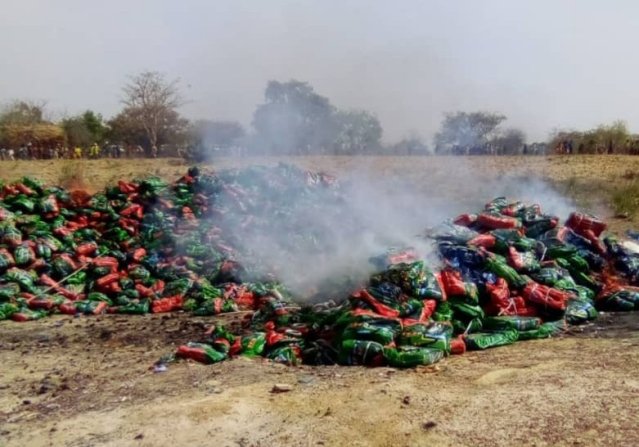
The Nigeria Security and Civil Defence Corps (NSCDC) command in Kano State has destroyed fake electric cables and counterfeit products worth N8 million.ASC Ibrahim Idris-Abdullahi, spokesperson for the command, said this in a statement on Thursday in Kano.
Idris-Abdullahi said the fake products were seized at a joint operation by the command and Standard Organisation of Nigeria (SON).
He said the seized items comprising fake mosquito repellent and electric cables were destroyed on Wednesday at Rijiyar Gwangwan in Dawakin Kudu Local Government Area (LGA) of the state.
Operatives of the Anti Vandalism Unit of the Corps participated in the destruction of thousands of cartons of expired mosquito coils and sub standard electrical cables.
The Corps in a recent joint operation with the SON embarked on a clampdown of traders who specialised in selling expired and sub standard products thereby endangering lives of the citizenry.
During the successful operations, cartons of expired and sub standard products were confiscated and the culprits charged to court, he said.
Idris-Abdullahi said NSCDC officials, SON, National Environmental Standard and Regulatory Agency (NESREA), community leaders and trade unions witnessed the destruction.(NAN)
Source: NAN News
-
adminposted in News & Trends • read more
By Abbas Bamalli
The Nigerian Union of Local Government Employees (NULGE) has expressed concern over a bill at the House of Representatives, seeking abolition of local government councils in Nigeria.Mr Hakeem Ambali, National President, NULGE, said this when he spoke with newsmen in Kano.
Ambali, represented by Mr Aliyu Haruna, NULGE National Treasurer, said abolishing local councils will worsen the security situation in the country.
A lawmaker from Rivers has sponsored a bill at the House of Representatives seeking to abolish local government councils in Nigeria.
In spite of the fact that governors have refused to implement the local government autonomy, what we are witnessing now is an attempt to abolish the local government councils in the country. This is a gang up against the masses.
This is an attempt to bring the country backward. Therefore, we are calling on the National Assembly to look into the issue, which is an attempt to take away what remain for the people at the grassroots.
I assured you that if the local government autonomy is implemented by the governors, the issue of insecurity would have been a thing of the past, because some security issues can be handled locally, he said.
Ambali added that once the local government councils were granted full autonomy, socio-economic activities will spring up at the grassroots level.
He said that NULGE had made contact with the leadership of the National Assembly on the issue, adding that if such did not yield good result, it will embark on strike.
Ambali also expressed concern over sack of about 2,000 workers by the Kaduna State government as well as the slashing of workers salary by the Kano State government.(NAN)
Source: NAN News
-
adminposted in News & Trends • read more
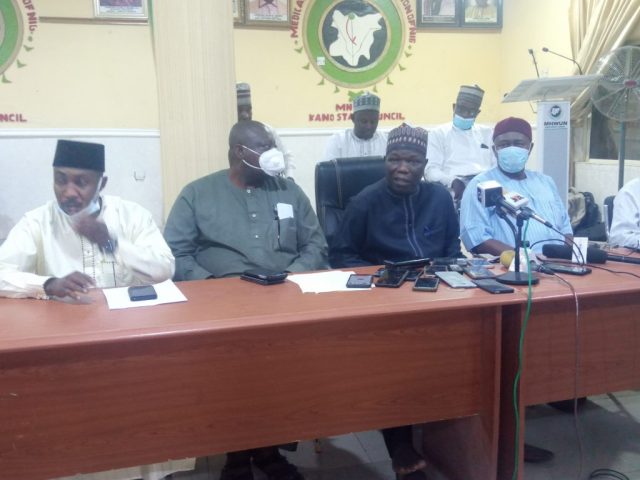
By Abbas BamalliThe Nigerian Labour Congress (NLC) has suspended its earlier plans for a three-day warning strike over alleged plans by the Kano State government to revert to N18,000 minimum wage.
The strike was scheduled to begin on Thursday.
The suspension was announced by the National Deputy President of the Union, Mr Najeem Yasin while briefing newsmen on Thursday in Kano.
The labour union recalled that the State government had deducted the workers March salary.
According to him, the decision to suspend the strike and peaceful protest followed the agreement reached between the Kano State Government and the organised labour on Wednesday.
The meeting was convened at the instance of Gov. Abdullahi Ganduje with the representatives of the National President of the NLC, Mr Ayuba Wabba and other labour officials.
The state government revealed that it has no intention to go back to payment of the old N18,000 minimum wage as speculated, and reiterated its position to respect the agreement of N30,600 signed between the two parties in December 2019.
We also agreed that the March deductions in workers salaries at state and Local Government levels should be refunded to workers along with the April or May salaries, depending on increase of FAAC allocation for the period.
A committee was set up between the organised labour and the government to look into all contentious issues as presented by the labour union.
We also resolved that all machinery for the implementation of the new minimum wage of N39,600 should be put in place for the Kano State University of Science (KUST) Wudil and Yusuf Maitama Sule Universities
The meeting also agreed that payment of monthly pension and all the entitlements of retirees should be vested under the resolution and approval of the board of trustees of Kano State Pension Fund Trustee as provided by the 2006 pension law.
Also, among the resolutions is that no worker or any leader should be punished/treated in a prejudicial/malicious manner as a result of partaking in the planned industrial action by the Kano State Government.
Therefore, with the above resolutions, the three days industrial action scheduled to begin April 8, and peaceful protest on April 12, are hereby suspended by the organised labour, he announced. (NAN)
Source: NAN News
-
adminposted in News & Trends • read more
By Patricia AmoguCountry Director, Water Aid, Evelyn Mere, has urged leaders around the globe to invest 1.2 billion dollars on water, sanitation and hygiene for healthcare centres during the pandemic.
Mere made this call in a statement through her Communications and Media Manager, Mr Oluseyi AbdulMalik, in Abuja.
She said that the call was necessary as G20 Finance Ministers meet this week in Rome to discuss how they would build back from the pandemic.
According to her, world leaders are being advised to heed this call to save countries from the disturbing effects of the pandemic.
She stated that the said sum equated to just thirty minutes worth of what most countries had already spent on COVID-19 response packages in the last one year.
Spending at least 1.2 billion dollars on water, sanitation and hygiene for healthcare centres is a no-brainer investment, both saving lives now and also protecting against future pandemics and the devastation they cause.
Yet it could change everything for the millions who have no option but to seek care from the 50 per cent of health care facilities in the poorest countries which dont have clean water.
We must find the money needed as a matter of urgency, to make sure all healthcare facilities in the poorest countries have clean water and soap before another pandemic hits, she added.
Mere emphasised that if frontline health workers cant wash their hands, keep patients clean or have somewhere decent to go to the toilet, a hospital is not a hospital at all and it would be a breeding ground for disease.
The News Agency of Nigeria,(NAN)reports that since the onset of COVID-19, rich countries have spent significant sums, an average of nearly 10 per cent of their GDP, and a total of 20.6 trillion dollars, on stimulus packages to help bolster their economies and to recover from the pandemic.
In Nigeria, millions of people are at free risk of COVID-19 and other infectious diseases as 96 per cent of all healthcare centres in Nigeria lack access to basic water, sanitation and hygiene services putting the lives of doctors, nurses, midwives and patients at risk.
Providing doctors, nurses and patients with somewhere to clean their hands is one of the most effective ways to halt the spread of disease.
An essential injection of finance by the G20 would prevent millions of avoidable deaths through infections and diseases.
Not only has research shown that washing hands with soap helps reduce the spread of coronavirus by one third but it would also help curb the growth of antimicrobial resistance.
Antibiotics are too used in unclean health facilities as a quick fix in place of proper hygiene Which is contributing to an increasingly alarming situation as antibiotics lose their power to fight infections.
According to the World Health Organisation, investment of this nature would take just one year to pay for itself and produce savings for every dollar invested thereafter but an ever-growing debt crisis is preventing poorer countries from being able to invest into basic water. (NAN)
Source: NAN News
-
adminposted in News & Trends • read more
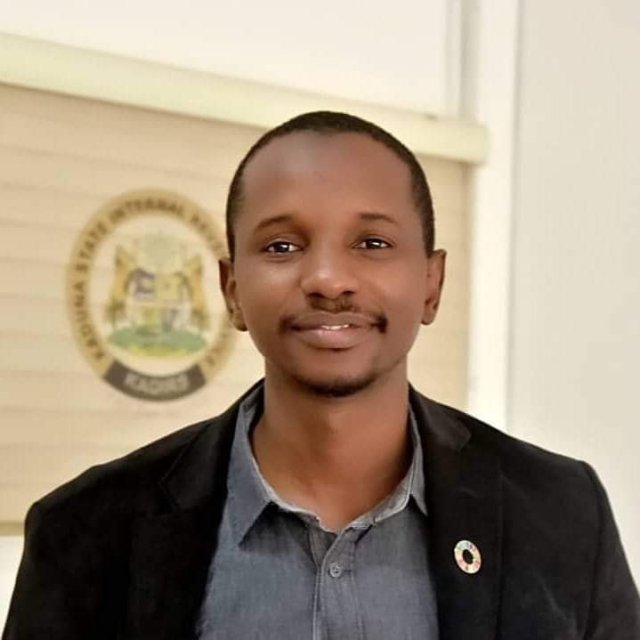
By Philip YataiThe Follow Taxes, an NGO says it will reward citizens who consistently report irregularities in procurement processes in Kaduna State.
The Co-Founder of the NGO, Dr Saied Tafida, made this known on the sidelines of two days training for State and Local Government procurement officers to improve Open Contracting Data Standard (OCDS).
Tafida told the News Agency of Nigeria (NAN) in Zaria on Thursday that the organisation would also recognise outstanding Ministries, Department and Agencies (MDAs) who adhered to the OCDS.
He said that the recognition would serve as an incentive to promote citizens participation and governments response to complaints around procurement processes in the state.
According to him, the goal is to entrench citizens participation and ownership in the procurement processes to improve the quality of service delivery in the state.
We have already trained the citizens as Community Development Champions in the three Senatorial Zones, one each from the 255 political wards in the state on how to engage the process.
After a while, we will go to the database to harvest how many reports were received and from which part of the state and on which procurement areas.
Citizens with the highest number of complaints from communities and local government areas will be recognised and rewarded.
He said that the capacity of the citizens would be further built to engage the process more and make neighbouring communities want to emulate the process.
He said that for the MDAs, the NGO would be rewarding agencies based on how much data they uploaded on the OCDS platform and how much of the citizens complaints and requests they responded to.
We will rank the MDAs based on performance and reward those that are doing very well.
The MDAs with the highest data upload and responses will be rewarded and recommended for governors recognition to encourage them to do more.
We are hoping that this idea will be adopted by the Kaduna State Public Procurement Authority (KADPPA) for sustainability to ensure robust citizens engagement of the procurement process, Tafida said.
NAN reports that the training was organised by the Legal Awareness for Nigerian Women and Follow Taxes with support of MacArthur Foundation, to improve the OCDS implementation in Kaduna State.
Tafida explained that the OCDS enabled the disclosure of data and documents at all stages of the contracting process by defining a common data model.
According to him, the OCDS is created to increase contracting transparency and allow deeper analysis of contracting data by a wide range of users.
He said this would strengthen accountability and transparency in the procurement processes in the state.
Mr Mohammed Suleiman, the Director Compliance and Capacity Building, KADPPA commended Follow Taxes for the initiative, describing it as crucial to robust citizens participation.
Suleiman said that all procurement officers would be trained on how to use the e-procurement and the OCDS portals, adding that the portals would be made user friendly and adaptable to mobile phones. (NAN)
Source: NAN News