Groups
-
adminposted in News & Trends • read more
By Folasade Akpan
The Executive Board of the International Monetary Fund (IMF) has approved the third tranche of grants for debt service relief for 28 member countries under the Catastrophe Containment and Relief Trust (CCRT).This is according to a statement issued by the fund in Washington D.C. on Monday.
It said that the approval followed two prior tranches approved on April 13 and Oct. 2, 2020.
The CCRT provides grants for debt service relief to countries hit by catastrophic events, including public health disasters such as COVID-19.
According to the fund, the approval enables the disbursement of grants from the CCRT for payment of all eligible debt service falling due to the IMF from its poorest and most vulnerable members from April 14 to Oct. 15.
It added that the estimated amount to be disbursed was 238 million dollars.
This tranche of grants for debt service relief will continue to help free up scarce financial resources for vital emergency health, social and economic support to mitigate the impact of the COVID-19 pandemic.
Subject to the availability of sufficient resources in the CCRT, debt service relief could be provided for the remaining period through from Oct. 16, 2021 to April 13, 2022 amounting to a total of about 964 million dollars.
The beneficiaries of the third CCRT tranche are Afghanistan, Benin, Burkina Faso, Burundi, Central African Republic, Chad, Comoros, Democratic Republic of the Congo, Djibouti, Ethiopia, The Gambia, Guinea and Guinea-Bissau.
Others are Haiti, Liberia, Madagascar, Malawi, Mali, Mozambique, Nepal, Niger, Rwanda, So Tom and Prncipe, Sierra Leone, Solomon Islands, Tajikistan, Togo and Yemen.
The IMF said that in March 2020, Managing Director, Kristalina Georgieva launched an urgent fund raising effort to raise 1.4 billion dollars in grants for the CCRT.
This, it said, would enable the CCRT to provide financial assistance for relief on debt service for up to a maximum of two years, while leaving the CCRT adequately funded for future needs.
It added that thus far, donors had pledged contributions totalling about 774 million dollars, including from the European Union, the United Kingdom, Japan, Germany, France, the Netherlands, Switzerland, Norway, Singapore, China, Mexico, Philippines, Sweden, Bulgaria, Luxembourg and Malta.
Meanwhile, the IMF, on Monday received the European Union (EU)s contribution of 199 million dollars to the CCRT.
This disbursement is part of the EUs overall contribution of 215 million dollars to the CCRT.
It finances grants for the third tranche of CCRT debt service relief that was approved by the IMFs executive board.
The EU stands ready to disburse its remaining grant contribution in support of additional debt service relief in the context of potential future CCRT tranches.
With this contribution, the EU, together with the EU institutions and its member states, has committed more than half of the current CCRT pledges.
The fund said that together with the third tranche, the IMF had provided about 736 million dollars in grants for debt relief to all 29 CCRT-eligible members since the pandemic began in early 2020.
It added that the purpose of the debt relief initiative under the CCRT was to free up resources to meet exceptional balance of payments needs created by the disaster rather than having to allocate those resources to debt service.
Georgieva said that the EUs generous contribution of 215 million dollars was critical to help the worlds most vulnerable countries cope with the impact of the COVID-19 crisis and continue providing health care, economic and social support for their people.
I am grateful to the EU and its member states for their support and strong partnership.
I urge other countries to contribute to the CCRT so we can in turn support our most vulnerable member countries.
Jutta Urpilainen, the European Commissioner for International Partnerships, said that through the contribution to the CCRT, Team Europe continues to stand in solidarity with its most vulnerable partners.
In this difficult period, the resources freed up can provide social services for the most vulnerable people, such as access to essential healthcare and education for young people, including girls.
Team Europes Global Recovery Initiative is working to provide debt relief and sustainable investment for the Sustainable Development Goals.
The CCRT provides grants to pay debt service owed to the IMF by eligible low-income member countries that are hit by the most catastrophic of natural disasters or battling public health disasterssuch as the COVID-19 pandemic.
CCRT-eligible countries are those eligible for concessional borrowing through the IMFs Poverty Reduction and Growth Trust (PRGT) and whose annual per capita gross national income level is below 1,175 dollars. (NAN)
Source: NAN News
-
adminposted in News & Trends • read more

By Temitope Ponle
A study has shown that a combination of Green Banks working alongside National Climate Change Funds (NCCF) has the potential to scale private investment in support of climate and sustainable development goals.The Scoping Report is by the African Development Bank (AfDB) and the Climate Investment Funds (CIF) titled Potential for Green Banks and National Climate Change Funds in Africa.
The report, published in March, is expected to underpin the development of a multi-country climate finance initiative in Africa.
A green bank is a financial institution, typically public or quasi-public, that uses innovative financing techniques and market development tools in partnership with the private sector to accelerate deployment of clean energy technologies.
The reports Executive Summary showed that Green Banks, structured as either new institutions or adaptations of existing institutions, were designed to address market gaps and strengthen national ownership of climate finance.
Green Banks, the summary noted, move problem-solving to the national level, empowering developing countries to better access international financial resources.
As catalytic facilities, they are designed to crowd in and increase private investment in low-carbon and climate-resilient projects.
Green Banks typically use a blended finance approach, with capitalisation coming from a variety of public and private sources, including bilateral donors, climate funds and national treasuries.
In developing economies, Green Banks can be most effective when paired with national Green Funds to provide integrated access to an effective combination of grants and finance, suited to local market conditions.
This approach is being developed in Rwanda through an integration of their existing Green Fund with a new Green Bank.
The report also showed the role of green banks and national climate change funds in mobilising finance to support low-carbon, climate-resilient development in Africa.
According to the report, a combination of green grant programmes and catalytic climate finance facilities focused on how the low-carbon and sustainable development sectors could help to boost private sector participation and mobilise support from global development partner institutions.
The report revealed that renewable energy and climate-smart agriculture were the two sectors that stood out as priorities across the study countries.
It also showed that green cities infrastructure was another potential priority sector in several of the countries engaged in the study.
Furthermore, the report stated that for countries to better access and mobilise private investment, the climate finance system must reorient toward national financial capacity that can channel capital to projects and markets where it is needed most.
It also noted that locally-based Green Banks were powerful tools to address market needs, understand local risk and drive private investment when paired with effective grant programs through NCCF, and strong enabling environments and policies.
By creating and capitalising such vehicles from a mix of domestic and international sources, countries can mobilise funds from diaspora, development finance institutions, national financial institutions, private investors, asset managers, sovereign wealth funds, and more.
According to the report, the methodology and approach used for this study are designed to raise awareness about NCCF and Green Banks and explore initial market conditions and high-level recommendations towards Green Bank and NCCF formation in six study countries, located in Africa.
The six countries selected to participate are Ghana, Zambia, Uganda, Tunisia, Mozambique and Benin.
Source: NAN News
-
adminposted in News & Trends • read more

By Kadiri AbdulrahmanThe Debt Management Office (DMO), on Tuesday, opened two new Federal Government of Nigerias savings bonds for subscription at N1,000 per unit.
According to information obtained from the DMOs official website, one is a two-year savings bond due on April 14, 2023, at an interest rate of 5.522 per cent per annum.
The second offer is a three-year bond due on April 14, 2024, at an interest rate of 6.522 per annum.
The bonds are opened at N1,000 per unit, with a minimum subscription of N5,000 in multiples of N1,000 thereafter and subject to a maximum of N50 Million.
The bonds qualify as securities in which trustees can invest under the Trustee Investment Act.
It is backed by the full faith and credit of the Federal Government of Nigeria and charged upon the general assets of Nigeria, DMO explained.
It urged interested investors to contact the stock-broking firms appointed as distribution agents by the DMO. (NAN)
Source: NAN News
-
adminposted in News & Trends • read more

By Gabriel YoughStudents of Taraba State University Jalingo on Tuesday organised a peace summit aimed at addressing insecurity through social change.
Mr Dennis Shima, the Students House of Representative Speaker and Chairman organising committee, said that the event is to create a peace advocacy forum that would educate citizens in rural areas on the need to live harmoniously with one another.
The News Agency of Nigeria (NAN) reports that the summit is tagged Easter lunch.
Shima said the summit is to contribute their quota to end the security challenges in the state and the nation.
According to him, the summit became necessary following escalating insecurity in their different forms across the country.
Shima said that as students, they thought it wise to put in place the summit to complement the peace efforts of Gov. Darius Ishaku to collectively foster unity and ensure development in the state.
We are launching a network that would reach out to rural citizens where the crisis usually starts and we believe it would be easy to foster peace those communities.
We believe our academic certificate would not be useful if there is no peace among our various ethnic groups and that is why we think an advocacy forum is the key, he said.
Prof. Patrick Oromarike, Head, Department of Political Science and International Relations of the university commended the students over the move towards ending insecurity in communities.
Oromarike, who was represented by Dr Julius Ngomba, the departments Examination Officer,commended the students for their efforts in tackling insecurity in communities across the nation.
Rev. Fr Isaac Nyame, a Guest Speaker at the occasion urged the students and other citizens to ensure peace and unity in their various communities to enhancenation building for a better society.
Source: NAN News
-
adminposted in News & Trends • read more
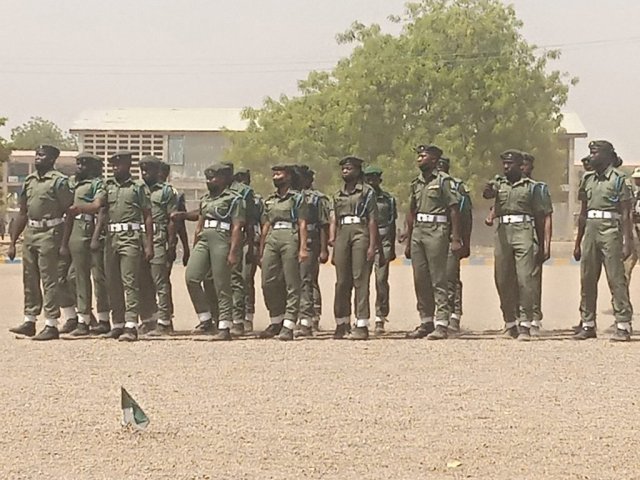
By Abbas BamalliThe 1 Division of the Nigerian Army based in Kaduna says that the ongoing inter-brigade sports competition for its corporal and below officers is to enhance their proficiency in fighting insecurity in the country.
The General Officer Commanding (GOC), 1Division, Maj.-Gen. Danjuma Ali-Keffi, said this on Tuesday when he declared the five-day competition opened in Kano.
He added that the competition was to boost the officers morale to counter security challenges.
According to him, the participating officers were drawn from 1Division Garrison, Kaduna; 31Artilary Brigade, Minna in Niger and the host, 3 Brigade, Kano.
He said, The event could not have come at a better time than now when there are growing concerns on the numerous security challenges confronting the nation.
He added that security challenges had made the Nigerian Army increasingly engaged to counter the threats.
The current security challenges in the country have brought to the fore the need to continuously reinvigorate our training and operations, especially, in the aspects of physical and leadership trainings.
Thus, your physical and emotional preparations are of paramount importance and can only be achieved through regular training.
It is, therefore, necessary for all of you to adequately train in order to ensure optimal performance at all times, he said.
The special guest, Maj-Gen Mukhtar Imam, the Commandant, Nigerian Army School of Infantry Kaduna, explained that the objective of the competition was to improve the officers physical fitness.
According to him, it is also to enhance their leadership capabilities, organisational abilities and use of initiative to promoteamongst them.
He said that the exercise was also intended to prepare them for battle in view of the present security challenges.
Therefore, the importance of this exercise to the overall vision of the Chief of Army Staff (COAS) which is to have a professionally responsive Nigerian Army in the discharge of its constitutional roles cannot be overemphasised.
I, therefore, implore you to conduct yourselves professionally throughout the competition.
The Commander, 3 Brigade, Kano, Brig.- Gen. Bamidele Alabi, said that a team of impartial and professional officials had been carefully selected to ensure no team was unnecessarily favoured or victimised.
I am glad to note that all necessary measures for a hitch-free competition have been put in place, he said.
He, therefore, urged all the participants and officials to take the competition seriously and abide by the rules.
The events to be competed for would include: half marathon, drill, combat swimming, and skill-at-arms and shooting, map reading and obstacle crossing. (NAN)
Source: NAN News
-
-
adminposted in News & Trends • read more

By Suleiman ShehuThe Nigeria Security and Civil Defence Corps (NSCDC) Oyo State Command, on Tuesday began training of 200 officers on the use of Closed-Circuit Television (CCTV) to tackle insecurity.
Mr Iskilu Akinsanya, State Commandant of NSCDC, who declared the training opened in Ibadan, said it had became necessary as a result of the increasing crime rate in the society.
He said the training would assist officers on how to use CCTV for surveillance and analysing situations in order to address insecurity in the state.
According to him, security issues have become very dynamic and gone are the days when officers only pursue criminals with rifles.
He said that security agencies must adopt the use of technology in order to effectively tackle the increasing insecurity in the society.
Akinsanya said that it was essential for officers and men to be alert to their responsibilities and be able to gather and analyse information through the use of technology.
The commandant called on the officers to take advantage of the training and pass the knowledge gained to other officers in their various units.
The NSCDC Commandant General (CG), Abubakar Audi, has emphasised that all the commands nationwide will be connected technologically.
So, from Oyo State Command, we will be reaching and relating directly with them on what is happening in the state and this is why the training is very compulsory and important.
At the end of the training, we expect that the officers will be able to analyse, digest any information gotten accurately, Akinsanya said.
Also speaking, NSCDC Head of training in Oyo State, Assistant Corps Commandant (ACC), Olusola Omotajo, said the training would enhance the performance of the officers on the field.
Omotajo said that the training would educate the officers on how to connect CCTV with internet surveillance and be able to monitor happenings in the society.
According to him, there are some CCTV protocols that are also wireless and can be monitored on the phone with installation of the Apps.
Omotajo said that it was very important for all security agencies to acquire the knowledge to be able to know the happenings in the society and nip crime in the bud. (NAN)
Source: NAN News
-
adminposted in News & Trends • read more
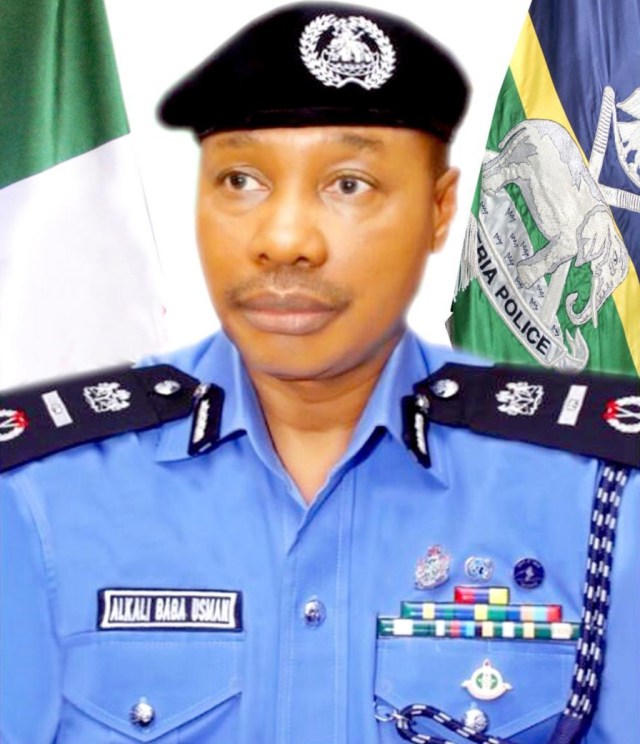
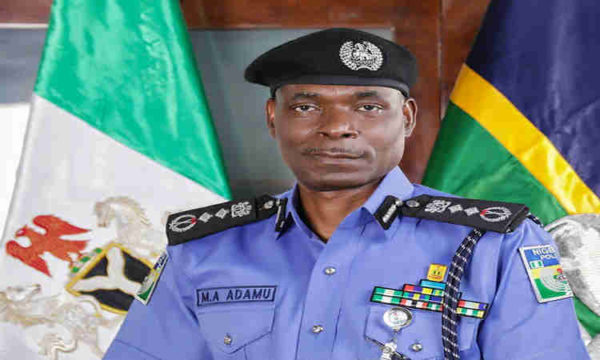
By Ismaila ChafePresident Muhammadu Buhari has approved the appointment of Deputy Inspector General of Police (DIG) Usman Baba as Acting Inspector General of Police (IGP).
The Minister of Police Affairs, Maigari Dingyadi, confirmed the development when he addressed State House correspondents in Abuja on Tuesday.
He said that the appointment was with immediate effect.
Buhari had on Feb. 4 extended the tenure of Mohammed Adamu as the Inspector General of Police for three months.
Adamu spent two months and three days during the extended period. (NAN)
Source: NAN News
-
adminposted in News & Trends • read more

How insecurity is forcing Nigerians to abandon gold jewelleryBy Francisca Oluyole of the News Agency of Nigeria (NAN)
The rising spate of insecurity, especially armed robbery, kidnapping and banditry has affected Nigerians attitude to life as everyone struggles to survive crimes gradually becoming part of daily life.
Kidnapping for ransom appears to be more scary as most Nigerians now live in fear of falling victims of the criminal elements.
True to type, Nigerians are devising different ways to survive the challenges and vagaries of this new life with women, traditionally known to be the major patrons of gold jewellery, changing their attitude to the ornament of beauty.
Because it attracts kidnappers they way honey attracts bees, some women have stopped wearing expensive Gold jewellery, while some have quickly sold off theirs to ward off the temptation of wearing them or even being identified as owning them.
Magdalene Okon, a civil servant, said that wearing of gold was not trending as it was in the past, adding that the high cost of gold over the years had made people to invest on land instead of gold jewellery that could be stolen in a twinkle of an eye.
I like wearing sets of gold jewelleries which comprise necklace, earing and bangles. But I have stopped that due to insecurity in the country.
Recently, my uncles little children were kidnapped because their mother is known to own massive gold jewelleries which attracted the kidnappers.
I learnt from this terrible incident and cautioned myself not to be wearing gold for now because the country is no long as safe as before.
Ms Aisha Abubakar, an undergraduate, said that women from the North are well known for adorning gold, such as Saudi gold, 22 carats jewelleries and above.
The surprise is that they hardly wear gold nowadays.
Most women now wear costumes such as Zeconia jewelleries for the safety of their lives.
In the past, my mother cannot do without puting on gold, she is so addicted to gold. But she has sold almost all the gold to pay for our school fees and also settle some debts when the cost of selling the precious metal to dealers became so lucrative.
The gold came as a massive relief. She is the only one taking care of the family due to the death of our father. The product came handy to solve some financial burdens.
My mother now wears costume jewelleries to occasions.
With the security situation getting worse in the norrthern part, some of her friends have deposited their gold in banks while others found alternative options of safeguarding them.
I have just a gold ear ring and chain, but I have stopped wearing them, especially on the campus, due to the fear of the unknown.
Even when I wear them for an outing, I watch my back because they are expensive.
Mrs Bukola Adekola, a 52-year-old civil servant in Abuja, said she could not do without buying the precious metal when they were affordable, just to compete with her friends.
Adekola said that Yoruba women were known for wearing gold.
We invest in gold as future assets not just to put them on.
The last time I bought gold was when a gram was sold for N3,800.
I disposed all the gold I bought at N3,800 per gram last year when a friend told me that a gram was sold at N24,000. It was like I won a jackpot because I sold all the gold I had and I made millions from them.
What is the essence of keeping gold at home when it is getting more dangerous to do so with the current insecurity in the country?
I now wear costumes to occasions and I am okay with that. I have invested the money on children education, business and others, she said.
Mrs Chioma Nnamdi, a Nurse with a private hospital in Lagos, said that her husband wedded her last year with a silver ring due to high cost of gold ring.
We wedded last year September because we planned it before the pandemic set in. Things were very expensive and we resorted to a normal ring. It is not about a gold ring, it is about the union and love we have for each other.
Alhaji Dahiru Abdullahi, a Gold dealer in Abuja, also decried the low patronage of gold due to advent of COVID-19 and the economic melt down in Nigeria and the whole world.
We dont experience rush from customers again, rather, people are bringing the ones they have to the market for sale. Costume jewellery are now in vogue, especially Zaconia.
Zaconia also has second hand value but we dont measure them per gram for sale or when we want to buy from customers unlike gold jewellery.
He said that buying a gram of gold was an asset, adding that many people invested their capital on gold for future security.
According to him, the current price of 18 carat of new jewellery is N26,000 per gram, while the 18 carat of fairly used jewellery is now sold at N19,000 per gram.
He said that 21 carat of new gold jewellery is now N32,000 per gram and 21 carat of fairly used jewellery is sold at N21,000 per gram.
These are current international prices. The amount I sell gold or buy from customers are the same with other gold dealers. We use international standard rate.
We dont cheat customers because they are in need of money and they want to sell their gold. We buy gold according to international rate as at that moment.
The prices fluctuate, but we follow the international rules and standards of selling and buying.
**If used, please credit the writer and the News Agency of Nigeria (NAN)
Source: NAN News
-
adminposted in News & Trends • read more
By Ahmed Ubandoma
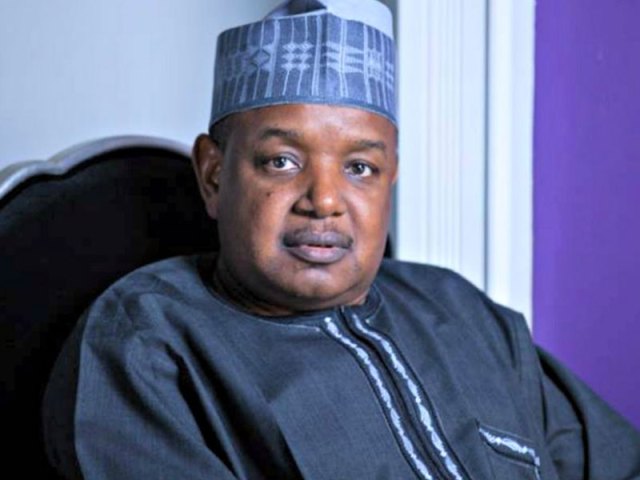
The Chairman, Progressives Governors Forum (PGF) and Governor of Kebbi State, Atiku Bagudu, has donated the sum of N50million to the victims of fire disaster in Gusau Market of Zamfara State.This is contained in a statement by Bagudus Special Assistant on Media, Mr Yahaya Sarki, in Abuja.
Bagudu on behalf of his colleagues, announced the donation when he led some members of the forum on a sympathy visit to Gov. Bello Matawalle of Zamfara in Gusau.
This incidence affected the livelihood of not only the traders but others who patronage the market have become victims of the inferno.
The fire incident is tragic and it sadden me, we therefore found it necessary to show our concern and sympathy to the victims.
So, we are here to express our sincerest sympathies and show our deepest concerns as regards the tragic incident .
He said that the gesture was to compliment the effort of Zamfara State Governor in assisting the victims to restart their business activities as they had lost everything they had laboured for.
This devastating incident regrettably struck at a time when the Zamfara State Governor was working on all fronts to reinvigorate the economy of the state .
Responding, Matawalle commended the Progressives Governors forum for the immeasurable gesture to the government and people of the state .
Matawalle, who took the visitors around the Tudun Wada section of the Market that was most affected by the inferno, thanked Bagudu and his team.
He said that the gesture would go a long way in alleviating the losses of the victims of the inferno.
He said: This is what brotherliness is all about which says , blood is thicker than water. This is an exemplary show of love, friendship, commitment and solidarity he said.(NAN)
Source: NAN News