Groups
-
adminposted in News & Trends • read more

crude oilU.S. West Texas Intermediate (WTI) crude futures fell 14 cents, or 0.3 per cent, to .76 a barrel by 0229 GMT, after rising 0.7 per cent on Wednesday.
Brent crude futures slipped seven cents, or 0.2 per cent, to .22, after gaining 0.5 per cent on Wednesday.
The markets struggling to get strong conviction to the upside at the current point in time, said Lachlan Shaw, Head of Commodity Research at National Australia Bank.
Theres mixed evidence on demand.
Oil prices rose on Wednesday as data from the U.S. Energy Information Administration showed U.S. gasoline stockpiles fell by 4.8 million barrels last week, much more than analysts had expected, as demand climbed to 8.8 million barrels per day (bpd), highest since March 20.
A spike in COVID-19 cases across several U.S. states, however, raised the prospect of renewed lockdowns that would likely hold back any sustained recovery in fuel demand.
That has kept the benchmark crude contracts in tight ranges this week, although holding above a barrel.
Gasoline demand was falling in areas where lockdowns were being reinstated in the U.S., while demand on the U.S. East Coast, where coronavirus infections were under control, was recovering well, Shaw said.
The U.S. reported more than 58,000 new COVID-19 cases on Wednesday, the biggest increase ever reported by a country in a single day, with infections climbing in 42 out of 50 states, according to a Reuters tally.
The market is also in a holding pattern ahead of a meeting on July 15 of the market monitoring panel of the Organisation of the Petroleum Exporting Countries (OPEC) and its allies.
Together called OPEC , the producers could decide to pare or extend their record 9.7 million bpd supply cut from August.
The panel has been pressing OPEC over-producers, such as Iraq and Nigeria, to improve their compliance with the curbs.
Angola has agreed to comply fully with its supply commitments, moving to cut more over July to September to make up for previous excess production, OPEC sources said this week.
Meanwhile, OPEC member Libya, which has been blockaded since January, is trying to resume exports, with Libyas National Oil Corp lifting force majeure at the Es Sider oil terminal on Wednesday.
An oil tanker, however, was prevented from entering the port. (Reuters/NAN)
Source: NAN News
-
adminposted in News & Trends • read more
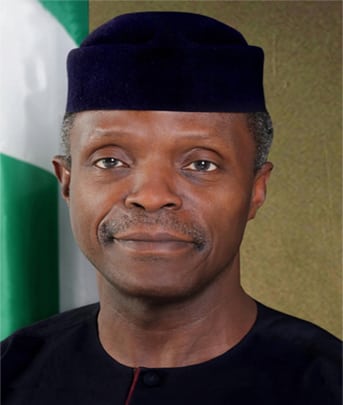
Vice President Yemi OsinbajoVice President Yemi Osinbajo will not be distracted by campaigns of lies and calumny, Laolu Akande said in a statement on Wednesday in Abuja.
Akande, a Senior Special Assistant to the President on Media and Publicity, Office of the Vice President.
Akande, in the statement, dismissed as false and baseless fabrications claiming to reflect goings-on at the probe panel investigating Mr Ibrahim Magu.
Magu, the suspended Chairman of the Economic and Financial Crimes Commission (EFCC) is being probed by a Presidential Investigation Committee over alleged malpractices and abuse of office.
The attention of the Office of the Vice President has been drawn to a series of tweets and online publications by PointBlank News and Newsreel.com.ng on July 8 credited to the same person, one Jackson Ude.
In essence, Udes story is that embattled former Chairman of Economic and Financial Crimes Commission, EFCC, allegedly embezzled over N39 billion and gave Osinabjo (sic) N4 billion, after the vice president gave instructions to him to release some of the recovered loots
He said the same Jackson Ude had also been circulating a video on YouTube with a female commentator, peddling the same lies.
With all emphasis at our disposal, let it be firmly stated that these are totally false and baseless fabrications purporting to reflect goings-on at the probe panel investigating Magu; they are indeed completely absurd in every respect.
Sadly, such mindless, vicious and reckless publications have now become the preferred tool of unscrupulous and reprobate elements in our society who are procured with monetary inducement to peddle blatant falsehood, tarnish the image of upright public officials and mislead unsuspecting Nigerians.
The Vice President will of course not be distracted by these obvious campaigns of lies and calumny, he said.
He said that the online publications, being criminally defamatory in nature, had been referred to the relevant law enforcement agencies for investigation and necessary action.
Source: NAN News
-
adminposted in News & Trends • read more
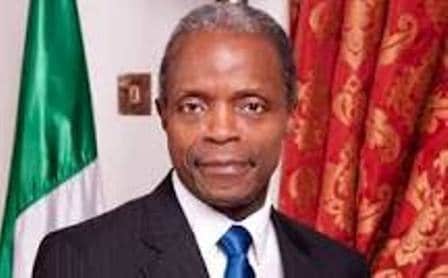
Vice President Yemi OsinbajoVice President Yemi Osinbajo on Thursday presided over a virtual meeting of the National Economic Council (NEC) at the Presidential Villa, Abuja.
The meeting anchored from the Yellow Room, Office of the Vice President, was the second virtual meeting as the nation strives to contain the spread of the COVID-19 pandemic.
The Minister of Finance featured at the meeting while the governors joined the virtual NEC from their states.
The Vice President, constitutionally, is the chairman of NEC which meets monthly to deliberate on the coordination of economic planning and programmes of various levels of government.
NEC comprises the 36 state governors, Governor of Central Bank of Nigeria, Minister of Finance, Head of the Civil Service of the Federation,Secretary to the Government of the Federation and other relevant government officials whose duties hinged on the economy.
Source: NAN News
-
adminposted in News & Trends • read more

Prof. Charles Uwadia, Chairman In Council of CPNBy Ijeoma Olorunfemi
The Computer Professionals (Registration Council) of Nigeria (CPN) on Thursday inducted 550 new IT professionals and urged them to join forces with the council to mitigate quackery in the profession.
Prof. Charles Uwadia, President/Chairman-in-Council of CPN, made the call at the induction ceremony of new IT professionals, which was part of the councils activities for its 2020 Virtual IT Professionals Assembly monitored in Abuja.
The theme of the meeting focused on Adoption of 5G in Nigeria: Technological and Regulatory Challenges.
The News Agency of Nigeria (NAN) reports that the 550 new inductees consisted of 410 Full members, 96 Associate members and 44 Corporate members.
Uwadia said that IT profession was a noble one and it was expected that members abide by its ethics.
Quackery is a challenge in IT profession because the usage is easily accessible by practitioners.
As professionals, you need to join forces to fight the scourge of quackery, he said.
Uwadia said that members had diverse benefits to enjoy but were required to be registered and licensed to operate legally.
He reiterated that regulating the profession was paramount to ensure that the sector generated the expected income to the economy of the nation.
Uwadia also added that the council had developed a professional programme package that would enable members update their knowledge, skills and encouraged them to leverage the platform.
Dr Akin Fapohunda, Chief Executive Officer of Aflon Digital Institute, Nigeria, in his induction lecture, focused on Business of Professionalism.
He explained that a professional was one that delivered value for the consideration received in a defined society.
Fapohunda said that it was required of IT professionals to be committed to the development of the profession, saying that it was the obligation of members to transform the society.
You need to be creative in solving problems, develop new skills in spite of age because there is no barrier to learning.
You need to develop entrepreneurship skills because it is the pathway for making impact and that will lead to the need to address power challenge in your organisations, he said.
He also said that COVID-19 had exposed the need to build the skills of teachers on e-learning, saying that IT professionals were saddled with the responsibility of championing online teachers ability on tutoring.
Prof. Adesina Sodiya, Chairman, Registration and Regulatory Committee of the CPN, said that IT profession was most challenging globally because it was change-driven and cut across all sectors of economy.
Sodiya noted that nations of the world committed huge resources into IT so as to impact lives of citizens, hence the need for members to acknowledge that and respect the ideology of the profession.
According to him, the growth of the profession will impact the whole nation and ensure that the transformation agenda of President Muhammadu Buhari is achieved.
He added that the inductees should be good ambassadors of the profession in their individual businesses and organisations because the council had in place mechanism to monitor and penalise violating members.
Mr Etemi Joshua, a new IT professional inductee, on behalf other members, congratulated the council, while pledging to play their role to the development of IT profession in the country.
Source: NAN News
-
adminposted in News & Trends • read more

Some stakeholders in the education sector have expressed support for the Federal Governments decision not to allow students to sit for the West African Senior School Certificate Examinations (WASSCE) amid rising cases of COVID-19 in the country.They spoke in separate interviews with the News Agency of Nigeria(NAN) in Ibadan on Thursday.
NAN reports that the West African Examination Council (WAEC) had on Tuesday released its examination timetable and guidelines for the 2020 WASSCE.
The Minister of Education, Adamu Adamu, however, said on Wednesday that students in the country would not sit for the examination now, citing safety concerns because of the raging COVID-19 pandemic.
Prof. Clement Kolawole of the Department of Education, University of Ibadan, said the government was in a better position to regulate its programmes based on the information and facts available to it.
Although the development is a surprise, it is better to stay alive than to cause untold hardship or expose our children to COVID-19 through WASSCE, he said.
Also speaking, Prof. Oyesoji Aremu of the Department of Guidance and Counselling, University of Ibadan, said there were implications for writing WASSCE on wellness of the students, parents and officials who would conduct the examinations.
Although WAEC has assured the public of ensuring the best of COVID-19 protocols, it goes beyond that given that examination itself could bring about a state of anxiety in students and their parents.
Here, it becomes much more expedient to also ensure mental wellness of the students while also safeguarding COVID-19 protocols.
This is not only for the students, but also for examination officials who may also be at risk.
Chances are that there could be student to student transmission in the course of writing examinations because chances are high that students will discuss with one another.
There could also be students to officials transmissions either before, during and after a paper is written, Aremu said.
He also cited the likelihood of high rate of examination malpractice under the guise of wearing face masks.
WAEC officials would have to guard against it in order to ensure quality assurance of the whole exercise whenever the new date is set for the examination, Aremu said.
Prof. Adams Onuka, an education evaluation expert at the University of Ibadan, on his part, said it was imperative to be cautious at this time.
Since the government is expected to protect the lives of the people, they must have weighed the available options, did analysis and came to the conclusion that only those who are alive can benefit from writing examinations.
So what use is it for people to write examinations and then lose their lives? Who then will benefit from the fall out from the examination?
It will not benefit anybody; parents, students, government and the nation.
Therefore, we have to make haste slowly, he said.
Onuka, who noted that Kenya had already cancelled the school year, added that it was better to lose one academic session than to lose a single soul to the pandemic.
He said except states were sure that adequate arrangements had been made to check community spread of the virus, reopening of schools and examinations should be put on hold.
Afterall, we lost sessions in the past to strikes and heavens did not fall, Onuka said.
Source: NAN News
-
adminposted in News & Trends • read more

News analysis by Ikenna Uwadileke, News Agency of Nigeria (NAN)The Central Bank of Nigeria (CBN) under its Anchor Borrowers Programme (ABP) on June 11, in Bwari, Abuja, launched its nationwide distribution of farm inputs to maize farmers for the 2020 wet season farming.
The apex bank said that the programme which targets to support 70, 000 maize farmers across the country has the ultimate goal of boosting maize production in the country.
It would be recalled that the ABP was launched by President Muhammadu Buhari on Nov. 17, 2015 to create a linkage between anchor companies involved in processing key agricultural commodities and small holder farmers.
The focus of the ABP is to provide support to farmers in form of loans and farm inputs such as seeds, fertilizers, pesticides, sprayers and technical support to grow their crops.
The programme targets farmers who produce cereals, roots, tubers and tree crops.
Others are legumes, livestock, cotton, sugarcane and tomato.
No doubt, Nigeria is a large producer of maize with a large population also depending on it as the main staple food crop.
According to 2018 report by International Institute of Tropical Agriculture (IITA), a non-profit institution that generates innovations to meet Africas challenges of hunger, malnutrition and poverty, the largest African producer of maize is Nigeria with over 33 million tonnes followed by South Africa, Egypt and Ethiopia.
It is an important cereal which most families in the country use as basic food for both domestic consumption and animal feed as all parts of the crop can be used for food and non-food products, a maize farmer, Malam Suleiman Modibbo said.
Modibbo, however, complained that maize farmers in Nigeria are apparently faced with numerous challenges ranging from lack of fund to purchase farm inputs to attacks by pests and diseases on their farms.
According to him, these challenges lead to farmers apathy toward maize production in the country.
Maize was not produced in commercial quantities to feed the industries, instead, industries import maize to meet up with production; maize farmers were relegated to subsistence farming, Modibbo noted.
But the narrative changed with the launch of the ABPs support to assist Nigerian farmers so that the nation can feed and have excess that can be exported to earn foreign exchange.
While distributing farm inputs under the CBN-Maize Anchor Borrowers Programme, Mr Nuhu Muazu, Head Development Finance Office, CBN, tasked farmers to make judicious use of the support to boost maize production and guarantee food security in the country.
For years, we have been using our hard earned foreign exchange to import food that we can produce and by doing so, we are importing unemployment.
We are also empowering farmers in other countries at the expense of the farmers in Nigeria.
Hence, the Federal Government said no, we have to feed ourselves, but we have to support our farmers with the necessary finances that will assist them to produce,Muazu said.
He reminded the farmers that the funds given to them are by no means free money.
According to him, the participating banks, which work with the CBN lend to anchors at nine per cent per annum for onward disbursement to the farmers.
Muazu said that the loan would be repaid by the farmers after the crops had been harvested which must cover the loan principal and interest.
Use the inputs, harvest and pay back to give other people the opportunity to access the loans, Muazu said.
Dr Edwin Uche, National President, Maize Growers, Processors and Marketers Association of Nigeria (MAGPAMAN), said that each of the 70,000 maize farmers would receive N182,000 per hectare.
According to him, this N182,000 has a composition of input and cash, technical support, extension support, land preparation and a lot of exposure embedded in it.
It is an encapsulation of a lot of things at a time, so the farmer has an opportunity of a whole new experience,Uche said.
He emphasised that the association was passionate about empowering the farmers to enable them operate in accordance with international best practices.
This is essential to enable them repay their loans and make profit, so that they can come out of poverty and empower their families and build the local economy.
As an association, we put up performance indicator, but as a farmer, you must grow from strength to strength.
We want to see people move from stage to stage and that is the whole essence of the Anchor Borrowers Programme.
Considering the quality of seeds we are giving the farmers, we are expecting a minimum of five tonnes per hectare and when a farmer is repaying a loan with about two tonnes per hectare, he has three tonnes to play around with,Uche said.
On his part, Dr Victor Inyama, National President, Federation of Agricultural Commodity Association of Nigeria (FACAN), commended CBN for the programme.
Inyama urged farmers to leverage on the support for agricultural development in the country.
While stressing the need for them to maximise the use of the inputs, he cautioned them of the consequences of selling the inputs.
One of the participating banks, Eco Bank, assured the farmers of the banks commitment to collaborate with CBN to facilitate easy access to the loans.
Nkiru Ngwu, Area Manager, Eco Bank, FCT, said we will work with the farmers to enable them achieve their expectations.
John Gabaya, Chairman, Bwari Area Council called for total ban of maize importation.
He argued that maize farmers in the country can produce enough maize grains to service local demand.
Gabaya, therefore, urged intending importers of maize to key into the ABP, access loan at single digit, source maize locally and create jobs.
Importing maize grain in any form is counterproductive to the agricultural development of Nigeria and should be discouraged in its entirety, Gabaya said.
Mr Abubakar Matawalle, representative of the Federal Capital Territory (FCT) said that the ABP has been a success in maize production in Nigeria.
In fact, Nigerian maize farmers have really felt the presence of government through this programme. It is however important for farmers to ensure that they repay their loans so that the banks can lend more.
The government on the other hand should strengthen the ABP, widen the coverage to accommodate more farmers and device more means to get the farmers to repay their loans, impose stiffer penalties for defaulters.
A beneficiary of the programme, Malam Shehu Aliyu, expressed delight over the support programme and said that it would promote agricultural development in the country.
The programme will make things easy for farmers and will go a long way in improving food production,Aliyu said. (NANFeatures)
Source: NAN News
-
adminposted in News & Trends • read more

Acting EFCC Boss Ibrahim MaguBy Emmanuel Afonne
An NGO, United Global Resolve for Peace (UGRFFP), has described as timely the indefinite suspension of Mr Ibrahim Magu as Acting Chairman of the Economic and Financial Crimes Commission (EFCC), by President Muhammadu Buhari.
Mr Shalom Olaseni, Executive Director, UGRFFP, who commended the President for suspending Magu, said in a statement in Abuja on Thursday that his removal would give room for thorough investigation into series of allegations leveled against him.
Olaseni stated that Buharis intervention was timely to shore up waning public confidence in the commission
He said that Magus reign allegedly became untenable and repulsive in the face of grave allegations of corruption and mismanagement of recovered public funds.
The office of EFCC Chairman is one which must be high above reproach and any semblance of moral turpitude, therefore making the suspension of Magu a necessary action to protect the agencys troubled image.
The alleged underlying factors which led to Magus removal revolved around allegations of personal enrichment, subversion of the course of justice in particular cases prosecuted by the EFCC and insubordination to the oversight authority of the Ministry of Justice.
These are strong albeit unproven allegations, and lend weight to the argument that a system with weak institutions is a breeding ground for corruption, Olaseni said.
According to him, the Presidential Investigative Panel must not be derailed by political manipulations and permutations during its investigation of the former EFCC boss.
He also called on the National Assembly to step into the investigation through its Financial Propriety Committee in exercise of its oversight power of review of executive actions.
This is to safeguard against an abuse of the entire process and further ensure that a trial or arraignment, where the investigations so recommend, will be backed by substantial body of evidence.
This will indeed send a significant message to intending abusers of their public offices that it is no longer business as usual, and that there are indeed no hiding places in the extant laws and procedural systems of Nigeria.
It is commendable that the Attorney General of the Federation and Minister of Justice, Mr Abubakar Malami, was an arrowhead in bringing to light the serious corruption infractions of the suspended former chairman of the EFCC.
It is only a necessary outcome given that the Ministry of Justice has the power of oversight over the EFCC, but one which takes grit and sense of propriety for consequential actions to be taken when obligatory.
It is, however, regrettable that Ibrahim Magus alleged infractions against constituted authority and insubordination against the legal superintendence of the ministry of justice was allowed to fester for as long as it did.
This is why it is imperative that a watchdog system is put in place to forestall the continual abuse of power that has been recorded in the office of the EFCC Chairman from Mrs Farida Waziri, Ibrahim Lamorde to the now suspended Ibrahim Magu, Olaseni added.
He urged the ministry of justice to put in place, a mechanism that would always monitor the abuse of powers and privileges of the EFCC chairmans office regardless of how highly connected the individual occupying the office.
It is hoped that such mechanism will check the abuse of powers and privileges of office that has become the curse of all former heads of the EFCC.
It has been variedly said that without strong watchdog institutions, impunity becomes the very foundation upon which systems of corruption are built.
If impunity is not demolished, all efforts to bring an end to corruption are in vain, he added. (NAN)
Source: NAN News
-
adminposted in News & Trends • read more

WHOBy Cecilia Ologunagba
The World Health Organisation (WHO) says there has been 30 per cent increase in the number of confirmed cases of Coronavirus (COVID-19) in the African Region in the past week.
WHO Regional Office for Africa in Brazzaville, Congo, disclosed this in COVID-19 Situation Report posted on its official Twitter account @WHOAFRO on Thursday.
In external situation report number 19 issued on July 8, it stated that COVID-19 outbreak continued to grow in the WHO African Region.
It said the virus continued to grow since it was first detected in Algeria on 25 February, 2020.
Since our last External Situation Report 18 issued on 1 July, 2020, a total of 91, 038 new confirmed COVID-19 cases (a 30 per cent increase) was reported from 45 countries.
Of the 91, 038 reported new cases in the region, the majority 71 per cent (64, 646) were recorded in South Africa.
South Africa remains the epicentre of the COVID-19 outbreak in the region and the country is now among the top 15 most affected countries globally.
South Africa has the cumulative number of cases (215, 855) exceeding that for Turkey (206, 844), Germany (196, 944) and France (159, 568), which previously reported the highest numbers.
On 4 July 2020, the WHO African Region and South Africa recorded their highest daily case count of 13, 474 and 10 853, respectively.
Similarly, it said the WHO African Region and South Africa registered the highest daily death toll of 225 and 192, respectively, on 7 July 2020.
During this period, five countries in the region observed the highest percentage increase in incidence cases.
Lesotho recorded 237 per cent increase (from 27 to 91 cases), Namibia 166 per cent (from 203 to 539 cases) and Madagascar 57 per cent (from 2, 214 to 3, 472 cases).
Also, Malawi recorded 48 per cent increased (from 1,265 to 1, 877 cases) and South Africa 43 per cent (from 151, 209 to 215, 855 cases).
Equatorial Guinea and United Republic of Tanzania did not officially submit reports indicating any confirmed case.
A total of 119 new health worker infections were recorded from three countries: Ghana (70), Malawi (38), South Sudan (7), Sierra Leone (2), Gambia (1) and Lesotho (1).
Two countries: Gambia and Lesotho reported their first health worker infection this reporting period, it stated.
In addition, it stated that from 1 to 7 July, 2020, 1, 221 new COVID-19 related deaths (20 per cent increase) were registered in 33 countries, with 845 (69 per cent) of the deaths recorded in South Africa
This was followed by Nigeria, with 79 (6.5 per cent) deaths and then Algeria with 56 (4.6 per cent) deaths.
The report further stated that currently, 33 (70 per cent) countries in the region were experiencing community transmission, seven (15 per cent) have clusters of cases and seven (15 per cent) have sporadic cases of COVID-19.
It stated that the region had also observed increased incidence of importation of cases from affected countries within the region, largely fueled by long-distance truck drivers and illicit movement through porous borders. (NAN)
Source: NAN News
-
adminposted in News & Trends • read more

Timipre Sylva, Minister of State for Petroleum ResourcesBy Edith Ike-Eboh
The Minister of State for Petroleum Resources Chief Timipre Sylva says the deregulation of the downstream oil sector was to ensure economic growth and development of the country.
Sylva made this known in a statement in Abuja, on Thursday.
He said it was unrealistic to continue to subsidise the Premium Motor Spirit (PMS) also known as petrol as it had no economic value.
He urged Nigerians to ignore recent misguided comments and innuendos on the issue.
It has become expedient for the Ministry of Petroleum to explain misconceptions around the issue of Petroleum Products Deregulation.
After a thorough examination of the economics of subsidising PMS for domestic consumption, the government concluded that it was unrealistic to continue with the burden of subsidising PMS to the tune of trillions of naira every year.
More so, when the subsidy was benefiting in large part the rich rather than the poor and ordinary Nigerians.
Deregulation means that the Government will no longer continue to be the main supplier of Petroleum Products, but will encourage private sector to takeover the role of supplying Petroleum Products, he said.
According to him, market forces will henceforth determine the price at the pump.
This, he said was in line with global best practices adding that government would continue to play its traditional role of regulation; to ensure that this strategic commodity was not priced arbitrarily by private sector suppliers.
A regulatory function not unlike the role played by the Central Bank of Nigeria in the banking sector; ensuring that commercial banks do not charge arbitrary interest rates.
Petroleum Products are refined from Crude Oil. Therefore the price of Crude (the feedstock) for the refining process will affect the price of the refined product, he added.
Sylva noted that when Crude Oil prices were down, government, through its regulatory functions ensured that the benefits of lower Crude Oil prices were enjoyed by Nigerians by ensuring that PMS price was lowered.
He noted that government at that time indicated that increase in Crude Oil prices would also reflect at the pump.
This is a necessary action taken by a responsible government in the overall interest of Nigerians.
Indeed, one of the reasons we have been unable to attract the level of investments we desire into the refining sector has been the burden of fuel subsidy.
We need to free up that investment space so that what happened in the Banking Sector, Aviation Sector and other Sectors can happen in the Midstream and Downstream Oil Sector.
We can no longer avoid the inevitable and expect the impossible to continue. There was no time government promised to reduce Pump Price and keep it permanently low.
Let us therefore ignore the antics of unscrupulous middlemen who would want status quo ante to remain at the expense of the generality of Nigerians., he added.
The minister noted that in addition to attracting investments and creating jobs and opportunities,the policy direction would free up trillions of naira to develop infrastructure instead of enriching a few.
He said that government was very mindful of the likely impact higher PMS prices would have on Nigerians.
To alleviate this, we are working very hard to roll out the auto-gas scheme, which will provide Nigerians with alternative sources of fuel and at a lower cost, he said. (NAN)
Source: NAN News
-
adminposted in News & Trends • read more

FMDQBy Itohan Abara-Laserian
The FMDQ Holdings (FMDQ Group) has admitted the Axxela Funding 1 PLC 11.50 billion Series 1 Bond under its 50.00 billion Bond Programme platform.
FMDQ Group in a statement made available to the News Agency of Nigeria (NAN) on Thursday in Lagos, said that Axxela Funding was admitted through its subsidiary, FMDQ Securities Exchange Limited (FMDQ Exchange).
According to the statement, Axxela Funding 1 PLC is a special purpose vehicle (SPV) incorporated by Axxela Limited to raise funds through the issuance of debt securities in the domestic capital market.
Axxela Limited, owned by Helios Investment Partners, is a natural gas shipping company on the West African Gas Pipeline, providing unique energy solutions with presence in Nigeria and gas export operations in neighbouring West African countries.
The admittance of the Axxela bond is testament to the opportunities which the Nigeria Debt Market Capital (DCM) avails to corporates in diverse business areas and further, to the potential of the market to support stakeholders effectively even as they carry on their activities in the face of the pandemic.
The Axxela bond, by its listing on FMDQ, shall be admitted onto the FMDQ Daily Quotations List; thus, promoting the much-needed transparency for investors and providing a credible basis for portfolio valuation daily.
Also, through the global visibility which the FMDQ website and systems guarantee, the corporate profile of the issuer is raised even further ahead of tapping into other opportunities in the Nigerian capital market, it said.
The statement highlighted the roles of the DCM, which played an important role in the efficient mobilisation and allocation of resources in the economy and despite the impact of the current times, the market had continued to effectively support corporate firms looking to expand their business operations.
It is in this regard that FMDQ Holdings PLC (FMDQ Group or FMDQ) in its role as a market organiser of the Nigerian DCM, amongst others, has continued to provide stakeholders in the Nigerian capital market with a credible and robust platform for capital access, risk management and transfer of value, it said.
FMDQ Group is Africas first vertically integrated Financial Market Infrastructure (FMI) group which provides a one-stop platform for the seamless and cost-efficient execution, risk management, clearing, settlement, depository, data and information services for the Nigerian financial market, through its subsidiaries: FMDQ Exchange, FMDQ Clear Limited, FMDQ Depository Limited and FMDQ Private Markets Limited. (NAN)
Source: NAN News