Groups
-
adminposted in News & Trends • read more
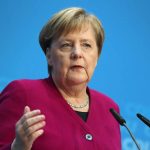
Former German chancellor Angela Merkel is on the road to recovery after injuring her knee, her spokesperson said.
The spokesperson said on Wednesday, in response to a question on whether the former German chancellor would travel to Russia for the funeral of former Soviet leader Mikhail Gorbachev.
It was not possible to make a statement about such a trip, the spokesperson said, as a number of factors were still uncertain.
However, she did say that Merkel would not be able to attend such an event in September, as she sustained an injury to her knee at the end of her holiday, around three weeks ago.
The spokesperson added that Merkel did not require surgery and was recovering well.
Merkel had paid tribute to Gorbachev as a unique global politician earlier on Wednesday, after the news emerged that Gorbachev had passed away on Tuesday. (dpa/NAN)(www.nannews.ng)
(Edited by Ummul Idris/Emmanuel Yashim)
Source: NAN News
-
adminposted in News & Trends • read more
The Buhari Media Organisation (BMO) has described some presidential candidates as power mongers who are bent on using disinformation and divisive rhetorics to curry sympathy votes from unsuspecting Nigerians.In a statement signed by its Chairman Niyi Akinsiju and Secretary Cassidy Madueke, BMO said it was not surprising to hear opposition candidates using the recent NBA conference to take pot shots at the President Muhammadu Buhari administration.
With Peoples Democratic Party (PDP) having two kindred spirits in the person of former Vice President Atiku Abubakar and the Labour Party candidate Peter Obi in the 2023 race, we were not exactly surprised to hear their rhetorics at the NBA conference, but what we find disturbing is their resort to disinformation.
For instance, a man who as Vice President presided over a privatisation process that shortchanged the Nigerian people and pushed millions of people into the unemployment market had the temerity to promise to tackle a problem he was part of.
And knowing how he once tagged the PDP as a hopeless basket case at the time he was hibernating in the All Progressives Congress (APC), we view his tantrums exactly the way Senator Kashim Shettima described it- a worn out rhetoric and sophistry of pretentious politicians.
We dare say nothing could be more pedestrian as the position of the Labour Party candidate who, while describing Nigeria as a failed state, opted as usual to pluck figures from the air when he claimed that there are over 100m people living in poverty in the country.
It is no longer news that the former Anambra governor conjures up figures and. scenarios to impress his audience but it should be a concern to hear former top government functionaries mocking the military just to score cheap political points on security.
it is ironic that on the same day that both men who are seeking to be commander in chief of the armed forces were downplaying the hardwork of security agencies, the media were replete with news of a successful air raid on the Sambisa forest enclave of the leader of the Islamic State of West Africa Province (ISWAP) Fiya Ba Yuram and other terrorist strongholds.
While we acknowledge that the country is facing security challenges, it is depressing to see opposition politicians making light of the good work the military authorities have been doing in recent years, the statement added.
BMO also decried the manner the opposition blamed the current administration for the nations challenges
As for the economy, we have a government that has twice taken the country out of recession that it could not be blamed for.
We have had a situation where the party Obi and Atiku served did nothing to wean the nation from oil for 16 years inspite of oil booms but instead left massive infrastructure deficit and a not-too-resilient economy.
inflation is a global phenomenon today and even at that, the countrys current rate is at same level with what it was in 2005 when the PDP Presidential candidate who is making lots of promises was Vice President.
It was also a period when PDP introduced commercial tricycle popularly known as Keke NAPEP as a one- size-fits all poverty eradication solution compared to the basket of initiatives which the Buhari-era National Social Investment Programme (NSIP) represents.
We need to remind Nigerians how In 2012, there were 112m out of a population of 167m people living below the poverty threshold and that was a time of sustained period of higher oil prices with no covid-19 or a Russia- Ukraine war creating havoc anywhere in the world.
BMO maintained that the Buhari administration has done far more than previous administrations with little resources. (NAN)
ABISource: NAN News
-
adminposted in News & Trends • read more
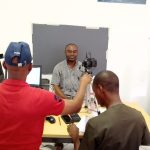
The Nigeria Immigration Service captures a Nigerian in Padova during FG consular intervention to Padova Province, Italy(NAN) ()
Edited by Isaac Aregbesola
Source: NAN News
-
adminposted in News & Trends • read more
ByLizzy Okoji
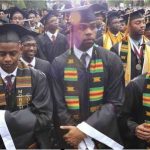
The Malaysian High Commissioner to Nigeria, Gloria Tiwet, says no fewer than 13,000 Nigerians study annually in her country, signalling robust bilateral relations between the two countries.
Tiwet made this known on Tuesday, at the Malaysian Technical Cooperation Programme (MTCP) Alumni Programme 2022 in Abuja.
She noted that the numbers of Nigerian students to Malaysia had started to pick again following a disruption of academic exercise; as a result of the COVID-19 pandemic.
Before COVID-19, every year, we had a total of 13,000 Nigerian students.
During COVID-19, there was no movement, so there was zero students because most of them would have returned to Nigeria.
Starting this year,, our borders have been opened since April, and right now, we have around 4,000 Nigerian students who returned to continue their studies and there are also very few who are just starting their universities.
So, right now, there is around 4,000 and I look forward to the numbers to increase to the numbers before COVID-19, that is, 13,000. Every year, there was 13,000 students, Tiwet said.
Tiwet who also noted that Malaysia was one of the top destinations for Nigerian students said the numbers of students received in Malaysia were either sponsored by their parents, the Government of Nigeria, or Tertiary Education Trust Fund (TETFUND).
She also noted that the concerns of students were adequately handled and responded to, by relevant authorities and the schools.
So, their affairs are under their respective universities or colleges that they study. And these universities are responsible for their wellbeing.
And if they have any difficulties, they are to inform the security. But of course, in an institution of higher learning, they have a department of student affairs that will have check and balance and to see that they are good students, she added.
Tiwet said the MTCP was established in 1980 in the spirit of South-South Cooperation, adding that the programme was a proof of the commitment of the government of Malaysia towards the promotion of technical cooperation among developing countries.
She said that the programme offered support to areas where Malaysia had experience and expertise.
She said that since its establishment, Malaysia had extended trainings to 144 recipient countries and a total number of 34,000 people have benefited, including Nigerians.
Tiwet disclosed that 495 Nigerian officials have participated in the programme amongst those from the 144 countries.
President of MTCP Alumni, Solomon Adams, said the trainings had been very impactful and very helpful in their various offices.
And, it has impacted us positively. We wish to state categorically clear, that we hope that in the future, we are going to have more of our citizens benefit from this training, Adams said.
The News Agency of Nigeria (NAN), reports that the event, in its third edition witnessed the provision of food items to individuals by the MTCP Alumni, with support from the government of Malaysia. (NAN) ()
============
Edited by Olabisi Akinbode/Isaac Aregbesola
Source: NAN News
-
adminposted in News & Trends • read more
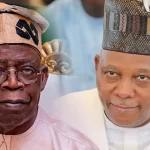
By Edeki IgafeA socio-political group, South-South Movement for Tinubu/Shettima, has urged Nigerians to shun campaigns of calumny against the candidacy of Sen. Bola Tinubu and his running mate Sen. Kashim Shettima of the All Progressives Congress (APC).
The group made the call in a communique issued at the end of its meeting on Monday in Warri and made available to newsmen.
The communique was jointly signed by the groups National Coordinator, Besidone Eyengho; Dr Emem Wills, National Secretary; Thank God Deizigha, National Organising Secretary; Nwulu Uche, National Publicity Secretary; George Ogaga State Coordinator and Abu Momodu a Member.
The meeting was attended by the senatorial coordinators and delegates from the six states in the South-South geo-political zone.
The group in the communique, described the campaign of calumny against Tinubu/Shettima as part of the antics of desperate and drowning politicians.
It said that Tinubu/Shettima ticket was the best choice and answer to the multi-faceted problems confronting the country.
The group also called on stakeholders in the South-South region to embrace the ticket to guarantee a prosperous Nigeria.
The All Progressives Congress (APC) Presidential candidate, Bola Tinubu is hale, hearty, agile and fit to tackle the challenges and demands of a prosperous Nigeria.
Sincere and concerted efforts should be made to return the South-South fully into the mainstream of national politics in order to ensure meaningful and accelerated development in the region.
The Tinubu/Shettima ticket will return the country to a path of sustainable peace, socioeconomic growth and development, it said. (NAN)(www.nannews.ng)
Edited by Benson Iziama/Olagoke Olatoye
Source: NAN News
-
adminposted in News & Trends • read more

By Funmilayo Adeyemi/ Folashade AkpanPort Harcourt, Aug. 30, 2022 (NAN) Imo and Ekiti rank the lowest in the number of out-of-school children in the country with one per cent and two per cent respectively, according to United Nations International Childrens Emergency Fund (UNICEF).
The Chief of Measurement for Results (M4R) UNICEF, Mr Claes Johanson, gave the figures on Tuesday at a two-day Media Dialogue on the Multiple Indicators Cluster Survey 6 (MIC6) Results in Port Harcourt.
Also, the 2018 statistics indicated that Abia, Kwara, Enugu, Bayelsa, FCT and Ekiti were topping other states with the lowest number out-of-school children.
He said that 27 per cent of children aged seven to 14 years have foundational reading skills while only 25 per cent are with foundational numeracy skills.
Johanson, however, stated that the MIC6 had helped in fishing out data in every sector that would help in analysing how things were working and why they were not working.
He said, The lowest out-of-school rates are found in Ekiti (two per cent), and Imo (one per cent). The highest rates are in Kebbi (65 per cent), Zamfara (61 per cent) and Bauchi (61 per cent).
Johanson said that the MIC6 results showed that Kebbi, Zamfara and Bauchi States have the highest number of out-of-school with 65, per cent, 61 per cent and 61 per cent respectively.
According to him, the figures indicate that Nigeria has not seen improvement in the number of out-of-school in the past five years and should begin to improve on this area.
It would be recalled that the data on the 2018 Digest of Basic Education Statistics by the Universal Basic Education Commission (UBEC) showed that Kano, Akwa Ibom, Katsina, Kaduna, Taraba, Sokoto, Yobe, Zamfara and Bauchi were having the highest figures.
The MIC6 cleared many things. In education and health, weve seen some of the most important findings. There is a good news, weve seen that fewer children under five were dying.
A large percentage of this is driven by increase in immunisation.
So, we had only 34 per cent children immunised five years ago. But now, we have 57 per cent, which really calls for celebration.
It is something we should really be happy about.
We also see that there is room for improvement everywhere particularly in education.
For the first time, we are looking at children that are actually learning, and we see that only 25 per cent have foundational numeracy.
One out of four children does not even go to school, so, the number of out-of-school children is still one in four and thats the same as five years ago.
So, continuing education is the most important thing, he said.
Johanson stated that the girl-child education plays a huge impact on every sector from health to the education of the child.
Hence, there is the need for policy makers to step in, to address problems that may emanate from inadequate focus on education, he said.
According to him, Sokoto has improved in the area of child marriage as a result of the level of education, urging journalists to report on the MIC6 results.
He stated that such reports would make other states with high out-of-school figures learn from the activities of states improving in this regard.
Overall, we see that the child marriage dropped a lot in Sokoto State. It used to be one in four, but now, it shows that one in three girls can marry before the age of 18.
Sokoto has improved on that more than the other states. As such, we are here with the media to look at the why this has happened, he said.
According to Johanson, UNICEF is working with the government to use the MIC6 to inform programmes and learn about what the country can do differently.
Similarly, the UNICEF Communication Specialist, Geoffrey Njoku, said that MICS 6 was an improvement on previous five years, which had presented indices on poor performance on health, education and other areas of SDGs in the 36 states and the Federal Capital Territory (FCT).
Njoku stated that the media dialogue was organised to look into factors responsible for the poor indices specifically and why some lingering challenges still remained in some parts of the country.
We have some good figures and we also have some that are not so good, so, we want to know why some of these indices are not very good.
We have to look at it from: could it be as a result of wrong identification of application of funds or non-application and wrong identification of where to apply the funds, he said.
Njoku described political will as essential with marked resources to intervene with positive impact that would yield better results on the SDGs.
He, therefore, called for more actions and better interventions to make significant difference in reducing the number of out-of-school children in states with prevalence.
Good, we say that out-of-school is decreasing, but in absolute numbers we have a population growth that swallows up and minimises the results, he said.
Njoku said the dialogue was held to get good and better results five years from now on health, education and SDGs through reports in various media platforms.
The News Agency of Nigeria (NAN) reports that the dialogue brought together over 40 journalists covering the education and health beats from different media organisations across the country. (NAN)(www.nannews.ng)
Edited by Folorunso Poroye/Julius Toba-Jegede
Source: NAN News
-
adminposted in News & Trends • read more
By Naomi Sharang
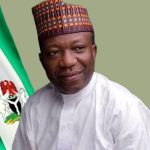
Prof. Abubakar Sulaiman, Director-General National Institute for Legislative and Democratic Studies (NILDS), has urged African parliamentarians to act fast in tackling insecurity on the continent.
He made the call on Tuesday, in Abuja during a working visit to NILDS by a delegation from the Ethiopian Oromia Regional Parliament led by the Speaker, Seada Abdurahman.
Receiving the delegation, Sulaiman said that Africa as a continent is facing a lot challenges bothering on security, development and good governance.
There is no country in Africa today that is immune to insecurity in one way the other; be it on religious fundamentalism or ethnic secession.
We are facing a lot of challenges bothering on terrorism; issues of economic growth and development; a lot of people are jobless and issues of unemployed youths, out of school children and starvation.
Within the context of Afrocentric policy, the era of looking onto our colonial powers has gone.
We must device African solution to African problems, Sulaiman said.
He further said that it was high time for African governments to look onto ourselves as Africa.
That is why a lot of innovations, Conventions and Protocols came up that Africa must develop Africa panacea to addressing Africans problem.
We must find a way to most of these problems.
On some of its legislative interventions in tackling insecurity in Nigeria, Sulaiman said that NILDS had in the last one year, partnered with donor agencies like Konrad Adenauer Stiftung (German Foundation) in coming up with bills to solve insecurity.
He said, We also partnered with the Office of the Speaker House of Representatives to review the security sector regime.
While saying that the essence of democracy is to ensure good governance, Sulaiman added that it was essential for stakeholders to identify what the problems are.
He said that the initiative had produced nine new bills for the Nigerian Parliament which tend to examine the security problems facing the country.
The director-general listed the bills to include: the Armed Forces Amendment Bill; Proliferation of Small Arms Bill and National Security and Civil Defence Bill.
Sulaiman also noted that Nigeria and Ethiopia share a lot in common in terms of population, culture, religion and in terms of long years of struggle for emancipation.
Nigeria is the largest country in Africa with about 200 million people while Ethiopia is the second largest in Africa with almost 120 million people.
The two countries share a lot of diversity in terms of multiplicity of ethnic groups. In Nigeria we have more than 250 ethnic groups while Ethiopia, that is Oromia region alone has above 80 ethnic groups.
As such, if you have decided to visit us in the institute, that idea is not out of place. We welcome you to our institute, he said.
In her remarks, the speaker of the Ethiopian Oromia Regional Parliament, Abdurahma, commended NILDS for the administrative support to the parliamentarians and the standing committees of the house.
Abdurahman who spoke through an interpreter said the Ethiopian regional council is very grateful to the institute. We will work closely with NILDs and we will take the lesson learnt back to our country.
She assured of strengthening bilateral-relationship between Ethiopia and Nigeria.
On his part, Mr Mamush Lellisa, Director of Capacity Building of the Ethiopian Regional Parliament, said they were in Nigeria to garner experience from the legislative institution.
We will use the experience gained to improve on our democratic practices, he said.(NAN) (www.nannews.ng)
Edited by Julius Toba-Jegede
Source: NAN News
-
adminposted in News & Trends • read more
By Sumaila OgbajeThe Defence and Police Officers Wives Association (DEPOWA) is to establish an ultramodern Post-Traumatic Stress Disorder (PTSD) facility to cater for members of the armed forces.
The President of DEPOWA and wife of the Chief of Defence Staff, Mrs Vickie Irabor, said this while briefing newsmen in Tuesday in Abuja.
PTSD is a mental health condition that is triggered by a terrifying event experienced or witnessed with symptoms like flashbacks, nightmares and severe anxiety, as well as uncontrollable thoughts about the event.
Irabor said the association had over the years, noted the physical, mental and psychological challenges faced by personnel of the armed forces while securing the nation.
She said that while there are regular hospitals to take care of physical injuries sustained by personnel on the frontline, there remained a huge gap in mental health responses globally, including Nigeria.
According to her, the gap is more noticeable in the treatment, management, and rehabilitation of PTSD for troops dealing with very traumatic conditions on the frontlines.
DEPOWA is therefore embarking on the setting up of a novel, fully equipped, and World class PTSD Diagnostic, Treatment, Rehabilitation and Research Centre at Muhammadu Buhari Cantonment, Giri, Abuja.
This project has secured relevant stakeholder buy-in and will continue to require more stakeholder engagement to serve the communities intended.
With the full support of Nigerias Chief of Defence Staff, Service Chiefs, and other stakeholders, the centre will help to evaluate, counsel and provide adequate support to personnel and by extension, their families before reintegration from conflict zones.
This facility will also serve as a repository for research on mental health challenges in the Armed Forces of Nigeria.
The project when completed, with Phase one proposed to be commissioned by April 2023, will ultimately enhance national, regional, and global stability.
It will as well help boost military capability thereby contributing to the worldwide fight against terrorism.
We also believe that establishing this facility will be a step towards ensuring the stability of military families, she said.
Mrs Irabor said that DEPOWA realised that the establishment of PTSD centre would also help to support the women, personnel and vulnerable groups impacted by the ongoing war against insurgency.
She said the personnel that had been deployed to the frontlines had suffered physical injuries and suppressed emotional trauma, built from experiences in the field.
According to her, these experiences going unchecked have led to damning consequences in the military community.
The DEPOWA president solicited for sensitization by the government and relevant stakeholders on mental health acceptance, PTSD treatment and anti-stigmatisation, to enable personnel submit to specialist care.
She also called on all Nigerians, private sector, NGOs, development partners and stakeholders to join DEPOWA in its campaign to actualise the dream of an Armed Forces PTSD Centre.
Consequently, we the wives of our gallant soldiers have decided not to sit and watch but mobilize timely intervention towards reducing the impact of such trauma on our personnel.
We have advocated for the establishment of an Armed Forces PTSD Centre for Diagnosis, Treatment, Rehabilitation and Research in Nigeria.
It is our desire to have a reintegration structure for our husbands that ensures they return to us in good health and total wellness.
We have therefore invited you here today, to join us as partners in this very important project, to boost the morale of our troops on the frontlines by saying thank you to them for all the sacrifices in the defence of our fatherland.
Join us today toandin support of the PTSD project, she added. (NAN)()
Edited by Maharazu Ahmed
=========
Source: NAN News
-
adminposted in News & Trends • read more
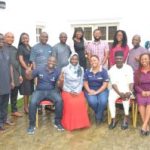
Professor Emmanuel Ameh, a Paediatric Surgeon at National Hospital, Abuja, has stressed the need for adequate attention and care to end preventable mortalities among babies born with cleft.Ameh made the call at the sideline of a two- day Nationwide Media workshop organised by Smile Train, the world largest cleft-focused Organisation in Abuja.
According to him, the biggest challenge facing cleft treatment in Nigeria is the lack of adequate awareness and firsthand knowledge on how to handle these babies, especially those with breathing difficulties.
Some of these babies die before they get to the hospital due to malnourishment, lack of proper care, the manner in which they are handled even in tertiary hospitals can be detrimental to their health and may cause death.
One of the things we are trying to do is to train staff, especially the nurses, community health officers, local birth attendants who will in turn train the women on how to identify cleft cases in new-borns and identify those with breathing problems in good time.
Ameh, also the Chief Consultant at the Hospital, said Smile Train was making available basic equipment to ensure cleft babies breathe well at the point of identification before getting to go for surgeries.
Smile Train has also established a helpline and these persons will be trained on how to get help via contacting the helpline, he said.
Ameh stressed the need for legislations at state levels to ensure that the state governments are investing in cleft care training and equipment for cleft lips and palette treatments.
We need to train a lot more personnel for the position of nurses and medical professionals, because we have young people who are interested but have no support for training, he added.
Dr Amina Abubakar, Consultant Plastic Surgeon, University of Abuja Teaching Hospital, Gwagwalada, said that stigma, unfounded myths and misinformation around Cleft are the reason why Cleft lip and palette patients suffer.
According to her, Smile Train had done a lot to support, from providing 100 per cent free surgeries to provision of training, funding and resources to empower local medical professionals on proper care for cleft patients.
No child born with Cleft should die in 300 corrective surgeries done, I have never lost any cleft patient, I can say it is a 100 per cent guarantee of successful surgeries.
Most times, when we go into the communities for awareness about Cleft, we find that indigenes are not willing to present their relatives or loved ones for help due to a lot of traditional beliefs.
This needs to stop, Cleft is a birth defect with yet to be identified causes and not a curse. It is not caused by sins of parents and is corrective, they can live normal and happy lives if well managed, she added.
Emily Manjeru, the Public Relations and Communications Manager of the Organisation, reiterated its commitment towards making sure that babies born with these abnormalies were given adequate treatment, get their voices and confidence back and become big achievers.
The News Agency of Nigeria (NAN) reports that cleft lip and palate is a gap or split in the upper lip or roof of the mouth, which is mostly present from birth. (NAN)
============
Edited by Ifeyinwa Okonkwo/Isaac AregbesolaSource: NAN News
-
adminposted in News & Trends • read more
By Kadiri AbdulrahmanThe Director of Trade and Exchange Department, Central Bank of Nigeria (CBN), Dr Ozoemena Nnaji, says there is urgent need to diversify the Nigerian economy to spur growth.
Nnaji made the call at the 33rd Seminar for Finance Correspondents and Business Editors in Abuja.
She said that the status of Nigeria as a mono-product economy had been detrimental to economic growth.She described a mono-product economy as one that depends on a single product or resource for economic growth and development.
She said that the concept could further be referred to a case where a country depended on a single product for sales or exports for for 70 per cent of its budget funding.
According to her, a mono-product economy is unstable.
An increase or decrease in the world price of the product will affect the budget of the economy.
It may witness a high percentage of unemployment; it is import-dependent and cannot stand on its own.
It weakens the foreign exchange base of the countrys economy, she said.
She said that such an economy weakend local production of goods that were imported into the country.
In addition to importing finished goods, a country may also import inflation and other economic effects she said.
She said that oil and gas accounted for 90 per cent of export income and 85 per cent of government revenue in the first quarter of 2022.
According to her, that makes Nigeria a mono-product economy, owing to its dependence on oil and gas.
She added that a more committed engagement in agriculture would grow the economy faster.
Nigeria is a hugely agrarian economy which vast arable land, and with a large portion of the population into subsistence agriculture.
Only less than 40 per cent of the vast arable land is cultivated, she said.
She said that the overbearing impact of the oil sector on the nations economy exposed the country to external shocks whenever there is change in price.
To insulate the Nigerian economy from the shocks and FX shortages, there is need to develop new strategies.
It should be aimed at earning more stable and sustainable inflows of FX through diversification of the non-oil export sector, she said.
She added that diversification would guarantee sectoral dependence and balance in the economy.
According to Nnaji, the need for more sources of export products to reduce importation of goods and services that can be produced locally makes diversification imperative.
Promotion of international trade that will lead to balance of payment position; the need for a dynamic economy capable of absorbing shocks while maintaining full employment.
The need for a high rate of economic growth and development, she said (NAN)(www.nannews.ng)
=======
Edited by Isaac Aregbesola
Source: NAN News