Groups
-
adminposted in News & Trends • read more

By Salisu Sani-IdrisAlhaji Garba Abubakar, Registrar-General of the Corporate Affairs Commission (CAC) has urged registered companies to always file returns to the commission to avoid deregistration.
Abubakar, who gave the advice in an interview with newsmen in Abuja on Thursday, stressed that it was not enough that people register companies, they must equally file returns as required by law.
The registrar-general explained that it was through return filing by companies that the commission was able to know which companies are active and which ones were inactive.
You must do what the law says you must do, you have to file your returns, we have categorised companies into what we call active or inactive.
It is not enough that people registered companies, there is the need to always file returns to achieve meaningful growth.
Companies that have filed returns up to date are active. Those that have not filed returns up to date, we have classified them as inactive.
This is creating lots of problems for most of them, because if you are applying for a Visa using a company account, no Embassy will give you a Visa, until you update your record with the CAC.
He said hitherto, companies that are actually making money everyday do not bother to file returns to the commission.
Because there is no way for a third party to know whether such a company is active or not.
Abubakar said that CAC would prioritise filing of returns as one of the ways to also improve its internally generated revenue.
He also said that such priority would be designed to compel registered companies to comply with the policy or be deregistered.
The law has made deregistration more cumbersome now, hitherto if you have reasonable cause to believe that your company is not carrying out business operations, you can just write to the company.
If they respond fine, if they do not send a second letter, you can strike them off. The law now says it must be five-years. You have to wait for five years.
We hope companies will update their records, after 18 months if you do not file your next return, then it will go back to inactive, so the revenue will continue to grow.
The registrar-general attributed the success recorded by the commission in terms of revenue growth to the current practice of looking inwards to improve its revenue.
He identified income generation from the new registration system, increase in share capital, and administration of charges that were mortgaged to be a major source of success achieved. (NAN)
Source: NAN News
-
adminposted in News & Trends • read more

By Salisu Sani-IdrisThe Nigeria COVID-19 Action Recovery and Economic Stimulus (NG-CARES), has urged the 36 states of the federation and the Federal Capital Territory (FCT) to accelerate the implementation of the programmes.
Prof. Foluso Okunmadewa, the World Bank, Lead Specialist, Social Protection and Task Team Leader for NG-CARES, made the call at a two-day implementing status review meeting with States Coordinators on Thursday in Abuja.
The News Agency of Nigeria (NAN) reports that NG-CARES is a World Bank-assisted Federal Government credit project of 750 million dollars.
It is a two-year intervention project aimed at mitigating the impact of COVID-19 on the poor and vulnerable groups.
Each of the 36 states of the federation is expected to get 20 million dollars; FCT will get 15 million dollars, while the Federal CARES Support Unit is also allocated 15 million dollars.
He expressed delight that the programme had started effectively since January, adding that most states were implementing it.
That is why we decided to sit with the coordinators in all the 36 states and FCT to look at the status of the implementation.
We will look at what are the things that they have achieved; what is working very well and what is a bit challenging, he said.
He said that no fewer than 40 million Nigerians were expected to benefit from the programme in three major areas.
They are: social transfers, basic services in the area of food security and in the area of small and micro enterprises.
And the totality of the people that are expected to benefit from the 750 million dollars NG-CARES programme within two years time are almost 40 million Nigerians, Okunmadewa said.
Okunmadewa emphasised the need for all states to accelerate the implementation of the programme.
We thought it is a good time to call 36 states and FCT coordinators to have a discussion on the programme and it has been going very well.
We have seen an upswing in the implementation unlike what it was around March this year, where things were not as forthcoming as expected.
But now in a sizable number of states, even the state governments have added more resources to the resources that were provided as assistance from the World Bank.
He, however, said that few states were still lagging behind in the implementation.
We looked at some of the constraints they have, we provided advice and some activities will be taken at the federal level, Okunmadewa said.
He said that some activities would be taken at the World Bank level to speak with governors and other critical stakeholders.
Earlier, the National Coordinator of NG-CARES, Dr Abdulkarim Obaje, said that both the World Bank and the Federal Government had requested for a review of the progress that had been recorded by all the states.
He said that the programme was a fast disbursing credit facility from the World Bank, which means the money should be disbursed to each state as quickly as possible within the time frame of the programme.
Obaje extolled the disposition of the World Bank and the Federal Government towards simplifying the processes.
He said this would ensure that all the money, if possible would go down to the states to assist the poor and vulnerable.
We want each of the states to draw down 20 million dollars over the remaining 12 months of the programme.
So, if states are not disbursing money fast to the delivery platforms, then it will lead to some inabilities to draw down all the resources.
Time is against us as we want to fast track implementation as much as possible across all the delivery platforms and throughout all the states, he said.
Also, Mr Umar Dahiru, a participant from Nasarawa State, expressed optimism that the programme would achieve its desired results and lift many people out of poverty in the state, based on the political will of the Governor, Abdullahi Sule.
(NAN) (www.nannews.ng)Edited by Bashir Rabe Mani/Solomon Asowata/Grace Yussuf
Source: NAN News
-
adminposted in News & Trends • read more

By Vivian Izu-IboboTwo men, Yetunde Awaye, 37, and Mohammed Afisu, 41, who allegedly stole a Rolex chronometer wristwatch worth nine million Naira, on Thursday appeared before an Ikeja Magistrates Court.
The defendants, whose addresses were not given, are standing trial on a three-count charge of conspiracy, stealing and receiving stolen goods.
They, however, pleaded not guilty.
The prosecutor, DSP Kehinde Ajayi, told the court that the defendants and others at large committed the offences on April 6, at 8.00 p.m., at No. 11, Town Dada Femi St., Ikotun, Lagos State.
Ajayi said that the first defendant (Awaye) stole the wristwatch belonging to one Mr Taofeek Oriola, while the second defendant (Afisu) received the property.
Ajayi said that Afisu received the stolen property on Ikotun Road.
According to him, the offences contravene Sections 411, 287, 328 and of the Criminal Law of Lagos State, 2015.
The News Agency of Nigeria (NAN) reports that Section 287 stipulates three years imprisonment for stealing.
The Magistrate, Mrs Ejiro Kubeinje, granted the defendants bail in the sum of one million Naira with two sureties each.
She ordered that one of the sureties must be a blood relation of the defendant and show evidence of tax payment to Lagos State Government.
Kubeinje adjourned the case until July 7 for mention. (NAN) (www.nannews.ng)
Edited by Ijeoma Popoola
Source: NAN News
-
adminposted in News & Trends • read more

By Patience YakubuA Kaduna Chief Magistrates Court, on Thursday, ordered that a 20-year-old mason, Dauda Francis, be given six strokes of the cane for stealing two cell phones worth N210,000.
Francis, who resides in Rigachikun in Kaduna, pleaded guilty to one count of theft.
Magistrate Ibrahim Emmanuel, also sentenced Francis to five months imprisonment.
Emmanuel did not give Francis an option to pay a fine.
Earlier, the convict begged the court to temper justice with mercy, saying that he was aware of his wrongdoings and had learnt his lesson.
Earlier, the Prosecution Counsel, Insp. Chidi Leo told the court that the convict committed the offence at 8:30 a.m. on May 28, at Kawo Kaduna.
He said that Francis stole a Samsung Galaxy and Tecno Phantom X, worth N210,000 from the purse of Ms Sarah Williams.
Leo added that the offence contravened the provisions of Section 271 of the Penal Code of Kaduna State, 2017. (NAN)(www.nannews.ng)
Edited by Sadiya Hamza
Source: NAN News
-
adminposted in News & Trends • read more

By Uche BibilariAn Upper Area Court Gwagwalada, Abuja, on Thursday convicted a 32-year-old welder, Emmanuel Joseph of defiling an eight-year-old girl.
The convict who resides in Gosa Area of Abuja, was charged with indecent assault.
The Judge, Malam Sani Umar, convicted Joseph after he pleaded guilty, and deferred his sentencing to Aug. 17.
Umar admitted the convict to bail in the sum of N300, 000 with one reliable surety in like sum, who must reside within the jurisdiction of the court.
He said the surety must deposit the sum of N70,000 to the court for the security of the bail and provide valid means of identification.
He said that the surety must provide two recent passport photographs and the address verified by the court staff.
Umar said that the reason for deferring the sentencing and granting the convict bail was for him to pay in full the N35,000 spent by the victims mother in the hospital to treat the victim from bruises she sustained from the act.
Earlier, the Prosecution Counsel, Mr Abdullahi Tanko told the court that the complainant Mary Gambo of Gosa Angwan Tiv, airport road Abuja reported the matter at Iddo police station on June 9.
Tanko said that the convict who was the complainants boyfriend, on June 6 assaulted hereight year old daughter.
He said that the offence contravened the provision of Section 285 of the Penal Code. (NAN) (www.nannews.ng)
Edited by Nick Nicholas/Sadiya Hamza
Source: NAN News
-
adminposted in News & Trends • read more

An Analysis by Oluwafunke Ishola/Dianabasi Effiong (News Agency of Nigeria)Most Nigerians are still in awe as to whether the COVID-19 pandemic still trends or has been laid to rest in their respective communities.
Such uncertainties heighten as the infection rate declines, protocols relaxed with less attention given to COVID-19 by many countries, including Nigeria.
With the advent of the Russia-Ukraine war and the outbreak of the Monkeypox disease in non-endemic countries, interests in COVID-19 appear to have been diverted, at least for a while.
Global health community is racing to provide vaccines for Monkeypox control while countries battle with food shortage issues, fuel crisis and global inflation emanating from economic downturn.
Similarly, the COVID-19 epidemiological report by the Nigeria Centre for Disease Control (NCDC) has been reviewed to thrice a week as against a daily report while the epicentre of COVID-19 in Nigeria, Lagos State, barely releases its COVID-19 update like before.
The last COVID-19 update from the state was released on April 24 and this, among other factors, makes concerned citizens continually ponder on whether COVID-19 still exists in countries.
The World Health Organisation (WHO) had on Dec. 31, 2019, announced detection of pneumonia of unknown cause in the city of Wuhan, Hubei Province, China.
Within a month, cases are reported in five WHO regions, leading the health agency to hold an Emergency Committee meeting of its International Health Regulations on Jan. 30, and declared the 2019-nCoV outbreak a Public Health Emergency of International Concern.
The Committee notes that early detection, isolating and treating cases, contact tracing and social distancing measures in line with the level of risk could assist to stop the virus spread.
On Feb. 11, 2020, it names the virus COVID-19, a choice that will help guard against the use of other names that might be inaccurate or stigmatising.
We must be guided by solidarity, not stigma.
The greatest enemy we face is not the virus itself; its the stigma that turns us against each other. We must stop stigma and hate, the WHO Director-General, Dr Tedros Ghebreyesus, tells the global community.
On Feb. 14, 2020, the COVID-19 infection is confirmed in Africa with the first reported case in Egypt, while Nigeria confirmed its first case on Feb. 27, 2020.
On March 11, 2020, WHO declares the COVID-19 outbreak a global pandemic due to its concern by its alarming levels of spread and severity, and the levels of inaction.
The high transmissibility of the virus leads to panic among the global populace with countries effecting measures including lockdown, curfew, travel bans, and many persons broadcasting unverified information on how to prevent infection from the disease.
At the peak of the pandemic in 2020, increased hospitalisation, high mortality rate, shortages in medical supplies including personal protective equipment (PPE) left health workers and other frontline workers dangerously ill-equipped to care for COVID-19 patients.
The global community rises to the challenge with strategic cooperation leading to the formation of the ACT-Accelerator partnership, launched by WHO and partners, to support the fastest, most coordinated, and successful global effort in history to develop tools to fight a disease.
With significant advances in research and development by the academia, private sector and government initiatives, the ACT-Accelerator secured a way to end the acute phase of the pandemic by deploying the tests, treatments and vaccines the world needed.
These interventions made the first COVID-19 vaccines possible, although it met with lots of skepticism about its safety and effectiveness.
However, the vaccine helps the world move beyond the fear of COVID-19 and exit lockdowns.
Consequently, borders are reopened, airlines begin operations, schools and offices resume from remote learning and work as the world adjust to living with COVID-19.
Consequently, the director-general of the WHO, at the 2022 World Health Assembly, warns countries against complacency, noting that COVID-19 pandemic is not over.
Ghebreyesus maintains that decline in infection figures and deaths does not signify an end to the pandemic while also expressing concern about COVID-19 spike in 70 countries and low testing rates.
It is not over anywhere until it is over everywhere. Only 57 countries have vaccinated 70 per cent of their population, almost all of them high-income countries, Ghebreyesus says.
Similarly, the NCDC cautions that COVID-19 is real and not yet over, noting, sadly, that the disease has affected no fewer than 200, 000 Nigerians.
The NCDC also notes that COVID-19 continues to threaten lives and livelihoods, stressing that all necessary precautions should be taken to ensure safety of lives.
Notably, Dr Iorhen Akase, an infectious diseases physician, complains that the world failed to learn from COVID-19 experience.
According to him, most people are in a hurry to move on with their lives in disregard to infection prevention control practice in their daily lives and communities.
Akase warns that pandemics and large-scale outbreaks can claim millions of lives, disrupt societies and devastate economies.
He adds that most infectious diseases can be controlled through effective preparedness and constant hand hygiene practice by citizens, advising citizens against letting down their guard.
Also on precautionary measures, Mr Bill Gates, Co-Chair, Bill and Melinda Gates Foundation, cautions against indifference to COVID-19 risks, noting that the pandemic could generate a variant that could be more transmissive and fatal.
Gates says the COVID-19 pandemic created a unique opportunity to improve global preparedness and strengthen health systems against future pandemic.
Specifically, that means improving technology, including vaccines, therapeutics and diagnostics; building up health systems and improving global monitoring of diseases.
As the world continues to respond to COVID-19, health experts stress that preemptive planning and protective measures can help in better management of future pandemics.
They also say that countries with high rates of current immunity and widespread booster uptake will be better protected against COVID-19, just as they call for a continuous response system against infectious diseases. (NANFeatures)(www.nannews.com)
================
Edited by Dianabasi Effiong/Vivian IhechuSource: NAN News
-
adminposted in News & Trends • read more
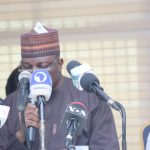
By Sylvester ThompsonProf. Abdullahi Mustapha, Director General (DG) of National Biotechnology Development Agency (NABDA), said that when pharmaceutical companies start local manufacturing of drugs, the strength of the naira will increase.
Mustapha said this at a press briefing on the significance of the NABDA 2022 Establishment Act to national development in Abuja on Thursday.
He disclosed that NABDA recently formalized partnership with the government of Cuba to promote joint research in tissue culture, drug and vaccine manufacturing.
At the moment, Nigeria imports 70 per cent of medicines used in the nation, this collaboration holds the possibility of reducing it to about 20 per cent in the next few years.
One of the implications of this is that the era of substandard drugs is coming to an end as local production will lead to quality enhancement, Mustapha said.
According to him, biotechnology is an accelerator of inclusive national growth, providing a knowledge-based approach to solving public problems and ensuring future sustainability.
He said the passage of the Act would catalse the stimulation of rapid commercialization of biotechnology research and development products and afford the agency a platform for collaboration.
The DG said NABDA would work with international centres, NGOs, national and international biotechnology agencies and institutions and ensure sustainable mechanism for adequate funding of biotechnology activities through national and international funding agencies.
Mustapha stated that the Act mandates the Agency to create public awareness of biotechnology application and its values in Nigerias development.
In fact, the Act recognizes the imperative of public education for groundswell private-sector participation in biotechnology enterprises.
It stipulates that the agency should coordinate and conduct body corporate with perpetual succession and a common seal.
Accordingly, Mustapha said the Act has also strategically pushed the agency to pursue its mandate of driving national development by ethically harnessing applications of biotechnology.
He mentioned some of these applications to include; green biotechnology which encompasses the agricultural field, red biotechnology, which relates to the medical field, blue technology which consists of the aquatic field and white biotechnology, relating to industrial domain.
The NABDA boss expressed optimism that the private sector participation in biotechnology would extend the frontiers of economic development and abate Nigerias over reliance on petrodollar.
He said the private sector participation is needed for mass production, commercialization and supply to end users of the bio-digesters invented by the agency.
These bio digesters which were locally fabricated with locally sourced material would foster energy generation and efficiency, Mustapha said.
He further said that the agency, through its research activities, is facilitating Nigerias dairy industry and working on how to improve livestock genetics aimed at ensuring indigenous cattle increase their milk and beef production capacity.
Mustapha listed various research activities of the agency aimed at improving the livelihood of Nigerians while improving national economy. (NAN)(www.nannews.ng)
==========
Edit6ed by Vincent ObiSource: NAN News
-
adminposted in News & Trends • read more

By Emmanuella AnokamThe Organisation of the Petroleum Exporting Countries (OPEC), has released a fresh report on crude oil production of its member countries, indicating that six countries increased their crude oil output while seven countries declined in production.
The information is contained in the OPEC Monthly Oil Market Report (MOMR) for May 2022, which was obtained by the News Agency of Nigeria (NAN) in Abuja on Wednesday.
The report showed that crude oil output increased in Saudi Arabia, the United Arab Emirates, Kuwait, Angola, Algeria, Congo, while production in Libya, Nigeria, Iraq, Gabon, Venezuela, Iran and Equatorial Guinea declined.
It showed that total OPEC-13 crude oil production averaged 28.47 million barrels per day (mb/d) in May 2022, lower by 239,000 barrels per day (tb/d) month on-month (m-o-m).
The report saw Saudi Arabia increasing output from 10,366 tb/d in April to 10,417 tb/d in May, UAE increased from 3,015 tb/d to 3,042 tb/d, while Kuwait jumped from 2,662 tb/d to 2687tb/d.
It further showed that Angola increased its crude oil output from 1,168 tb/d in April to 1,176tb/d in May, Algeria improved from 1,003 tb/d to 1,007tb/d, while Congo slightly moved up from 262tb/d to 268tb/d.
However, production in Libya declined from 914 tb/d in April to 725 tb/d in May, Nigerias output fell from 1,322 tb/d to 1,258 tb/d, while Iraq declined from 4,420 tb/d to 4,374tb/d.
Also, Gabon declined from 200tb/d to 169tb/d, Venezuela went down from 712tb/d to 711tb/d, while Iran and Equatorial Guinea declined from 2,564tb/d to 2,538tb/d and 96tb/d to 94tb/d respectively.
On the world oil supply, the report said preliminary data indicated that global liquids production in May decreased by 0.22 mb/d to average 98.71 mb/d compared with April.
Non-OPEC liquids production (including OPEC Natural Gas Liquids (NGLs) is estimated to have increased in May by a minor 23 tb/d m-o-m to average 70.2 mb/d, but this was higher by 1.7 mb/d year-on-year (y-o-y).
Preliminary estimated decreases in production during May were mainly driven by Canada and the UK by 0.4 mb/d, while Eurasia and Latin America are expected to have seen growth in liquids output of 0.4 mb/d.
The share of OPEC crude oil in total global production decreased by 0.2 pp to 28.8 per cent in May compared with the previous month.
Estimates are based on preliminary data from direct communication for non-OPEC supply, OPEC and non conventional oil, while estimates for OPEC crude production are based on secondary sources. (NAN) (www.nannews.ng)
===========
Edited by Vincent ObiSource: NAN News
-
adminposted in News & Trends • read more
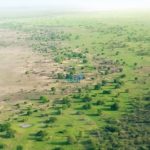
By Vivian EmoniThe Nigeria Conservation Foundation (NCF) and the Pan African Agencies of Great Green Wall (GGW) on Tuesday called on stakeholders to collaborate for effective implementation of GGW projects across African continent.
NCF Director-General, Dr Muhtari Aminu-Kano, made this call at a workshop for the integration of biodiversity in the Actions of the GGW, in Abuja.
The workshop was organised by NCF for National Agencies and Civil Society Organisations partners of BirdLife International, under the aegis, Pan-African Agency of the GGW.
The theme of the workshop was entitled: Make the Sahel Greater and Greener for Nature and People.
According to Aminu-Kano, Nigeria is one of the countries of GGW initiative, faced with challenges of land degradation, drought and climate change among others in 11 frontline states.
The GGW initiative aims to address the issues of desertification, land degradation, bio-diversity loss, promote climate change resilience by ecosystems and communities, and improve food security in the about 11 countries of the Sahel region in Africa.
Aminu-Kano said the workshop was to deliberate on how GGW project could be implemented effectively, through the framework and tools provided to address the environmental challenges.
He said NCF as a Non-Governmental Organisation (NGO), dedicated to nature conservation and sustainable development, required CSOs, private sectors and other stakeholders to collaborate to tackle environmental challenges through efficient implementation of GGW.
We have been deliberating on the framework from various stakeholders which will thereby, help improve efficiency and encourage the collaboration with tools that will offer accountability and support to review work processes.
We sat down with some of the African heads of the GGW from various countries to deliberate on the framework on Memorandum of Understanding that has been signed between the agencies of the GGW, the CSOs and other stakeholders, he said.
Aminu-Kano said the collaboration was also to engage in effective community sensitisation, adding that such would support in achieving the objective of GGW project.
Dr Yusuf Bukar, Director-General, National Agency for the Great Green Wall (NAGGW), said that the meeting was to exchange ideas and knowledge on better ways to implement the project.
He said that the agency was established to restore degraded land and other environmental challenges which had been major issues preventing socio-economic growth in the Northern part of the country.
The Director-General, Sudan NAGGW, Dr Sawsan Mustafa, said that the meeting would go a long way to address the environmental issues being faced in Africa.
He said that the collaboration by relevant stakeholders would provide opportunity for effective communication, adding that the workshop would improve such communication, as it would enhance the implementation of the project.
Mr Gora Diop, Director-General, Senegal, NAGGW, said that the agencies needed to work with other stakeholders in their various countries to achieve the mandates of GGW.
Mr Jean-Baptiste Deffontaines, Head of West Africa Sub-region office, BirdLife International, said that the meeting would also deliberate on how to protect birdlife and other wildlife in African continent. (NAN) (www.nannews.ng)
======
Edited by Chidinma Agu/Vincent ObiSource: NAN News
-
adminposted in News & Trends • read more

By Aderonke OjoEFCC Football Club on Wednesday in Abuja defeated Mailantarki Care Football Academy 2-1 to win the 2022 FCT FA Cup.
The News Agency of Nigeria (NAN) reports that in the final match played at the Area 3 pitch, EFCC FC struggled hard to emerge winners of the trophy.
The Mailantarki Care Football Academy started strong, having more of ball possession as they looked to utilise the long balls and pin down the opposition.
Both teams missed good goalscoring chances in the first half as they pressed on.
On resumption of the second half, the EFCC FC defenceline did well in ensuring that their attacks were firm.
But it was however Mailantarki Care FA who opened scoring against the run of play.Jabeer Hassan scored in the 62nd minute from close range following a brilliant cross from the left.
Job Opanachi however got the equaliser for EFCC FC barely five minutes later after a brilliant finish.
EFCC FC however got the much needed relief when they were awarded a penalty kick which was scored by Emmanuel Icha in the 86th minute for a 2-1 victory.
NAN reports that 33 male teams featured in the competition, and both the EFCC FC and Mailantarki Care Football Academy will represent FCT in the National Aiteo Cup competition.(NAN)(www.nannews.ng)
==============
Edited by AbdulFatai Beki and Olawale AlabiSource: NAN News