Groups
-
adminposted in News & Trends • read more

By Taiye AgbajeA Federal High Court in Abuja on Wednesday reserved judgment in a suit filed by two aggrieved directors of Green Energy International Limited against the Chairman, Prof. Anthony Adegbulugbe.
Justice Bolaji Olajuwon took the decision after counsel to the parties in the suit adopted their processes and presented their arguements.
She said the judgment date would be communicated to the parties.
Olajuwon also reserved judgment in a suit filed by the oil and gas company and Adegbulugbe against the two directors, Dr Bunu Alibe and Mr Ayo Olojede.
The development followed the breakdown of peace talks between the directors and the companys chairman.
The News Agency of Nigeria (NAN) reports that Adegbulugbe was a former Special Adviser on Energy in the Olusegun Obasanjo administration.
NAN also reports that Alibe and Olojede, two directors in the company, had, in a suit marked: FHC/ABJ/PET/20/2020, sued Green Energy and Adegbulugbe as 1st and 2nd defendants.
The plaintiffs, in the suit which commenced via a petition, accused Adegbulugbe of series of corporate misdemeanours, including unilateral usurpation of executive responsibilities, contrary to the provisions of the Companies and Allied Matters Act (CAMA), 2020 and the companys Articles.
They claimed that they were unlawfully removed by the chairman of a company which they jointly nurtured to fruition.
The applicants averred that such decision was contrary to the provisions of CAMA 2020 and the organisations Article of Association.
Responding, Adegbulugbe also filed a separate suit against the two directors before the court marked: FHC/ABJ/CS/1390/2020.
Although the matter was formerly before Justice Ijeoma Ojukwu, the case was, however, reassigned to Olajuwon following the transfer of Ojukwu to the Calabar division of the court recently.
When the matter came up before Olajuwon on Nov. 2, 2021, the parties indicated interest to settle the dispute out of court, prompting the judge to adjourn for report on the out-of-court settlement or for continuation of the matter.
However, at the Feb. 3 hearing, the new counsel to the two directors, Etigwe Uwa, SAN, told the court that he had just taken over the matter from Agbabiaka and would need more time to study the brief.
The application was not opposed by Bembella Anachebe, SAN, who was the counsel to the respondents and the matter was adjourned for parties to explore out-of-court settlement.
But on the last adjourned date, the court did not sit and the matter was fixed for Wednesday.
Upon resumption of the first case filed by Alibe and Olojede on Wednesday, counsel for the defendants, Anichebe told the court that the settlement process had broken down.
He said since the case was adjourned for report of settlement or hearing, he was ready to proceed with the hearing.
Adeyinka Aderemi, who held the brief of Uwa, however said settlement was still ongoing as the terms of agreement were being responded to by Prof. Gbolahan Elias who was engaged to draft an interim agreement.
He said only two issues were outstanding, including the payment of salaries of the petitioners, adding that Elias had promised to revert back to the petitioners.
But Anichebe insisted that in the letter written by the directors to Elias, they categorically rejected the proposal.
He said Bunu and Olojede wanted their salaries to be paid first before the issue of settlement was addressed.
They are saying, pay us our salaries before talking, he said
The senior lawyer told the court that the duo had consistently rejected the draft agreement.
Given the fundamental differences, it is clear that settlement has broken down, he added.
Anichebe said since the pending motions had been served on parties, he urged the court to allow them take the applications and move on.
But Aderemi restated that the last response from Elias as at yesterday (Tuesday) was that after confirming the receipt of their letter listing those two demands, he promised to respond.
According to him, all our clients are asking for is for them to go ahead and pay their salaries.
Responding, Anichebe insisted that no salary would be paid until the terms of settlement are concluded.
He argued that the petitioners must sign an interim agreement for them to be paid salaries.
Following the arguments by counsel to the parties, Olajuwon consequently ordered the parties to take their applications.
While Anichebe urged the court to dismiss the suit filed by the two directors, Aderemi prayed the court to grant all the reliefs sought by their clients.
After parties adopted their processes and presented their positions for and against the suit, the judge reserved judgment in the matter.
She said the judgment date would be communicated to parties.
Also in the suit filed by the company and Adegbulugbe against the two directors, Anichebe informed the court that having indicated interest to withdraw the suit, he urged the judge to strike out the matter.
He said the case had been overtaken by events.
But Aderemi, in his argument, prayed the court to dismiss the suit rather since issues had been joined in the matter.
Olajuwon equally reserved judgment in the suit.(NAN)(www.nannews.ng)
(Edited by Mufutau Ojo)
Source: NAN News
-
adminposted in News & Trends • read more

By Ikenna OsuohaSave Our Heritage Initiative (SOHI), an Abuja based NGO, has said that care and love for older persons is imperative and key to reclaiming the societys lost heritage.
Ms May Ikokwu, Chief Executive Officer (CEO) of the group, said this in an interview with the News Agency of Nigeria (NAN) on the occasion of International Day against Elder Abuse in Abuja on Wednesday.
The News Agency of Nigeria (NAN) reports that World Elder Abuse Awareness day is celebrated every year on June 15 to raise the voice on caring for elders.
Elder abuse is a global social issue that affects the Health and Human Rights of millions of older persons around the world.
The day was officially recognised by the United Nations General Assembly.
NAN reports that Elder abuse is an intentional act or failure to act that causes or creates a risk of harm to an older adult.
An older adult is someone aged 60 or older. The abuse occurs at the hands of a caregiver or a person the elder trusts.
Ikokwu, who restated the need to end elder abuse, urged the society to always listen to older adults and their caregivers to understand their challenges and provide support.
Report abuse or suspected abuse to local adult protective services, or the police where there is a desk officer for Elder Abuse. Use the National Senior Citizens Centre (NSCC), government agencies, state laws, and other resources.
Educate oneself and others about how to recognize and report elder abuse, given that worldwide one in six older adults are abused but only about 4 per cent of cases of elder abuse are reported, she said.
She explained that elder abuse ranged from abandonment, neglect, physical abuse and others capable of leading to psychological trauma and death.
The Chief Executive Officer therefore, expressed the need for the society to provide over-burdened caregivers with support such as help from friends, family, or local relief care groups.
Ikokwu called on the society to resist all forms of elder abuses, including financial abuse or stereotypes, to preserve and protect elders whom she described as God-given heritages.
She explained: Physical abuse is when an elder experiences illness, pain, injury, functional impairment, distress
It can also be death as a result of the intentional use of physical force and includes acts such as pushing, slapping etc.
She said others included humiliation or disrespect, verbal and non-verbal threats, harassment, and geographic or interpersonal isolation.
Financial Abuse is the illegal, unauthorised or improper use of an elders money, benefits, belongings, property, or assets for the benefit of someone other than the older adult.
According to the SOHI boss, older women are not spared from the sexual abuse suffered by younger women, such as rape and being forced to undress and these tend to cause psychological trauma in the victims.
(NAN) www.nannews.ngEdited by Idris Abdulrahman
Source: NAN News
-
adminposted in News & Trends • read more

By Constance Athekame
The National Power Training Institute (NAPTIN), says Agence Franaise de Development (AFD) and the EU, have pledged to expend 46 million dollars to fund vocational skills in the power sector.The Director-General of NAPTIN, Mr Ahmed Nagode, said this in Abuja on Wednesday at a workshop on Enhancing Vocational Training Delivery for the Nigerian Power Sector.
Nagode was represented by Mr Kunle Oyenusi, the Director, Legal NAPTIN, who is also Head Implementation Unit (PIU) of the project.
The workshop has as its the theme Meeting the Training Needs of the Nigerian Electricity Supply Industry would enhance capacity building in the power industry.
He said that a financing plan aggregate of 46 million dollars funded by AFD and the European Union (EU) would be solely invested in NAPTIN for the enhancement of vocational skills training in the power sector in Nigeria.
According to him, the project has three major components: Product Development, Infrastructural Development and Corporate Development.
Nagode said that the project, upon completion would reposition NAPTIN as a centre of excellence to serve the Nigeria Electricity Supply Industry (NESI), West Africa Power Pool (WAPP)
ECOWAS Centre for renewable Energy and Energy efficiency (ECREEE) and Association of Power Utilities of Africa (APUA).
The project has four specific objectives: to develop trainings curricula adapted to the market needs and specialise the trainers
To reinforce NAPTINs attractiveness by building new technical infrastructure laboratories, workshops and acquiring relevant technical equipment for the network of the regional training centres and headquarters in Abuja.
To sustain public investment by setting up a sustainable business model and to deeply reform NAPTINs governance, procedures and policies into a more business-oriented institution.
Nagode said that that the workshop was under the first component, the product development.
The main purpose of this workshop is to bring stakeholders together at a round table to talk about their training needs.
So that NAPTIN can position its training products through infrastructure to deliver quality training that the sector needs, he said.
Nagode said that the result of the interaction with stakeholders would be transmitted into the development of the training component.
According to him, to support the generation, transmission and distribution companies there is the need to ensure that human capacity is given the right attention.
I thank the AFD and EU for providing the support on which the project rest.
I assure you that NAPTIN will ensure that the training content and courses developed suit the current and future needs of NESI, he said.
On his part, Mr Joseph Vennel, Team Lead Component 1 for the project said that there were lot of workmen in the sector that were unskilled.
Vennel who worked with an Indian Company, Feedback Intra and consultant to NAPTIN said that such workmen require skills to work effectively.
There was the need for stakeholders in the power sector to enhance its human capacity skills for workmen to deliver quality service as customers want regular electricity at all times, he said.(NAN) (www.nannews.ng
==============
Edited by Ese E. Eniola WilliamsSource: NAN News
-
adminposted in News & Trends • read more

By Lizzy OkojiJustice Edward Asante, President, ECOWAS Court of Justice, has lamented the poor application of Community Law by national courts of Member States, saying it impacted negatively on growth of regional laws.
Asante made this known while delivering the Courts address at 2022 First Ordinary Session of the ECOWAS Parliament in Abuja.
The president, in a message to the session, said that poor implementation of community laws impeded the ECOWAS integration agenda.
Asante, who was represented by Vice President of the ECOWAS Court, Justice Gberi-be Ouatttara, also blamed the situation for the poor knowledge of the court in spite of its enviable jurisprudence.
He blamed the non-adherence to community laws on poor knowledge of various sensitization campaigns and external court sessions in Member States designed to improve public awareness of its activities and bring it closer to the citizens.
Asante also expressed concern about the absence of nationally designated focal points for the execution of the Courts decisions in most of the Member States.
It is importance of the authority to have a stake in the enforcement of its decisions as the focal point between the Court and the Member States.
On the one hand, between the Court and the applicants who are the beneficiaries of the decisions of the Court and therefore have a stake in the enforcement of its decisions.
I also challenge Member States to domesticate Communitys legal instruments, particularly the Revised Treaty and the Protocols of the Court which they have signed.
And affected States that were taking too long to trigger the procedure for the domestication of these instruments, he said.
Asante also noted that the operations of the Court were being hampered by the reduction in the number of judges from seven to five and their tenure from five years renewable to four non-renewable.
This, the ECOWAS Courts President said, also impacted negatively on its effectiveness in spite of its burgeoning case docket.
In view of the important role of the court in the ECOWAS integration process, the President urged regional parliamentarians to contribute towards the resolution of these challenges .
This, he reiterated, includes helping to improve the awareness of the Court and the application of Community law in their States.
Justice Asante described the session of parliament as a gigantic gathering that provides the opportunity for each West African citizen to participate through their parliamentarians in the ECOWAS integration project.
The News Agency of Nigeria (NAN) reports that the 2022 First Ordinary Session of the ECOWAS Parliamentfrom June 9 to July 2seeks to deliberate on draft community regulations emanating from the Commission.
Other agenda for discuss includes; examining community strategies targeted at improving governance, address issues of unconstitutional change of governance, insecurity, and proffer solutions towards democratic consolidation in the sub-region. (NAN) ()
=================
Edited by Maureen Atuonwu
Source: NAN News
-
adminposted in News & Trends • read more
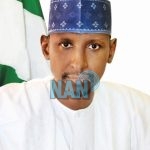
By Salisu Sani-IdrisAbuja Original Inhabitants Youth Empowerment Organisation (AOIYEO), has commended the FCT Minister, Malam Muhammad Bello, for the successful inauguration of the six area councils chairmen.
The President of the organisation, Mr Isaac David, made the commendation in a statement on Tuesday in Abuja.
The News Agency of Nigeria (NAN) reports that the minister inaugurated the newly elected six area council chairmen and their deputies.
Bello, while inaugurating the chairmen in Abuja, urged them to focus on good governance aimed at satisfying the yearnings and aspirations of the electorate.
NAN reports that the new chairmen and councillors of the six Area Council were elected on Feb. 12.
David described the the FCT minister as lover of peaceful coexistence of the Abuja people, adding that the minister had played a major role of a unifier, showing that the FCT natives had no other place to call their own than the FCT.
The youth leader said that the FCT minister stood firm to protect the mandate of the people against those that wanted to monopolise the area council for the selfish gains.
At the end of the day, let us not forget that we have no other place than the FCT. This is our home and we have to love our territory, love our leaders, pray for our leaders to work hard to make FCT great.
And the only way we can do this is through the collective work of us all, no matter how highly placed or lowly placed, once we have that love for FCT in our heart, the sky will not be our limit.
David said that both the FCT minister and the Minister of State, Dr Ramatu Aliyu are outstanding and a fine example of the new crop of smart, intelligent and dedicated, justice proven administrators.
He is a man that obeyed the rule of law, he obeyed the court judgment and the judgment that corrected the error on tenure elongation.
People can not do without him and he can not do without the support of the people.We are solidly behind him as he continues to dole out meaningful support to the FCT Area Councils and communities.
The youth leader also applauded the minister for ensuring effective city and urged the newly inaugurated to strictly work with the people and provide necessary infrastructures and empowerment to their communities.
This is especially in the area of health, education, agriculture and security, he said. (NAN)
Edited by Grace Yussuf
Source: NAN News
-
adminposted in News & Trends • read more
By Justina Auta
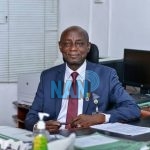
The National Blood Service Commission (NBSC) has called for a more robust Public Private Partnership (PPP) in the blood services for improve availability of safe blood in the country.
The Acting Director-General of the commission, Dr Omale Amedu, made the call in an interview with the News Agency of Nigeria (NAN) in Abuja on Tuesday, to celebrate the World Blood Donor Day.
The World Blood Donor Day, held annually on June 14, is aimed at raising global awareness on the need for safe blood and blood production for transfusion.
Amedu said investing in blood services would improve the availability of blood and blood products such as whole blood; red cell concentrates; platelets; fresh frozen plasma, cryoprecipitate and others.
He also added that it would also provide avenue for the production of plasma-derived medicinal products (PDMP), which can also be sold within and outside the country.
The aspect of ensuring safe blood for Nigerians cannot be complete without the private sector.
So we need them to invest in providing blood services not just as whole blood, but as blood products and plasma derived products.
These products are products that are sold as drugs. This aspect is business oriented.
Investors who are able to put together good initiative can go into the business, where they can separate blood into its components and produce drugs like antigen, haemoglobin and several others.
All these are sold not just in the local market, but international market as well.
And the federal government will collaborate with anyone who is interested through Public Private Partnership (PPP) to ensure they fully establish this venture and make profit out of it, the acting D-G said.
According to him, the commissions mandate was to regulate, coordinate and ensure the provision of safe blood and blood products.
He, therefore, appealed for more voluntary unpaid donors to donate blood to save lives, improve their health status and increase the nations blood bank.
Our target is to ensure that blood units collected will increase from the present 25,000 to one million by 2023 and three million by 2030, Amedu said.
The director-general further described blood donation as an act of solidarity and urged Nigerians to join the effort to save lives.
He said that the act highlights the critical contributions voluntary, unpaid blood donors make to national health systems. (NAN)
Source: NAN News
-
adminposted in News & Trends • read more
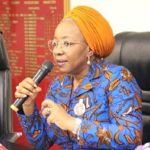
By Vivian EmoniThe Federal Government on Tuesday in Abuja said that poor financial support has been a major obstacle for effective implementation of the Great Green Wall (GGW) project across the continent.
The Permanent Secretary, Ministry of Environment, Mr Hassan Musa, stated this at a meeting of the Technical Committee of Experts, 8th Ordinary Session of the GGW member countries Council of Ministers.
The News Agency of Nigeria (NAN) reports that the Great Green Wall is an African-led movement with an epic ambition to grow 8,000-km natural wonder of the world across the entire width of Africa.
The Permanent Secretary was represented by Mr Saghir el Mohammed, Press Director of the ministry.
Musa said the recognition of the paucity of financial resources for the implementation of the GGW, had led to the several billions of dollars pledged by a coalition of Technical and Financial Partners (TFPs).
He said that the pledges were made at the 4th Edition of the One Planet Summit on Climate Change and Biodiversity held in Paris, France, in January, 2021.
According to him, financial provision and mobilisation have been a major obstacle to effective and impactful implementation process of the activities of the laudable GGW initiative.
It will be a painful and futile exercise if initiatives conceived and documented on paper without a matching financial and articulated human resources provided to concretise these initiatives through impactful actions.
Poor financial provision and mobilisation has been a major obstacle to the effective and impactful implementation process of the activities of the laudable GGW initiative in virtually all the participating member states.
The need for mobilisation of financial resources to actualise the vision of the GGW is glaring, he said.
The permanent secretary said that the pragmatic efforts of GGW member countries to access these financial resources pledged by the TFPs required necessary evaluation.
He said that the aim of the meeting was to evaluate the past programmes and project activities, as well as discuss further the plausible implementation process.
He said that the technical experts had been committed to ensuring that the goals and objectives of the GGW for the Sahara and Sahel initiative (GGWSSI) were achieved.
He said that one of the critical vehicles to realise the goal was financial resources, human ingenuity, adding that the method of remuneration could not be over-emphasised.
Musa urged the technical committee to do justice to the agenda by ensuring that the deliberation would be a fruitful one.
Dr Yusuf Bukar, Director-General, National Agency for the Great Green Wall (NAGGW), said that the meeting was to deliberate on critical items and issues bordering on the implementation activities of the GGW.
Though the items on the agenda for deliberations are numerous, I am confident that the commitments from the side of the experts will definitely bring positive result that will enhance the implementation of the GGW project, he said.
Mr Arona Soumare, representing the African Bank, Financial Partner, said that the GGW initiative was a big project that needed the support of financial partners globally.
As financial partners, it is really our mandate to support the continent to address land degradation and other environmental challenges as part of the GGW objective.
A lot has to be done, we have to mobilise for the funding, we have to work as partners to get the project implemented.
As a bank, we need to increase our support as most of the partners should come together and jointly work on the implementation of the GGW, he said. (NAN) (www.nannews.ng)
=========
Edited by Mark Longyen/Vincent ObiSource: NAN News
-
adminposted in News & Trends • read more

By Ifeanyi OlannyeThe Small and Medium Enterprises Development Agency of Nigeria (SMEDAN) on Tuesday commenced a three-day capacity building for entrepreneurship teachers in Asaba, Delta.
The Director-General, SMEDAN, Mr Olawale Fasanya, in his address of welcome at the training, said that the general idea behind the capacity building was to catch the pupils and students young, by equipping them with entrepreneurship skills.
Fasanya said that SMEDAN, through its flagship programme, Mind Shift National School Entrepreneurship Programme (N-SEP) -2022, aimed to build entrepreneurship skills in the minds of primary school pupils and secondary students through their teachers.
The News Agency of Nigeria (NAN) reports that the training programme was organised by SMEDAN, in partnership with the Delta State Government.
Fasanya, represented by the Agencys South-South Zonal Coordinator, Mr Egbuna Iloba, said that the essence of the programme was captured on the adage, Give a man a fish, he eats for a day; teach a man to fish and he eats for a lifetime.
He said that with the World Banks prediction of an additional 40 million people joining the economically active group by 2040 in Sub-Saharan Africa, it has become imperative for young Nigerians to be supported with education and training that promotes employment generation.
According to him, the programme is designed to enhance the capacity of the teachers who will in turn prepare the pupils and students and convert them into entrepreneurs.
There is much anxiety and uncertainty among the Nigerian students about their future because of dearth of opportunity in the employment market and their lack of entrepreneurial skills to go into new business ventures.
Given the number of people entering the unemployment market, it has become imperative for young people to be supported with education and training that promotes employment generation and wealth creation.
It was on this premise that the Mind Shift Entrepreneurship Programme (MEP) was conceived by SMEDAN.
The programme is designed to engage the vibrant energy of the students, youths and channel it into productive creation and management of their own businesses.
The programme provides access to functional and hand-on entrepreneurship and financial literacy and community service education, to every primary and secondary student in Nigeria, Fasanya said.
According to him, the MEP programme is driven through the N-SEP for primary and secondary school and the Tertiary Institutes Entrepreneurship Development Programme (TINEDEP).
We have gotten the buy-in of the universities, polytechnics and colleges of education and the regulatory authorities have endorsed the programme.
The objectives of the programme include: inculcating the culture of Entrepreneurship into the students of young age and involving many businesses and community leaders in a programme that impacts positively the lives of youths and the community, he said.
Fasanya said that SMEDAN had carefully designed teachers manual to guide the teachers on how to hand-hold the pupils and students towards their entrepreneurship journey.
He, however, urged the state government to take the ownership of the programme and step it down to all the schools in the state.
On her part, Mrs Rose Ezewu, State Commissioner for Secondary Education, represented by the Permanent Secretary in the ministry, Sir Austin Oghoro, while declaring the programme open, lauded SMEDAN for the capacity building.
She described the programme as first of its kind, while urging the agency to sustain the commitment of equipping Nigerians with skills for growth and development.
According to Ezewu, the programme is worthy of emulation, the training will enable the state government to chart a new course in shaping the mindset of pupils and students in areas of business development and wealth creation.
The teachers for this training have been specially selected to be at the vanguard of this programme.
And, I wish to enjoin you to effectively utilise the skills learnt to improve the education sector and develop the school children in the state, she said.
While tasking the participants on the training, Ezewu expressed confidence that the outcome of the training would be beneficial to the teachers, pupils, students and the state at large.
In his remarks, SMEDAN State Manager, Mr Leke Babalola, urged the teachers to be committed to the training, adding that it would be a win win for all at the end. (NAN)(www.nannews.ng)
================
Edited by Olabisi Akinbode/Isaac AregbesolaSource: NAN News
-
adminposted in News & Trends • read more
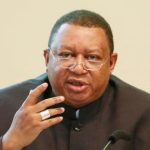
By Emmanuella AnokamThe Organisation of the Petroleum Exporting Countries (OPEC) has called for oriented strategy and timely investments in Natural Gas systems, given the current heightened uncertainties and volatility being faced in energy markets.
Dr Mohammad Barkindo, Secretary-General, OPEC, made the call on Tuesday in a keynote address at Mediterranean Gas (MedGas) event Dinner, at Athens, Greece.
Barkindo, in his address, lauded the Mediterranean Gas on its forward oriented strategy and timely investments in Liquefied Natural Gas (LNG) and Natural Gas systems.
He described such investments as a significant contribution to the major diversification and energy security strive in Greece and in the region.
It is particularly of importance at this time, given the current heightened uncertainties and volatility that we all face in energy markets, he added.
He also lauded Mr Theodore Theodoropoulos for his visionary leadership in Mediterranean Gas group of Companies, and Mr Basilio Petkidis, President, Mediterranean Gas for the Floating import of liquefied natural gas, storage, and regasification unit project.
He described the project as a pioneering advanced technology application across the industry and a stimulating factor in the economy.
The OPEC secretary-general thanked the Mediterranean Gas leadership in proceeding with foresight and undertaking such a timely and prestigious project.
It demonstrates beyond doubt full faith in the hydrocarbons industry and its essential role in our everyday life.
Mediterranean Gas deserve our sincerest commendation for contributing to energy security and a smooth energy transition, he said.
He said that recent experience had shown that focusing on only one of components in the energy transition, while ignoring the others, could lead to unintended consequences such as market distortions and price volatility.
The prevailing narrative does not correlate with the future trajectory of the worlds energy needs. One cannot help but be reminded of the old quote:
Never theorise before you have data. Invariably, you end up twisting facts to suit theories, instead of theories to suit facts. (NAN)(www.nannews.ng)
============
Edited by Idris AbdulrahmanSource: NAN News
-
adminposted in News & Trends • read more

By Obinna UnaezeThe Small and Medium Enterprises Development Agency of Nigeria (SMEDAN) has said that it is collaborating with the Niger Government to establish entrepreneurship clubs in schools across the state.
Mr Olawale Fasanya, Director-General, SMEDAN, made this known in Minna, during a three-day capacity buildingfor entrepreneurship teachers in public and private primary and secondary schools in the state.
The programme is being implemented under the Mind Shift Entrepreneurship Programme (MEP) known as the National-School Entrepreneurship Programme (N-SEP).
This programme is designed to enhance the capacity of the teachers who will in turn prepare the pupils/students and convert them into entrepreneurs.
The teachers are expected to teach the pupils/students about entrepreneurship skills and form them into entrepreneurship clubs in their various schools.
This is to enable continuity in the culture of entrepreneurship among them when they leave school or while in school, he said.
Fasanya who was represented by Mr Levi Anyikwa, Deputy Director, Partnership Coordination, SMEDAN, said that training of the trainers among the teachers was a continuous exercise.
After the capacity building of this teachers, there will be a stepping down to the schools at the grassroots, he said.
The Executive Director said that there was much anxiety and uncertainty among the Nigerian students about their future, because of dearth of opportunities in the employment market and their lack of entrepreneurial skills to venture into new businesses.
The World Bank recently predicted that there will be additional injection of 40 million people joining the economically active group by 2040 in Sub-Saharan Africa.
Given the most promising economic performance within the region, there is no way regular employment will cope with this number of people entering the unemployment market.
The imperative is that young people must be supported with education and training that promotes employment generation and wealth creation, he said.
He said that MEP was designed to engage the vibrant energy of students and youths and channel it into productive venture creation and management of their own businesses.
The programme is to provide access to functional and hands-on entrepreneurship/financial literacy and community service education to every primary and secondary student in Nigeria, he said.
Inaugurating the programme, Hajiya Hannatu Salihu, the State Commissioner for Education, promised that government would provide the necessary instructional materials to enable the trainees inculcate entrepreneurial skills in their students.
Salihu said that 70 teachers were drawn from the public schools in the state for the training, while 30 came from the private schools.
Hajiya Halima Musa, a trainee teacher from Central Primary School Kontagora, said that the exercise was interactive and impactful as it exposed them to various entrepreneurship education.
Musa thanked the SMEDAN and the government for the gesture and promised to impact her pupils. (NAN) (www.nannews.ng)
Edited by Julius Toba-Jegede
Source: NAN News