Groups
-
adminposted in News & Trends • read more

By Ibukun Emiola
The Academic Staff Union of Universities (ASUU), has urged the Federal Government to improve the economic situation in the country, as well as the education and health sectors.Prof. Ayoola Akinwole, the Chairman, University of Ibadan chapter ofASUU, said: Until we improve our economic situation, democracy will not prosper.
The only antidote to this is to have a large percentage of the middle class sufficient to support democracy.
Build public institutions instead of giving money to people. No amount of money freely given will ever eradicate poverty in Nigeria.
Akinwole, commenting on celebration of the nations Democracy Day, urged the ruling elites to shun corruption, greed and primitive accumulation as well as desist from fanning embers and cinders of disunity and violence.
He advised governments at all levels to provide basic social infrastructure and as well provide employment opportunities in order to reduce poverty and crimes.
Also, Dr Babatunde Oyedeji, Politics and International Relations at the Lead City University, Ibadan and Dr Stephen Lafenwa, a Political Scientist at the University of Ibadan, said there was need to strengthen andconsolidate on the gains of 23 years of uninterrupted democracy.
Oyedeji said: Nigerians have to thank Godthat we are still a nation.
So many waters have passed under the bridge; so many people have died under the military coup, government prolonged military rule, inflation, structural adjustment programme and so on.
But, the expectation is that all shall go well; so far, there are some rough tumbles here and there and Nigerians are not comfortable anyway, even about democracy.
Oyedeji said that there were so many problems affecting people directly; for instance, infrastructure and the economy, electricity and unemployment, as well as insecurity.
He said but as long as there is life, there is hope. People are praying thatthe hope should be transformed into reality and achievement.
The countryhas hopes, but there is a need for good governance, which will enhance the practice of democracy in the country.
Government needs to provide basic human needs like good roads; in most places, the roads are not good and they are not safe.
We need to develop our industries, especially the production sector. The small scale traders must be enhanced to contribute to the growth of the countrys economy.
We have to stop being a consuming country. We need to be a producing nation, so as to meet local demands and export into other countries, Oyedeji said.
Also, Dr Stephen Lafenwa, a Political Scientist, University of Ibadan, said that Nigerias democracy should be such that it would be inclusive; so that those with good ideas and are qualified should be given the chance to develop the country.
To strengthen the countrys democracy, there is the need for transparency and accountability. Political office holders must be answerable to Nigerians and give account.
We have to rule out money politics and our political processes must not be shrouded in secrecy. Transparency is one of the key pillars of democracy.
Nigeria runs a party based democracy; so, we must ensure that political parties are strong to have ademocracy, if not, democracy can never be strongor consolidated or entrenched, Lafenwa said.
He said that strengthening the institutions and making political offices less attractive would improve the practice of democracy in Nigeria.
Let all those who venture intopolitics have asecond address; something else that they earn a living from.
Let us goback to the basis when we stated democracy. It was done on a part-time basis, these people have a second address.
If you do something that is not in their interest, they resigned and go back to their profession. Politics is now a do or die affairs because this is no longer so.
Let there be equality, equity, fairnessand justice, Lafenwa said. (NAN)
Edited by Olagoke Olatoye
Source: NAN News
-
adminposted in News & Trends • read more
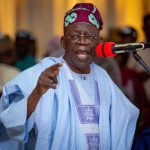
By Naomi SharangThe candidate of the All Progressives Congress (APC) in the Delta State House of Assembly election for Bomadi Local government Area, Mr Kingsley Muturu, has described Bola Tinubu as a symbol of modern-day democracy.
Muturu made the call in a statement issued on Sunday to mark Nigerias Democracy Day which is now celebrated every June 12.
He said Tinubu had contributed a lot of resources in building the countrys democracy.
Muturu also congratulated him for emerging as the APC flagbearer in the 2023 presidential election.
His emergence is divine, in spite of all what he went through in the hands of those who did not want him to emerge and moreso in the hands of those who he made politically relevant.
In spite of the betrayals and backstabbing, Asiwaju stood firm to claim what he deserved, Muturu said.
According to Muturu, the emergence of Tinubu as the presidential candidate of the APC has made the campaign much easier for other APC candidates vying for other elective positions nationwide.
I congratulate our leader and now our great partys presidential candidate for his victory at the just concluded special national convention in Abuja; the victory did not come easy.
It was a victory forged in the furnace of resilience, determination and single-mindedness and it is a forerunner to a sure victory for our part in the forthcoming general election.
I can say that he is the most saleable candidate going into the election next year and this has even made the work of campaigning for other candidates of the party much easier, he said.
The ex-Niger Delta agitator, however, urged Tinubu to be magnanimous in victory and carry along even those that contested against him to ensure at the 2023 general election.
The contest must have left some party members unhappy, it is now the duty of our leader and candidate to as usual be magnanimous in victory and extend an olive branch to all those who could be aggrieved or those whose expectations were not met.
By this way, the party will go into the general elections as one formidable family, he said.
Muturu also urged Tinubu to ensure that the much clamoured restructuring of the country is achieved when he eventually becomes the countrys president.
He said that the Nasir El-Rufai committee report on restructuring of the country was readily available for implementation as it had become one of the important factors that would put the country on the path of growth. (NAN)(www.nannews.ng)
========
Edited by Chinyere Joel-NwokeomaSource: NAN News
-
adminposted in News & Trends • read more

By Stephen AdeleyeAmb. Hamzat Lawal, Executive Director, Connected Development, a Civil Society Organisation (CSO), Amb. Hamzat Lawal, on Sunday advocated full involvement of traditional rulers in the creation of state police.
Lawal, an international election monitor, made the call at the sidelines of the 25th Coronation Anniversary of the Ohinoyi of Egbiraland, Dr Ado Ibrahim, held at his palace in Okene.
The activist stressed the need to create State Police to adequately confront insecurities currently ravaging the country.
He said that the states should be allowed to have their own police chosen among the people and under the supervision of traditional rulers.
According to him, the states through the royal fathers will understand the terrain better and know each and every member of the community and identify strangers who might want to perpetrate evil in the community.
He also called for the involvement of traditional rulers in designing and implementation of security architecture since they are the closest to the people.
A mechanism, he said worked during the pre-colonial era where taxes and other forms of administrations were made possible through the monarchs.
If you look at happenings in the country today, there is palpable atmosphere of mistrust, everyone is suspicious of one another.
The traditional institution is the only platform that can effectively earn the trust of the people and therefore should be allowed to supervise the operation of community police if it must work he said.
The royal fathers should be given more roles that would enable them to adequately supervise and enhance the security architecture of their areas of jurisdiction, Lawal said.
He said traditional rulers should be given more roles to play in governance and security as they are closer to the grassroots and by extension the people than the government at the center. (NAN)(www.nananews.ng)
Edited by Isaac Aregbesola
Source: NAN News
-
adminposted in News & Trends • read more

By Fatima Mohammed-LawalThe NDLEA on Sunday warned intending Hajj pilgrims against drug trafficking.
Hajia Habiba Zubair, an official of the agency gave the warning in Ilorin while addressing those travelling to Saudi Arabia to perform the 2022 Hajj.
She warned that pilgrims could take only prescription drugs to Saudi Arabia as the government there would not tolerate anything outside that.
You should avoid drugs capable of getting you arrested, she admonished.
Zubair also admonished the pilgrims not to take kolanuts or ground pepper to Saudi Arabia as they would be confiscated.
Do not take any luggage from strangers in any circumstance as you may be tricked into taking on prohibitive substances, she warned.
The NDLEA official also told the intending pilgrims to always wear the states uniform while in Saudi Arabia for easy identification. (NAN) (www.nannews.ng)
Edited by Alli Hakeem
Source: NAN News
-
adminposted in News & Trends • read more
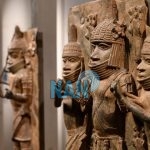
Repositioning Nigerias museums for improved patronageBy Taiye Olayemi
The National Commission for Museums and Monuments (NCMM) founded in 1979 is charged with collecting, documenting, conserving and presenting national cultural properties to the public for the purposes of education, enlightenment and entertainment.
Over the years, it has tried to establish museums fitted with a collection of artefacts belonging to cultures of different ethnic groups. Some of these artifacts include wood, ivory, metal and terracotta.
Others include the Egungun costumes,clay pots, masks, textiles, drums, dane guns and wooden figures withcollections of statues from different periods of Nigerias history.
The museums also contain traditional musical instruments like sansas, fiddles and flutes, as well asdivination bowls and ancestral figures made of wood, like Mumuye figures that are used by different communities.
Some of them accommodate works of art by Nigerian artists such as Nike Davies-Okundaye, Abiodun Olaku, Djakow Kassi, Bruce Onobrakpeya, Bolaji Ogunwo, Yusuf Durodola, Nosa Iyobhabha, Duke Asidere, Ben Enwonwu,Nathaniel Hodonu, Northcote W. Thomas, Kelani Abassand Elizabeth Ekpetorson.
Some analysts say that the NCMM has indeed tried to meet its mandate in spite of limited resources at its disposal, while others, especially tourism stakeholders, believe that a lot more must be done to improve patronage to the museums andgenerate revenue.
At the celebration of the International Museum Day last month, Prof. Abba Tijani, Director-General of NCMM, hinted of high prospects for the museums when he said that Nigeria would be retrieving over 1,500 stolen artefacts this year, out of over 5,000 artefacts stolen from different parts of the country.
Tijani said that the artefacts were expected fromGermany, Australia, New Zealand, United Kingdom and other individual museums across the globe.
According to him, upon return of the artefacts, the NCMM willorganise series of exhibitions where they would be displayed for the general public to have a glimpse of them.
But as Nigeria awaits the new consignment of artefacts expected to enrich its museums, stakeholders have continued to emphasise the need to adequately fund the NCMM to boost the quality of museums and make them attractive to the general public.
They say that strengthening the museums has become imperative since many people visit them for research purposes, while many go there for sightseeing and education.
One of such stakeholders, Mr Michael Balogun, Chief Executive Officer, Tour2Nigeria, wants the Federal Government to further invest in upgrading the museums to accommodatevirtual technology and argumented reality.
According to Balogun, privately-owned museums across the country are properly managed as opposed to government-owned.
He suggests that the museums be outsourced to private operators who, he believes, will manage them well, if the nation must generate revenue from the facilities.
He particularly suggested that physically challenged individuals be considered by acquiring brailles and other means through which they could learn.
The national museums are nothing to write home about. If you consider the standard of most international museums, we are lagging behind. It is only the private outfits that appear adequately managed.
My suggestions will be to outsource it to the private sector and get it updated to the level of using virtualtechnology and augmented reality, he says.
Nigerian flutist, Omatshola Iseli, popularly known as Tee Mac, opines that it is criminal for the Nigerian government to neglect the nations museums which host the nations historical legacy.
Omatshola urged the Federal Ministry of Education to work with the Federal Ministry of Information and Culture toward ensuring that the museums, which are a means of education, regain their value.
It is a crime that the Nigerian government has neglected the museums, our historical legacy.
The Ministry of Eduction is particularly guilty; when I was a student in Switzerland, we visited regularly the museums and even traveled to Ravenna, Rome and Paris to visit museums as part of our education.
The museums accommodate elements of our history; we should work with the consciousness that our history is our wealth, he says.
Another stakeholder, Efetobo Awhana, Organiser of the annual Nigeria Travel Week, says that the Federal Government must look into renovating most of the museums which he insisted are not attractive enough to woo tourists.
Awhana says that until that is done, the facilities will not generate the needed interest and revenue for government.
Our museums have a huge potential, given the rich history and diverse cultural heritage of Nigeria.
Currently, our museums are very unattractive to tourists; most of them look like abandoned book shelves damp and dusty without any vibrancy.
They need serious renovation to, at least, make them presentable, he said.
Awhana, however, commended governments efforts toward the gradual return of the looted Nigerian artefacts, and urged the Federal Government to ensure that the retrieved artefacts were properly preserved.
We have often shown a lack of appreciation for historical artefacts which are highly treasured every where in the world.
We hope that with the publicity and global attention these repatriations are attracting, those who will receive the artefacts will preserve them and do what is right in the interest of Nigeria, he says.
For Ms Bimbo Esho, Managing Director, Evergreen Musical Company, to properly reposition the museums for improved revenue generation, the members of staff of the museums must be exposed to periodic training.
Esho says that the federal government must also fund the museums adequately to be able to function optimally and engage in media promotion of the museums to generate traffic.
Very often, our artefacts are stolen and sold abroad because those who run the museums dont understand the need for curating our future.
We need to train museum staff on the need to curate these relics for future purposes. The museums also need proper funding and media promotion to gain public attention.
Mr Olugbenga Adebayo, Chief Executive Officer, Gadeshire Travels and Tours, on his part, wants all cultural ambassadors, curators and traditional leaders to work together toward drawing a master plan that will make the museums attractive.
Government at all levels must be ready to come up with a master plan on creating at least a museum each, in all the 774 local governments in Nigeria, aside the existing National Museums.
These museums at the local governments will document various objects of history and culture of the people of that locality.
Our National Museums must also be repositioned in terms of structures to fit into contemporary needs.
Our museums also need to be updated and improved upon in terms of proper documentation of the objects and proper training must be given to the personnel.
Where it is possible, the documents can be translated to various languages for the purpose of foreign visitors, he said.
As the stakeholders continue to offer suggestions toward making the museums more viable, analysts have urged government to work out strategies that will make the facilities more attractive in view of their socio-economic relevance to Nigeria and Nigerians. (NANFeatures)
- *If used, please credit the writer and the agency.
Source: NAN News
-
adminposted in News & Trends • read more

Keeping women safe while giving birth, the way forwardBy Abiemwense Moru, News Agency of Nigeria (NAN)
Nigeria Health Watch with support from MSD for Mothers organised a stakeholders meeting in Abuja on Evidence for Change: Learning and Recommendations for Quality Maternal Care.
The different stakeholders discussed experiences and made recommendations on achieving quality maternal health care.
In an experience-sharing session, Zara Zarma, a Village Health Worker with Girl Child Concerns (GCC), shared her experiences in providing health education, support and referral services for women in her community.
Zarma, who appreciated GCC for training her through MSD for mothers on maternal care, said it had not been easy moving from house to house sensitising pregnant women to always seek medical attention during pregnancy.
She said now that I have been trained, I see the need for pregnant women to seek help from the hospitals because they do not have to die at childbirth. .
People do not really see the need as they prefer to do it the local way, which may lead to the women losing their lives.
I move from house to house to talk to women to access health facilities for their medical attention to save their lives and the lives of their babies.
Iyadunni Olubode, Nigeria Director, MSD for Mothers, in her opening remark at the meeting, said no woman should die in childbirth.
We believe the voice of Nigerian women is pivotal.
She emphasised that understanding maternal health challenges is important in finding solutions to them.
Olubode maintained that more women must be reached across the country to address their challenges together.
When we understand the challenges, we review them together and then know what works, she said.
Also, Mrs Vivianne Ihekweazu, the Managing Director, Nigeria Health Watch, thanked collaborators and MSD for Mothers for the work and support and requested for a call to action on maternal quality healthcare.
She said Nigeria Health Watch has been working on maternal health advocacy and communications programme in the past 18 months to spotlight the importance of quality care in maternal health in Nigeria through MSD for Mothers funded projects.
So over the period, we have interacted with stakeholders to spotlight insights and evidence from MSD for Mothers collaborators programmes.
The aim is to spotlight interventions that will enable Nigeria to achieve the SDG target of a global Maternal Ratio of fewer than 70 maternal deaths per 100,000 live births by 2030.
She said with the approach to spotlight quality of care for womens maternal health, the focus is on six thematic areas for the purpose of the project.
The thematic areas are Understanding Quality of Care Gaps, Quality Assurance, Private Sector CapacityAffordability, Digital Support/Technology and Evidence for Change.
Ihekweazusaid the objective of the evidence for changemeeting was to amplify MSD for Mothers-supported collaborators, as evidenced through the outcomes and impact of the initiatives and innovations in improving maternal health outcomes in Nigeria.
Another objective according to her is to highlight the importance of adopting quality-of-care approach in delivering maternal healthcare in Nigeria through strategic approaches of MSD for Mothers-supported projects in Nigeria.
She said we hope to achieve more as we share some of the key learnings and some of the innovative solutions from our various programmes.
Understanding current challenges and gaps in delivering quality health care in Nigeria, helped by the fact that some of our key stakeholders are in the room with us.
Ultimately, at the end we hope to be able to synthesise the findings and propose a roadmap for policy implementation for better maternal health care in Nigeria.
On his part, Dr Usman Tijjani, the Executive Secretary, Private Health Institutions Management Agency (PHIMA), said there was need to emphasise girl child education and intensify family planning as population will always affect resources and services.
The government has to come in by improving the private sectors as the burden is too much on the government.
Government should channel resources on primary services such as health, education, food and security.
One of the panelists at the meeting, Dr BolanleFajemirokun, Director of Partnerships, LifeBank, spoke on keeping blood safe in handling maternal health issues, stressing that it had to be transported in cold chain packages.
She maintained that the quality of blood was essential in maternal care as one of thechallenges was the lack of critical supply.
Another challenge is the lack of structural infrastructure as drones can be used when the patients condition is critical.
When patients condition is not critical, we use bikes, tricycles, donkeys among others.
Fajemirokun maintained that to avoid lack ofblood, a pool must be kept full as data evidence was also important.
Another panelist, Dr Uchenna Igbokwe, the Principal, Solina Group, advised that innovations should be designed to address postnatal issues.
He added that what works needed to be scaled up as affordability was also necessary.
Dr Ademola Serrano, the Innovation Manager. PharmAccess, another panelist, said sustainable funding was necessary for clinical care in enhancing maternal care.
Serrano said PharmAccess assisted other partners with a self-care platform to enable women to have proper healthcare.
We also supported the process of training the people on how to use the self-care platform itself.
The platform was used as methodology tool to ensure that all delivering service components within the facilities as little as cleaning and washing their bed sheets and caring for wastes were part of the quality rules.
He said with other partners, the group identified and trained quality improvement facilitators and set quality improvement tips within each of the facilities and their responsibilities to ensure the facility maintained quality.
A panelist, Dr Mairo Mandara, Founder and Board Chair, Girl Child Concerns, said the system was overburdened because of the crisis in Borno as many health care workers fled but the poor people did not have anywhere to go.
She said they were faced with a lot of challenges particularly in health and education.
Mandara said there were people in the local government quarters, women, men and children but there were no care workers.
I was opportuned to be among the team that formulated the village health care worker curriculum during the MDG programme, I knew the power and content of village health workers.
Issues of maternal care can be prevented as no woman or newborn should die and with support from MSD for Mothers, we went to the local government areas and from there, we picked up Zarma four years ago.
We got young women in those villages and the criterion is being able to have primary six literacy and with the help of traditional rulers and support from their parents, we took them to Maidugurito the School of Health Sciences and Technology.
We trained them for three months as village health workers on understanding pregnancy, signs of pregnancy, among others.
With support from MSD, we trained these women on maternal health, child health and nutrition.
We also trained 240 village health workers across three local governments and they were improving in their skills to the extent that World Health Organisation (WHO) acknowledged our work as there was an increase in immunisation.
She added that Girl Child Concerns also trained many women as village health workers when government was returning people back to their homes from the IDP camps.
Recently, in the last one year, when government was closing IDP camps and returning people to their villages and for every returned village we took a number of women trained them as village health workers and we had a total of 465 couples. So we are supported to do a total of 240 and 60 supervisors which is 300.
She maintained that with the work of village health workers, Borno had been doing well even more than some states without crisis.
Mandara maintained that in knowing what women wanted, more research and discussions were needed to address the issues.
Another panelist, Dr Chibugo Okoli, the Deputy Country Director, Jhpiego, thanked MSD for Mothers for funding and addressing quality maternal care in Nigeria.
Okoli said about 649 women were studied in two local governments in Lagos State Alimosho and Ikorodu, and in the Federal Capital Territory Bwari and Abuja Municipal Councils.
She explained that between the 649 women, they carried out a point of care test for them as part of the study by looking at their blood pressure, diabetes, anemia among others.
Okoli said most women did not know they had high blood pressure, diabetes, anemia among others, even though the measurements showed that at the point of care something has to be done about it.
We have worked with the State Ministries, the FCT, Lagos State Ministry of Health through Eko Creation Workshop, where we also invited women to contribute to using the findings; we got to set up an implementation platform called the Women Centre Quality of Care module.
This is with four components of concentration called patient education, early detection through screening for these diseases and also management for these diseases and making referral.
We work across General Hospitals, Private Hospitals, Mission Hospitals and Primary Health Care Centres.
So for us, we focus on quality, which means doing whatever we are implementing for every woman all the time and at the right time and we use the WHO framework on quality of care for maternal health.
She added that they are always documented as evidence and many women now accessed health facilities during pregnancy.
As of now, in mid-2022, we have over 80 per cent of women coming to the facilities for their blood pressure, checking for diabetes, among others.
Also, another panelist, Paulina Akanet, State Programme Manager, Saving Mothers Giving Life 2.0 (SMGL2.0) at Pathfinder International,said awareness was needed for women to know that SMGL2.0 services were existing so that they could take advantage of it.
She said the first activity identified earlier in May 2021 was to leverage the facilities and so they got the caregivers at the 25 Pathfinder facilities onboard.
These women, according to her, are directly from their facilities with the activities for three months.
So, we were able to bring onboard 300 women, which gave us a threshold and a learning process for us to know exactly how these women interacted with chat boards, the messages, and the Q-rated messages on the chat boards.
We were able to know the challenges they have in accessing the content on the chat boards and so by late August 2021, we launched the digital campaign on Facebook and on Google and we were able to reach about 1.3 million women.
About 127,000 of them interacted with the AskNivi campaign and we were able to successfully onboard over 1,000 women between the months of August 2021 and December 2021.
With pathfinder SMGL 2.0, we identified three objectives and the first was to ensure that we encourage women involved in ASKNIVI on whatsapp, especially on their first trimester.
The second objective that we identified was to make sure that these women visit and complete the recommended WHO visits required throughout their pregnancy journey of 37 or 42 weeks of pregnancy journey.
The third objective we identified was to make sure that these women deliver at a high quality supported facility.
She said the challenge for digital health solution in Nigeria was generic, as the first was Internet Penetration, even though on paper it was recorded that they had over 51 internets per broadband penetration in Nigeria.
According to her, with the Pathfinder SMGL 2.0 in support, we realised that some of these women actually reside in the remote areas in the 25 local governments and that is one of the challenges we have.
She said insecurity also became a factor for accessing the new era and facility; where these women were not able to complete their regular SMGL 2.0 visits because of insecurity.
She added that the internet facility was turned down for a period of three months and that became an issue.
Another challenge we identified was language barrier: due to the area where these women are located, some of them are not that literate to actually comprehend the content in English language.
Some of these challenges are infrastructure challenges and some are socioeconomic challenges.
So because of the language barrier, and in a bid to solve it, we transmitted all the content into Hausa language which was completed two months ago.
In her presentation, Dr Bosede Ezekwe, World Health Organisation (WHO) Nigeria, said the organisation was improving the capacities of health facilities through the Maternal and Perinatal Database for Quality, Equity and Dignity (MPD-4-QED) programme.
Ezekwe was represented by Ify BaBabatunde-Yusuf, the Director of Policy and Advocacy, Nigeria Health Watch.
She said among the quality standards expected to be available in every health facility was that every mother and newborn had a complete, accurate, and standardised medical record during labour, childbirth and the early postnatal period.
According to Ezekwe, It is also expected that every health facility has a mechanism for data collection, analysis and feedback as part of activities for monitoring and improving performance around the time of childbirth.
On the gaps the WHOs MPD-4-QED programme sought to address, she said that high quality data was required to identify areas for quality of care improvement.
Ezekwe added that high quality data was also needed on the innovative steps taken so far in addressing these identifiable gaps.
According to Ezekwe, one of the process indicators in the QED project includes the development of facility-based routine data collection systems for maternal and perinatal mortality and near-misses necessary for quality improvement.
On global targets, she said the Sustainable Development Goals (SDG) is built on the gains of the Millennium Development Goals (MDGs) with a target for reduction of maternal mortality ratio to less than 70 per 100,000 live births and the reduction of newborn mortality to less than 12 per 1,000 live births by 2030.
The Ending Preventable Maternal Mortality (EPMM) programmes target of a reduction of Maternal Mortality Ratio (MMR) by all countries to at least two-thirds of their 2010 baseline levels is reliant upon the provision of available, accessible, acceptable, quality service in an enabling environment that respects human rights principles.
The World Health Organisation (WHO) Quality, Equity and Dignity (QED) project to improve Quality of Communication (QoC) for mothers and newborns in health facilities is one strategy to achieve the SDG targets.
Nigeria is one of nine first wave countries implementing Quality of Communication (QoC) which aims to halve hospital-based maternal and newborn deaths in five years.(NANFeatures)(www.nannews.ng)
** If used, please credit the writer as well as the News Agency of Nigeria (NAN)
Source: NAN News
-
adminposted in News & Trends • read more

By Ikenna OsuohaMr Victor Ogba, National Coordinator, Movement for Nigerias Transformation (MNT), on Sunday expressed optimism on the capacity of INEC to conduct free, fair and credible elections in 2023.
Ogba said this in a statement on Sunday in Abuja, on the occasion of Nigerias Democracy Day celebrations.
He said that the group was confident in the ability of the government of President Muhammadu Buhari to ensure acceptable general elections in 2023.
Members of the MNT strongly believe that Nigeria and indeed Nigerians can make the upcoming 2023 elections the most free and acceptable election ever in Nigeria.
As the conduct of the political party primaries have so far been on a relatively encouraging premise, the remaining part of the implementation of the electoral process should be taken seriously, he said.
Ogba who lauded political parties for conducting peaceful and credible primaries so far, said it was a demonstration of the countrys commitment to democratisation process.
It is remarkable that the conventions and primary elections conducted by the political parties are in keeping with the time table of the Independent National Electoral Commission (INEC), he said.
He explained that the peaceful conduct of the two major political parties in their primaries is indicative of the countrys preparedness for credible 2023 elections.
Ogba, who described June 12 1993 general elections as the most credible in the history of the country, urged political stakeholders to replicate same in 2023.
The political gladiators in the political parties should play by the rules of the INEC-steered electoral game.
The electorate on their part should be prepared to come out in their numbers to vote rightly and defend their votes.
INEC should do all it can to live above board by being an unbiased umpire sticking tenaciously to the enforcement of the electoral rules, he said.
Congratulating Nigerians on the auspicious Democracy Day celebration, Ogba said: May the celebration of this 2022 edition of Democracy Day usher in for Nigerians the dawn of a new era.(NAN) www.nannews.ng
Source: NAN News
-
adminposted in News & Trends • read more

By Nicholas ObisikeImo State Basketball team on Saturday defeated their counterpart from Enugu 43-42 to win the maiden edition of the South East Basketball tournament in Enugu.
The News Agency of Nigeria (NAN) reports that Imo reached the final by beating Abia 35-33 while Enugu overpowered Anambra 33-26.
Speaking after the match, Joseph Ogbonna, the Imo captain, said his players were excited to win the madien edition of the South East Basketball Tournament.
Ogbonna said the tournament is a stepping stone for many of them and believed that the players will go a long way.
He appealed to the Federal Government to save Nigerian basketballers from the embarrassment caused by their suspension from international competitions for two years.
Nobody is happy about the suspension of Basketball from international competition at the time the game is fast growing, he said.
Also speaking, the Secretary, South East Basketball Association, Osondu Ngwude, said that they have decided to host the tournament in different states of the zone.
He noted that Abia may host the next edition of the tournament, saying this could be more organised than the just-concluded edition. (NAN) (www.nannews.ng)
Edited by Vincent Obi
Source: NAN News
-
adminposted in News & Trends • read more
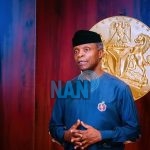
By Chijioke OkoronkwoVice President Yemi Osinbajo has been described as an inspiration, role model and the Obama of Africa by his supporters.
The supporters expressed these views at the Wuse, Abuja, campaign office of The Progressives Project (TPP), a coalition of support groups that backed the vice president on his presidential bid.
Osinbajo, who visited the campaign office on Friday, was greeted by an excited crowd of supporters and members of the various groups already waiting.
They chanted PYO, PYOas Osinbajo made his way into the compound and to the elevated section which had a large banner of the vice president as background.
The vice president thanked all his supporters at TPP and across the country for their dedication to the cause and passion for the birth of a new Nigeria.
This movement is a movement within a party, also, we are not doing something that has not been heard of before.
What is new is that we have a firm belief that a new Nigeria is possible and it is possible through us who are here, he said.
According to Osinbajo, the movement for a new Nigeria has only just started and must remain strong and firm.
That is why our movement for a new Nigeria must remain strong and firm.
And we will do everything to keep our movement strong and solid, he said.
Speaking at the event, one of the leaders of the Osinbajo support groups, Dr Ahmed Badanga, described the vice president as a role model to all.
You are the Obama of Africa; you have made us proud and we will continue to remain with you.
I will urge all of us to remain steadfast and committed to this cause because we have a bright future ahead of us, Badanga said.
Osinbajo emerged third at the All Progressives Congress (APC) Special Convention for its Presidential Primary on Wednesday, behind former Minister of Transportation, Rotimi Amaechi, and eventual winner, Bola Tinubu.
A member of the Coalition of Women for Osinbajo, Hajiya Rabi Dauda, was effusive with her praise for the vice president.
I stand on the authority of motherhood and I declare you a winner forever.
We, the women of Nigeria find it worthy to stand by you.
Somehow, you are not the flagbearer today, but you will be the flagbearer tomorrow.
I want to say to you that this is a continuous process, we will be waiting for you.
We are here today to listen to you, to tell us where to go and what to do, and I tell you, we will all be waiting for you, tomorrow and always.
Anytime you need us, all you need to do is to call on us and we shall be there for you, she said.
On her part, Mrs Diana Mary, said the vice president had shown his supporters and Nigerians the right direction for the country.
We are winners; we are not taking this for granted, you have led a direction that we will continue to follow and we are happy that for the sake of Nigeria you answered the call.
Thank you. We know that you went through a lot, and we know that a lot has happened in times past, and we believe that this moment you will address whatever it is so that we keep going forward.
We are not going to relax, I want to appeal that we still converge and speak about those things that we need to address so that we can pull a stronger force for Nigeria.
This generation of Nigerians are looking for that force that will fight for their future.
I am speaking from a place of conviction, whenever you are alone and you think that it is a low moment, I want you think of the numerous and thousands of us who are behind you and believe in your audacity, drive, and tenacity.
You are the star that we know, she said.
Osinbajo was also commended by the supporters for his indefatigable courage and confidence.
The character you exhibited should be a subject to be learned by the youths.
You are not just a role model but you are a movement that has touched every facet of this country.
You might not be the flagbearer of our party but have it at the back your mind that in Nigeria today, you are the flagbearer of every market woman, all the downtrodden, we believe in you.
But we have agreed to sit and brainstorm and submit a report to you so that we can forestall a future reoccurrence of what has happened, a supporter said. (NAN) ( www.nannews.ng)
Edited by Mufutau Ojo
Source: NAN News
-
adminposted in News & Trends • read more
By Joan NwagwuThe International Labour Conference (ILC) has adopted to add the principle of a safe and healthy working environment to the International Labour Organisation s (ILO) Fundamental Principles and Rights at Work.
The delegates adopted the resolution on Saturday at the ongoing 110th Session of the ILCs plenary sitting in Geneva, Switzerland.
The conference noted that until now, there had been four categories of Fundamental Principles and Rights at Work which include freedom of association and the effective recognition of the right to collective bargaining.
Others are the elimination of all forms of forced or compulsory labour; the effective abolition of child labour and the elimination of discrimination in respect of employment and occupation.
The News Agency of Nigeria (NAN) reports that the delegates decision at the conference means that Occupational Safety and Health will become the fifth category.
NAN reports that the Fundamental Principles and Rights at Work were adopted in 1998 as part of the ILO Declaration on Fundamental Principles and Rights at Work.
The conference noted that under the declaration, ILO member states regardless of their level of economic development, committed to respect and promote these principles and rights, whether or not they had ratified the relevant conventions.
Each of the fundamental principles is associated with the most relevant ILO Conventions.
The new fundamental conventions will be the Occupational Safety and Health Convention 1981(N0.155), and the Promotional Framework for Occupational Safety and Health Convention, 2006(No.187), it said.
The conference also approved eight amendments to the Maritime Labour Convention, 2006(MLC,2006), which focuses on the rights and working conditions of seafarers.
According to the conference, these amendments have been negotiated and adopted in May 2022 by seafarers, shipowners and governments representatives during the Special Tripartite Committee of the MLC, 2006.
It said the new provisions expected to enter into force in December 2024, will contribute to enhancing the living and working conditions of seafarers around the world.
This is based on some of the lessons learned during the pandemic, the conference said.(NAN)
Edited by Grace Yussuf
Source: NAN News